
Money One-page note UK only
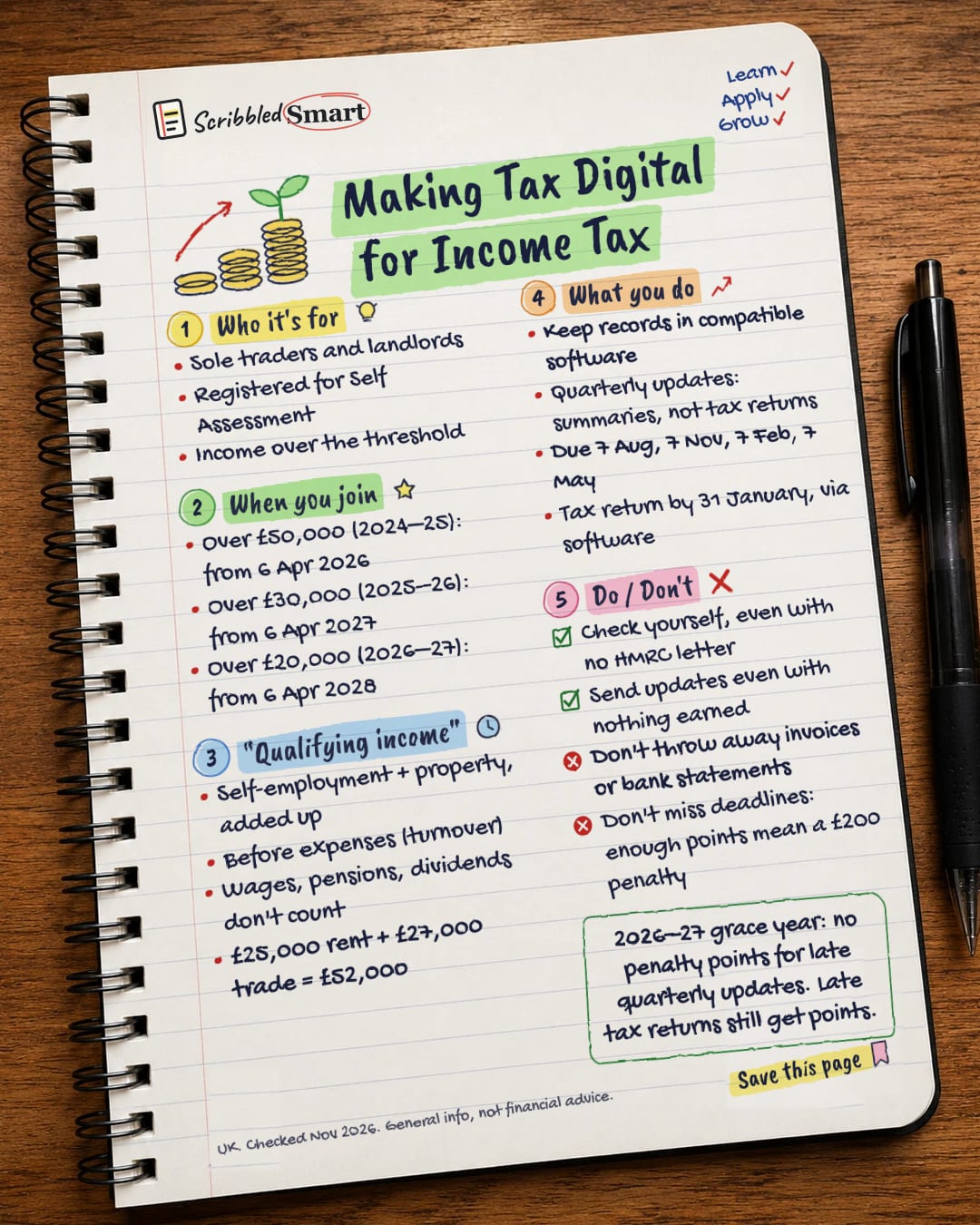
Making Tax Digital for Income Tax
Self-employed or a landlord? Making Tax Digital started in April 2026, and the threshold drops to £20,000 by 2028. Here's who's in and what changes. Save this page.
Good to know
UK. Checked Nov 2026. General info, not financial advice.
What's on the page
The note as text, so you can read it, copy it or use a screen reader.
Who it's for
- Sole traders and landlords
- Registered for Self Assessment
- Income over the threshold
When you join
- Over £50,000 (2024–25): from 6 Apr 2026
- Over £30,000 (2025–26): from 6 Apr 2027
- Over £20,000 (2026–27): from 6 Apr 2028
"Qualifying income"
- Self-employment + property, added up
- Before expenses (turnover)
- Wages, pensions, dividends don't count
- £25,000 rent + £27,000 trade = £52,000
What you do
- Keep records in compatible software
- Quarterly updates: summaries, not tax returns
- Due 7 Aug, 7 Nov, 7 Feb, 7 May
- Tax return by 31 January, via software
Do / Don't
- Check yourself, even with no HMRC letter
- Send updates even with nothing earned
- Don't throw away invoices or bank statements
- Don't miss deadlines: enough points mean a £200 penalty
Sources
- GOV.UK (HMRC): Find out if and when you need to use Making Tax Digital for Income Tax (updated 26 Mar 2026)
- GOV.UK (HMRC): Work out your qualifying income for Making Tax Digital for Income Tax (updated 11 Sep 2026)
- GOV.UK (HMRC): Use Making Tax Digital for Income Tax – Send quarterly updates (updated 16 Oct 2026)
- GOV.UK (HMRC): Use Making Tax Digital for Income Tax – Create digital records (updated 16 Jul 2026)
- GOV.UK (HMRC): Use Making Tax Digital for Income Tax – Submit your tax return (updated 16 Jul 2026)
How we checked this
Every fact on this note comes from the 5 sources listed here, checked against official or peer-reviewed sources where possible. AI tools help with drafting; a person checks every fact against the sources. How we research
Spotted a mistake? Tell us and we'll fix it and log it on the corrections page.


