
Money One-page note UK only
Overpaying Your Mortgage: How It Works
An extra £100 a month on a £150,000 mortgage could save about £23,000 in interest. Here's how overpaying works, and the 10% rule. Save this page.
Good to know
UK. Example assumes the rate stays at 5%. Lender rules vary. General info, not financial advice.
What's on the page
The note as text, so you can read it, copy it or use a screen reader.
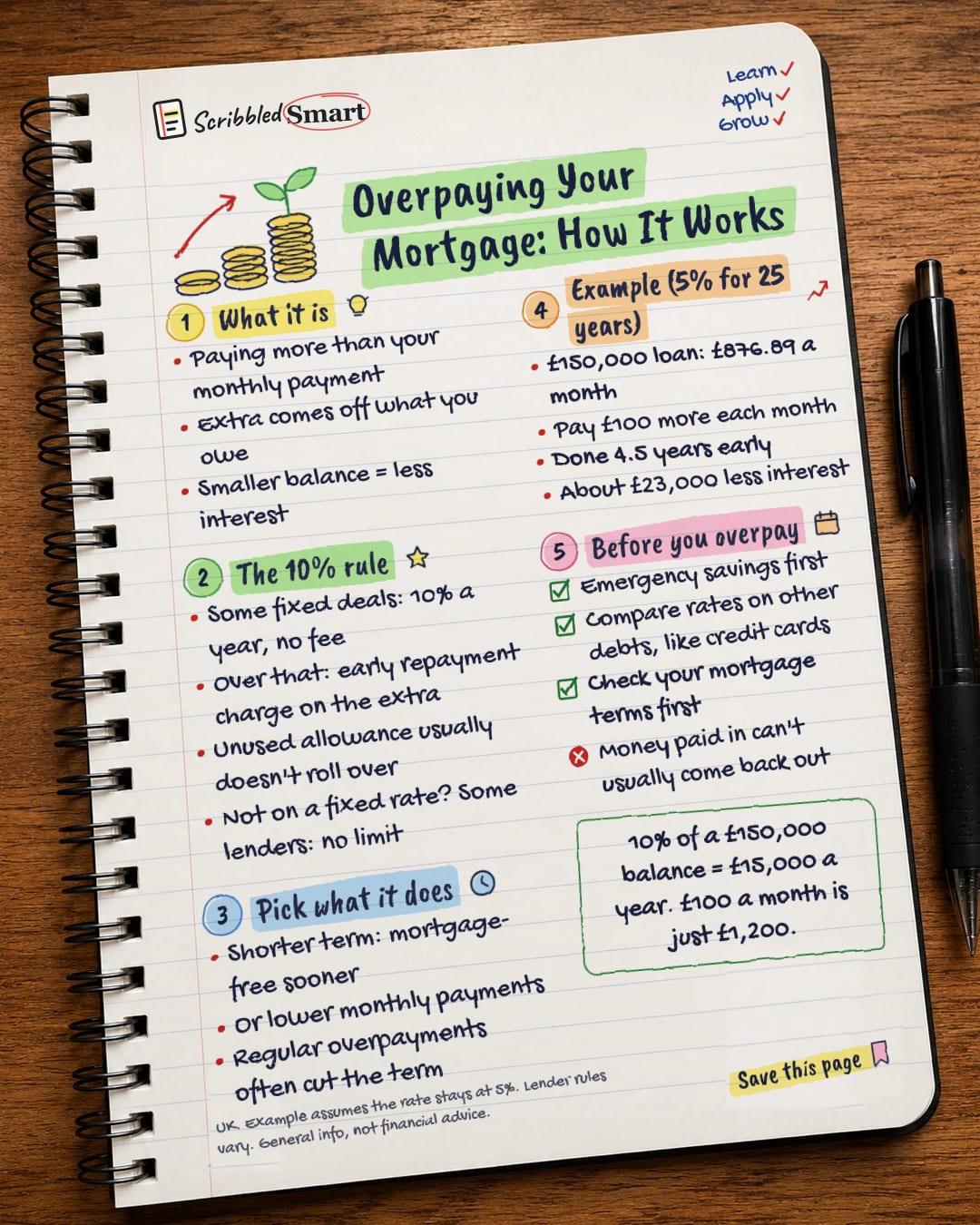
What it is
- Paying more than your monthly payment
- Extra comes off what you owe
- Smaller balance = less interest
The 10% rule
- Some fixed deals: 10% a year, no fee
- Over that: early repayment charge on the extra
- Unused allowance usually doesn't roll over
- Not on a fixed rate? Some lenders: no limit
Pick what it does
- Shorter term: mortgage-free sooner
- Or lower monthly payments
- Regular overpayments often cut the term
Example (5% for 25 years)
- £150,000 loan: £876.89 a month
- Pay £100 more each month
- Done 4.5 years early
- About £23,000 less interest
Before you overpay
- Emergency savings first
- Compare rates on other debts, like credit cards
- Check your mortgage terms first
- Money paid in can't usually come back out
Sources
- Santander UK: Mortgage overpayments
- Coventry Building Society: What to consider before overpaying your mortgage (Dec 2024)
- Lloyds Bank: What is an Early Repayment Charge? (search summary only; page returned an error)
- HSBC UK: Mortgage overpayment calculator (search summary only)
- FCA: FCA helps people navigate their financial lives with simplified mortgage rules (22 Jul 2025)
- Bank of England: Database, quoted household interest rates (IUMCCTL, IUMBV42, IUMBV34, IUMTLMV), Oct 2026
How we checked this
Every fact on this note comes from the 6 sources listed here, checked against official or peer-reviewed sources where possible. AI tools help with drafting; a person checks every fact against the sources. How we research
Spotted a mistake? Tell us and we'll fix it and log it on the corrections page.


