
Money One-page note UK only
National Insurance Explained
National Insurance isn't just another tax. It builds your State Pension. Here's what you pay and why your record matters. Save this page.
Good to know
UK. Tax year 2026/27. General info, not tax advice.
What's on the page
The note as text, so you can read it, copy it or use a screen reader.
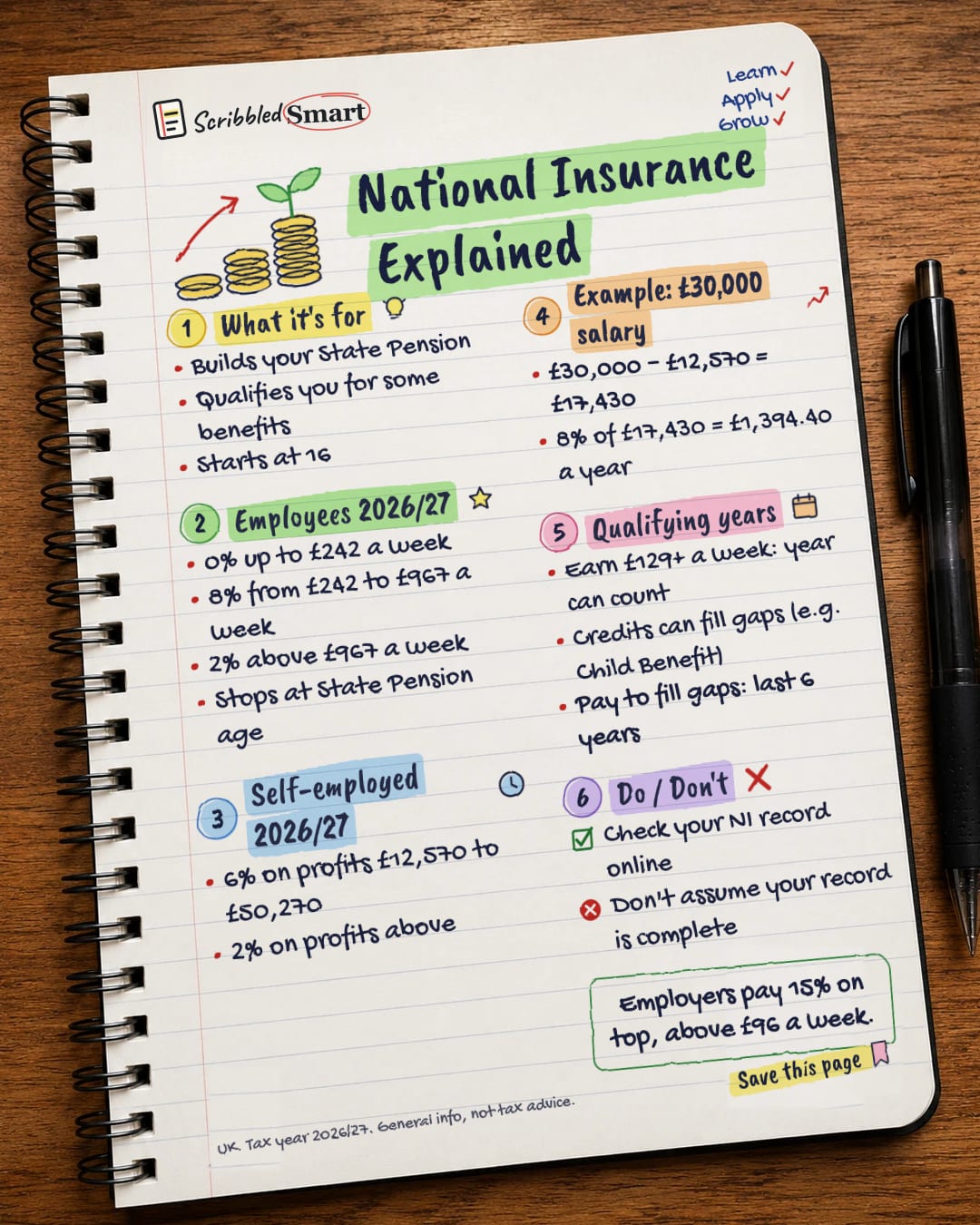
What it's for
- Builds your State Pension
- Qualifies you for some benefits
- Starts at 16
Employees 2026/27
- 0% up to £242 a week
- 8% from £242 to £967 a week
- 2% above £967 a week
- Stops at State Pension age
Self-employed 2026/27
- 6% on profits £12,570 to £50,270
- 2% on profits above
Example: £30,000 salary
- £30,000 − £12,570 = £17,430
- 8% of £17,430 = £1,394.40 a year
Qualifying years
- Earn £129+ a week: year can count
- Credits can fill gaps (e.g. Child Benefit)
- Pay to fill gaps: last 6 years
Do / Don't
- Check your NI record online
- Don't assume your record is complete
Sources
How we checked this
Every fact on this note comes from the 6 sources listed here, checked against official or peer-reviewed sources where possible. AI tools help with drafting; a person checks every fact against the sources. How we research
Spotted a mistake? Tell us and we'll fix it and log it on the corrections page.


