
Money One-page note UK only
Overdrafts: How They Really Work
Overdrafts cost more than most people think. Arranged vs unarranged, the 2020 rules and your credit file, on one page. Save this page.
Good to know
UK. Example rate is illustrative, simple interest, no buffer. General info, not financial advice.
What's on the page
The note as text, so you can read it, copy it or use a screen reader.
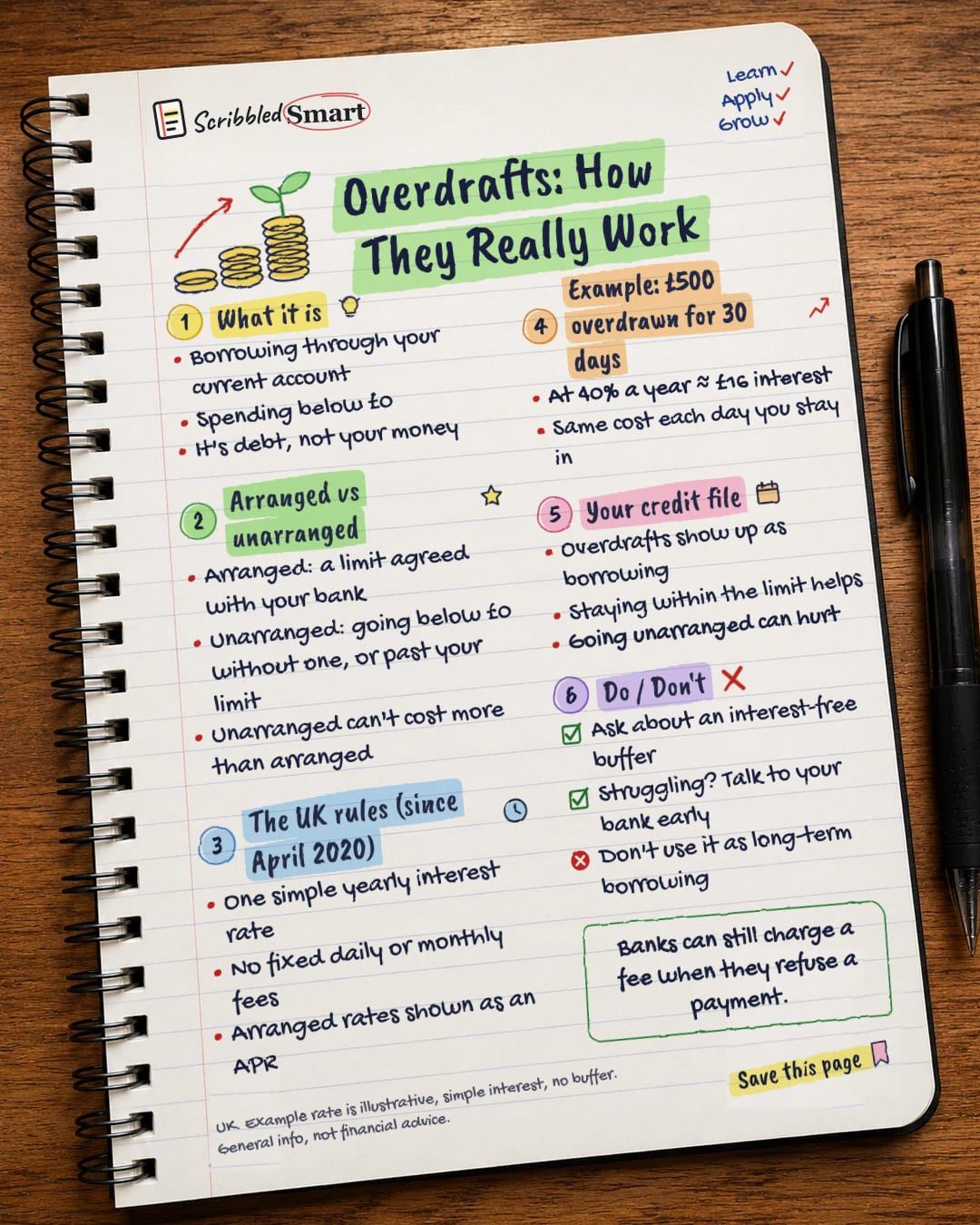
What it is
- Borrowing through your current account
- Spending below £0
- It's debt, not your money
Arranged vs unarranged
- Arranged: a limit agreed with your bank
- Unarranged: going below £0 without one, or past your limit
- Unarranged can't cost more than arranged
The UK rules (since April 2020)
- One simple yearly interest rate
- No fixed daily or monthly fees
- Arranged rates shown as an APR
Example: £500 overdrawn for 30 days
- At 40% a year ≈ £16 interest
- Same cost each day you stay in
Your credit file
- Overdrafts show up as borrowing
- Staying within the limit helps
- Going unarranged can hurt
Do / Don't
- Ask about an interest-free buffer
- Struggling? Talk to your bank early
- Don't use it as long-term borrowing
Sources
- FCA: FCA confirms biggest shake-up to the overdraft market for a generation (7 June 2019)
- FCA: New overdraft rules mean 7 out of 10 people will be better off or see no change (22 Jan 2020)
- FCA: PS19/16 High-Cost Credit Review: Overdraft policy statement
- FCA Handbook: CONC 5C.2 Charges for overdrafts to be interest rates
- FCA: Evaluation Paper 23/1 technical annex
- TSB: Overdrafts
- Unity Trust Bank: Overdrafts Key Features Document
How we checked this
Every fact on this note comes from the 7 sources listed here, checked against official or peer-reviewed sources where possible. AI tools help with drafting; a person checks every fact against the sources. How we research
Spotted a mistake? Tell us and we'll fix it and log it on the corrections page.


