
Productivity One-page note
Habit Trackers: Do They Work?
Habit tracker templates are everywhere. Do they actually work? Research says tracking helps, with a catch. Save this page.
Good to know
Harkin et al. 2016, Psychological Bulletin (meta-analysis); Lally et al., European Journal of Social Psychology (published 2009). Averages; results vary by person.
What's on the page
The note as text, so you can read it, copy it or use a screen reader.
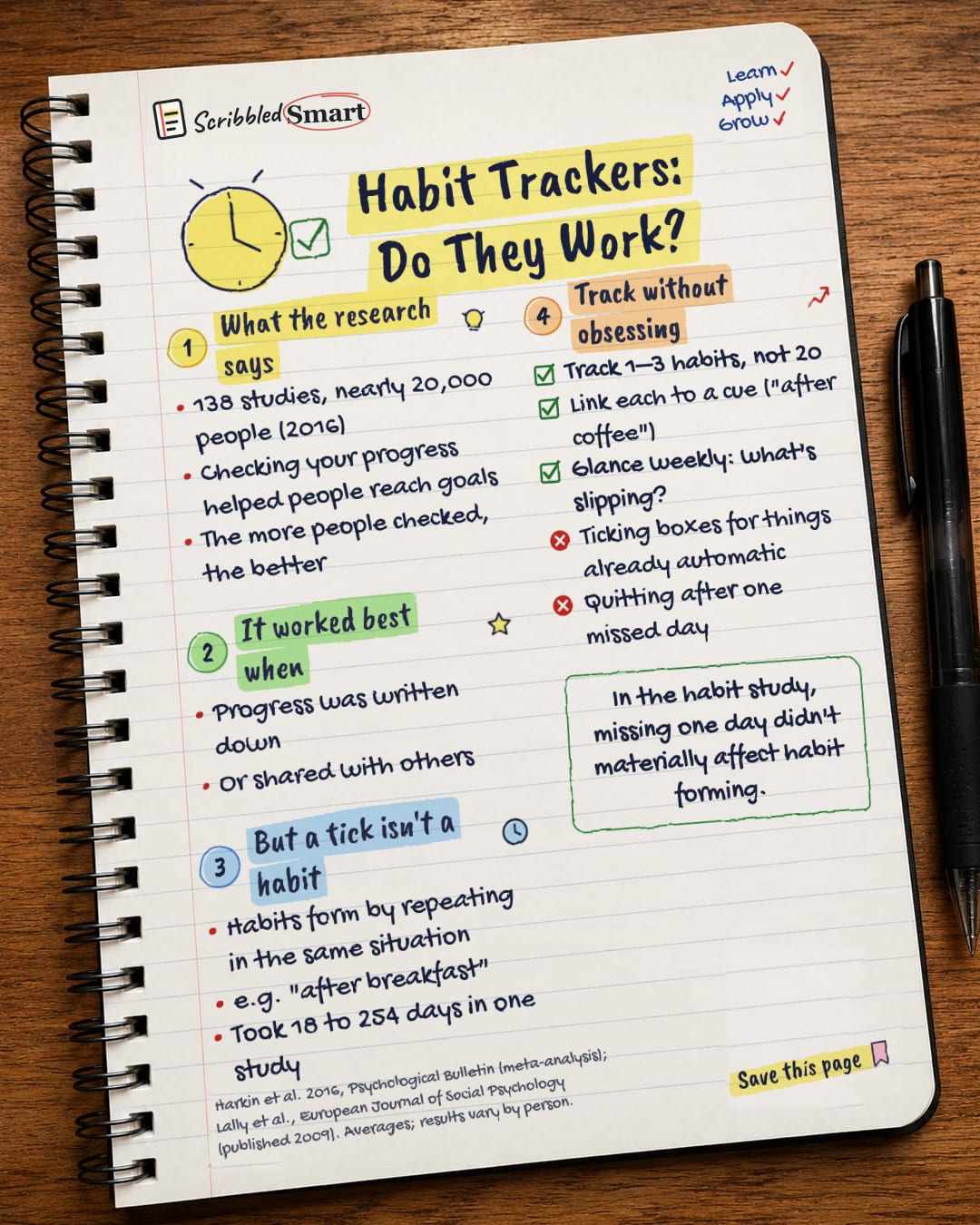
What the research says
- 138 studies, nearly 20,000 people (2016)
- Checking your progress helped people reach goals
- The more people checked, the better
It worked best when
- Progress was written down
- Or shared with others
But a tick isn't a habit
- Habits form by repeating in the same situation
- e.g. "after breakfast"
- Took 18 to 254 days in one study
Track without obsessing
- Track 1–3 habits, not 20
- Link each to a cue ("after coffee")
- Glance weekly: what's slipping?
- Ticking boxes for things already automatic
- Quitting after one missed day
Sources
- Harkin B et al. (2016): Does monitoring goal progress promote goal attainment? A meta-analysis of the experimental evidence. Psychological Bulletin
- Lally P, van Jaarsveld CHM, Potts HWW, Wardle J (2009 online; 2010 print): How are habits formed: Modelling habit formation in the real world. European Journal of Social Psychology
How we checked this
Every fact on this note comes from the 2 sources listed here, checked against official or peer-reviewed sources where possible. AI tools help with drafting; a person checks every fact against the sources. How we research
Spotted a mistake? Tell us and we'll fix it and log it on the corrections page.


