
Productivity One-page note UK only
Long Hours Don't Mean More Work Done
More hours doesn't mean more done. Here's what the research and UK law say about long weeks. Save this page.
Good to know
General info, not legal or medical advice. UK 48-hour rule; some jobs differ; under 18s max 40 hours. Checked Nov 2026.
What's on the page
The note as text, so you can read it, copy it or use a screen reader.
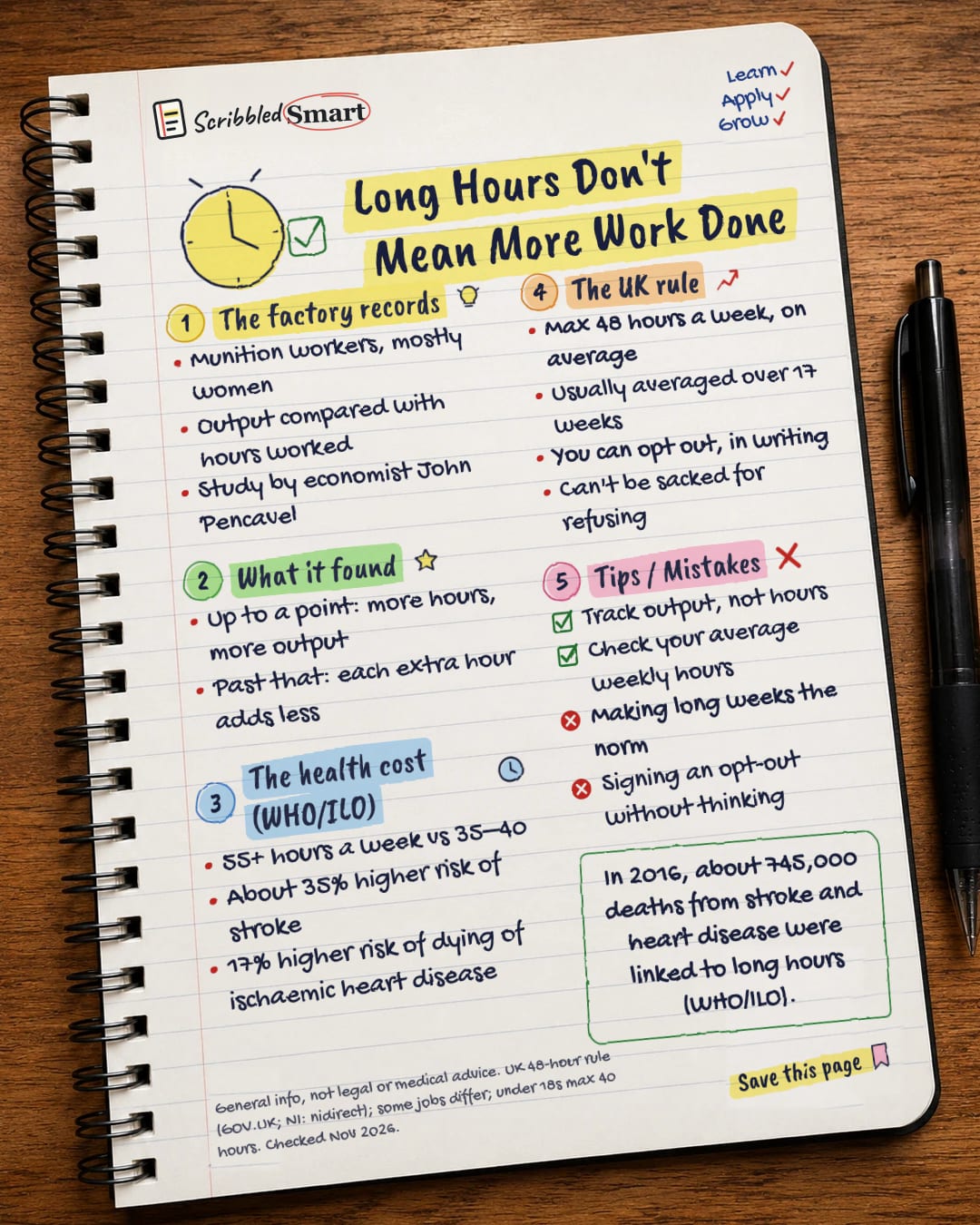
The factory records
- Munition workers, mostly women
- Output compared with hours worked
- Study by economist John Pencavel
What it found
- Up to a point: more hours, more output
- Past that: each extra hour adds less
- Tired hours are weaker hours
The health cost (WHO/ILO)
- 55+ hours a week vs 35–40
- About 35% higher risk of stroke
- 17% higher risk of dying of heart disease
The UK rule
- Max 48 hours a week, on average
- Usually averaged over 17 weeks
- You can opt out, in writing
- Can't be sacked for refusing
Tips / Mistakes
- Track output, not hours
- Protect a full day off
- Making long weeks the norm
- Signing an opt-out without thinking
Sources
- Economic Journal: Pencavel (2015), The Productivity of Working Hours
- WHO: Long working hours increasing deaths from heart disease and stroke: WHO, ILO (17 May 2021)
- Environment International: Pega et al. (2021)
- GOV.UK: Maximum weekly working hours
- Quartz (context only): You really can work longer hours without killing your productivity (2014)
How we checked this
Every fact on this note comes from the 5 sources listed here, checked against official or peer-reviewed sources where possible. AI tools help with drafting; a person checks every fact against the sources. How we research
Spotted a mistake? Tell us and we'll fix it and log it on the corrections page.


