
Productivity One-page note
OKRs Explained
Goals that sound great but never get measured? OKRs fix that with one objective and a few numbers. Save this page.
Good to know
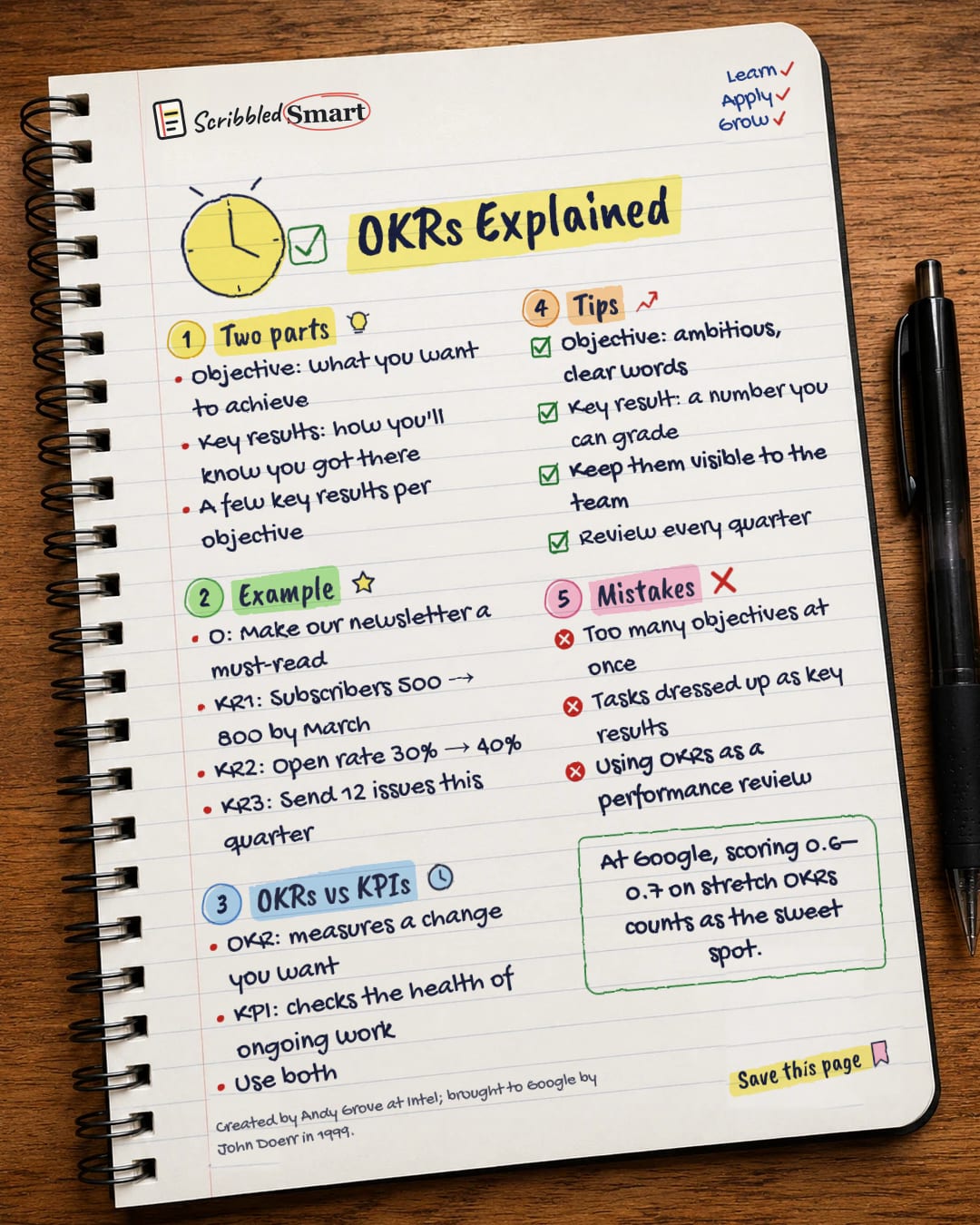
Created by Andy Grove at Intel; brought to Google by John Doerr in 1999.
What's on the page
The note as text, so you can read it, copy it or use a screen reader.
Two parts
- Objective: what you want to achieve
- Key results: how you'll know you got there
- A few key results per objective
Example
- O: Make our newsletter a must-read
- KR1: Subscribers 500 → 800 by March
- KR2: Open rate 30% → 40%
- KR3: Send 12 issues this quarter
OKRs vs KPIs
- OKR: measures a change you want
- KPI: checks the health of ongoing work
- Use both
Tips
- Objective: ambitious, clear words
- Key result: a number you can grade
- Keep them visible to the team
- Review every quarter
Mistakes
- Too many objectives at once
- Tasks dressed up as key results
- Using OKRs as a performance review
Sources
How we checked this
Every fact on this note comes from the 3 sources listed here, checked against official or peer-reviewed sources where possible. AI tools help with drafting; a person checks every fact against the sources. How we research
Spotted a mistake? Tell us and we'll fix it and log it on the corrections page.


