
Productivity One-page note
Plan-Do-Study-Act (PDSA) Cycle
Want to improve something? Don't change everything at once. Test one small change, learn, and go round again. Save this page.
Good to know
Based on NHS England quality improvement guidance. Example is made up.
What's on the page
The note as text, so you can read it, copy it or use a screen reader.
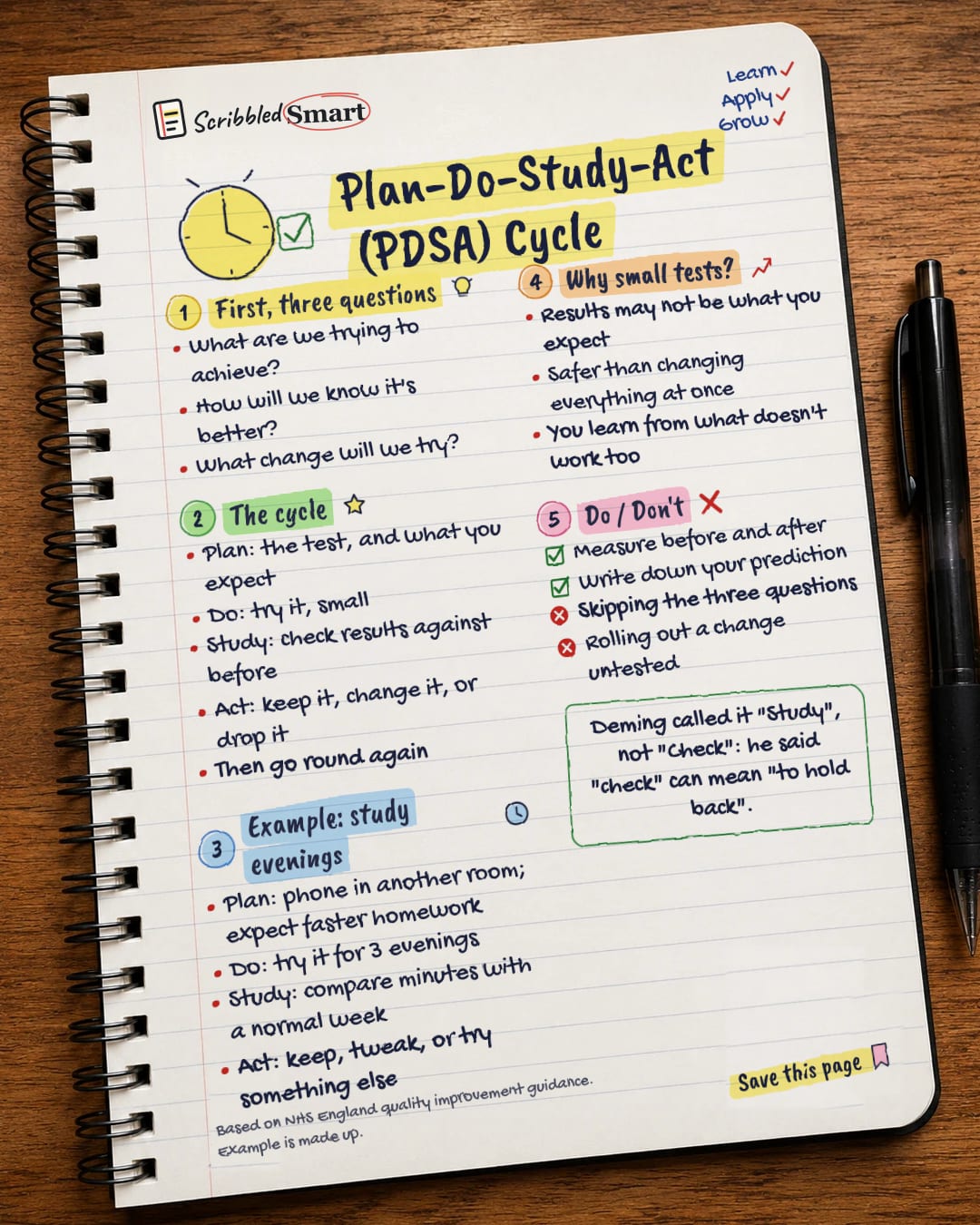
First, three questions
- What are we trying to achieve?
- How will we know it's better?
- What change will we try?
The cycle
- Plan: the test, and what you expect
- Do: try it, small
- Study: check results against before
- Act: keep it, change it, or drop it
- Then go round again
Example: study evenings
- Plan: phone in another room; expect faster homework
- Do: try it for 3 evenings
- Study: compare minutes with a normal week
- Act: keep, tweak, or try something else
Why small tests?
- Results may not be what you expect
- Safer than changing everything at once
- You learn from what doesn't work too
Do / Don't
- Measure before and after
- Write down your prediction
- Skipping the three questions
- Rolling out a change untested
Sources
How we checked this
Every fact on this note comes from the 2 sources listed here, checked against official or peer-reviewed sources where possible. AI tools help with drafting; a person checks every fact against the sources. How we research
Spotted a mistake? Tell us and we'll fix it and log it on the corrections page.


