
Psychology One-page note
Coercive Control: The Signs (UK)
Coercive control is a pattern, not a one-off, and in the UK it's a crime. Here are the signs to take seriously. Save this page.
Good to know
🇬🇧 Scotland: 0800 027 1234. Northern Ireland: 0808 802 1414. Checked Nov 2026. General info, not legal advice.
What's on the page
The note as text, so you can read it, copy it or use a screen reader.
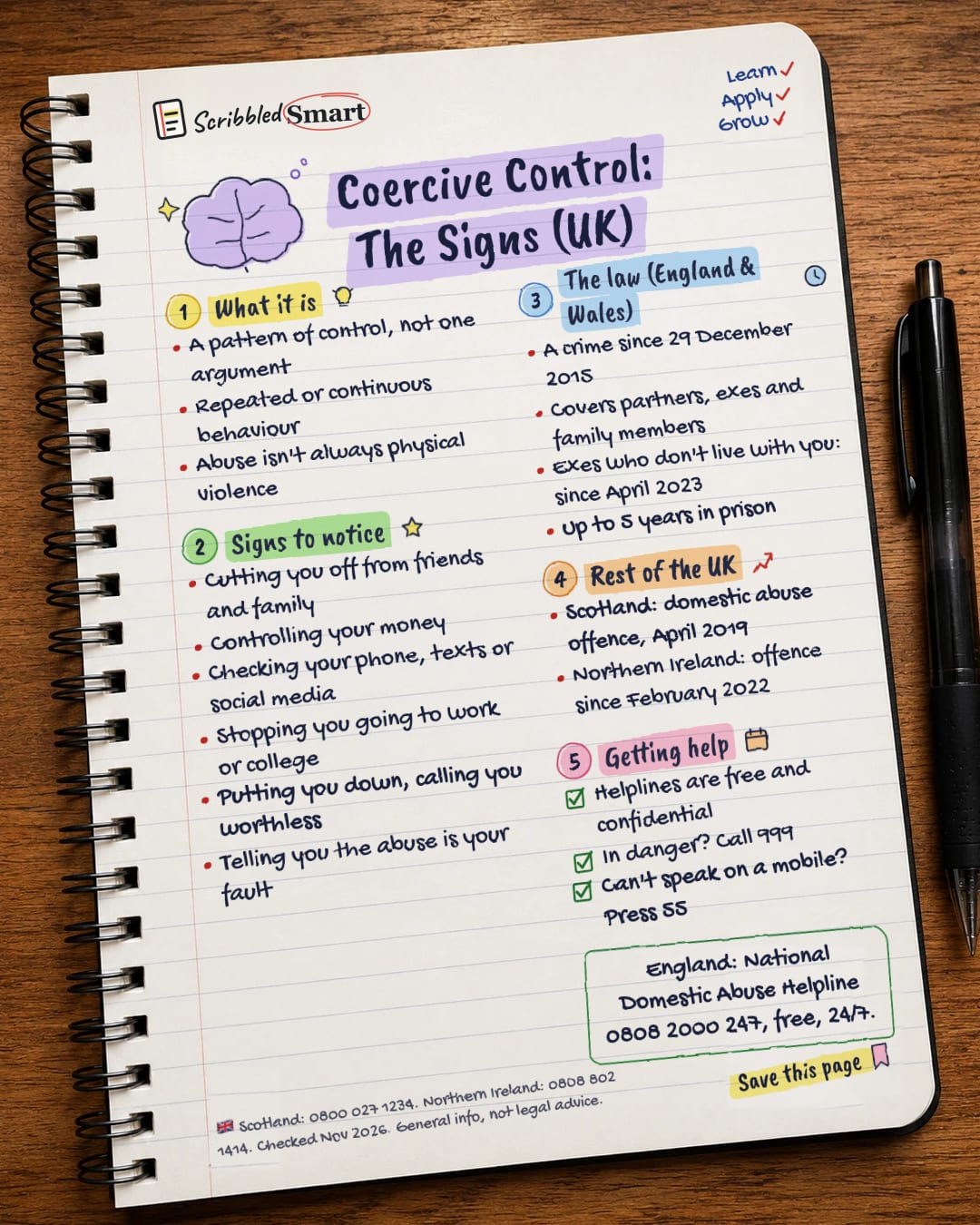
What it is
- A pattern of control, not one argument
- Repeated or continuous behaviour
- Abuse isn't always physical violence
Signs to notice
- Cutting you off from friends and family
- Controlling your money
- Checking your phone, texts or social media
- Stopping you going to work or college
- Putting you down, calling you worthless
- Telling you the abuse is your fault
The law (England & Wales)
- A crime since 29 December 2015
- Covers partners, exes and family members
- Exes who don't live with you: since April 2023
- Up to 5 years in prison
Rest of the UK
- Scotland: domestic abuse offence, April 2019
- Northern Ireland: offence since February 2022
Getting help
- Helplines are free and confidential
- In danger? Call 999
- Can't speak on a mobile? Press 55
Sources
- legislation.gov.uk: Serious Crime Act 2015, section 76
- GOV.UK: Domestic abuse: how to get help
- Home Office: Controlling or coercive behaviour: statutory guidance framework (2023)
- legislation.gov.uk: Domestic Abuse Act 2021, section 68
- legislation.gov.uk: Domestic Abuse (Scotland) Act 2018 commencement (SSI 2018/387)
- Scottish Government: Domestic Abuse Act in force
- Department of Justice NI: New domestic abuse offence comes into force
- PSNI: Domestic Abuse and Civil Proceedings Act
How we checked this
Every fact on this note comes from the 8 sources listed here, checked against official or peer-reviewed sources where possible. AI tools help with drafting; a person checks every fact against the sources. How we research
Spotted a mistake? Tell us and we'll fix it and log it on the corrections page.


