
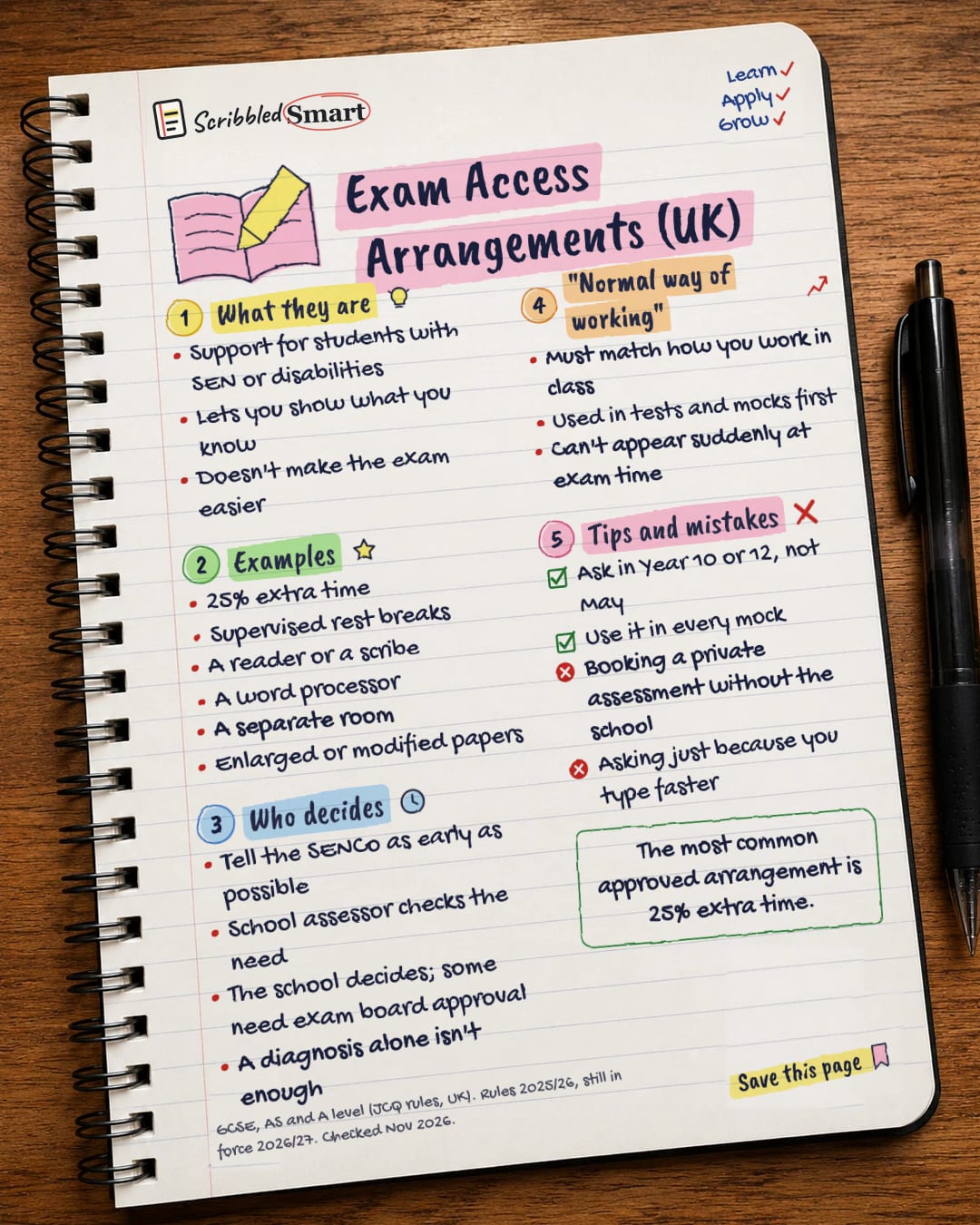
Study One-page note UK only
Exam Access Arrangements (UK)
Extra time, rest breaks, a reader: who can get exam access arrangements, and how to ask. Save this page.
Good to know
GCSE, AS and A level (JCQ rules, UK). Rules 2025/26, still in force 2026/27. Checked Nov 2026.
What's on the page
The note as text, so you can read it, copy it or use a screen reader.
What they are
- Support for students with SEN or disabilities
- Lets you show what you know
- Doesn't make the exam easier
Examples
- 25% extra time
- Supervised rest breaks
- A reader or a scribe
- A word processor
- A separate room
- Enlarged or modified papers
Who decides
- Tell the SENCo as early as possible
- School assessor checks the need
- The school decides; some need exam board approval
- A diagnosis alone isn't enough
"Normal way of working"
- Must match how you work in class
- Used in tests and mocks first
- Can't appear suddenly at exam time
Tips and mistakes
- Ask in Year 10 or 12, not May
- Use it in every mock
- Booking a private assessment without the school
- Asking just because you type faster
Sources
- JCQ: Guidance for parents, carers and students about access arrangements (2025/26 PDF)
- JCQ: Adjustments for candidates with disabilities and learning difficulties (AARA)
- JCQ: Access arrangements and special consideration (documents page)
- Ofqual: Ofqual issues improved access arrangements data (27 Nov 2025)
- Ofqual: Regulatory report: Access arrangements, including 25% extra time
How we checked this
Every fact on this note comes from the 5 sources listed here, checked against official or peer-reviewed sources where possible. AI tools help with drafting; a person checks every fact against the sources. How we research
Spotted a mistake? Tell us and we'll fix it and log it on the corrections page.


