
Study One-page note
How to Make Flashcards That Actually Work
Most people use flashcards the wrong way. Here's how to make them stick. Save this page.
What's on the page
The note as text, so you can read it, copy it or use a screen reader.
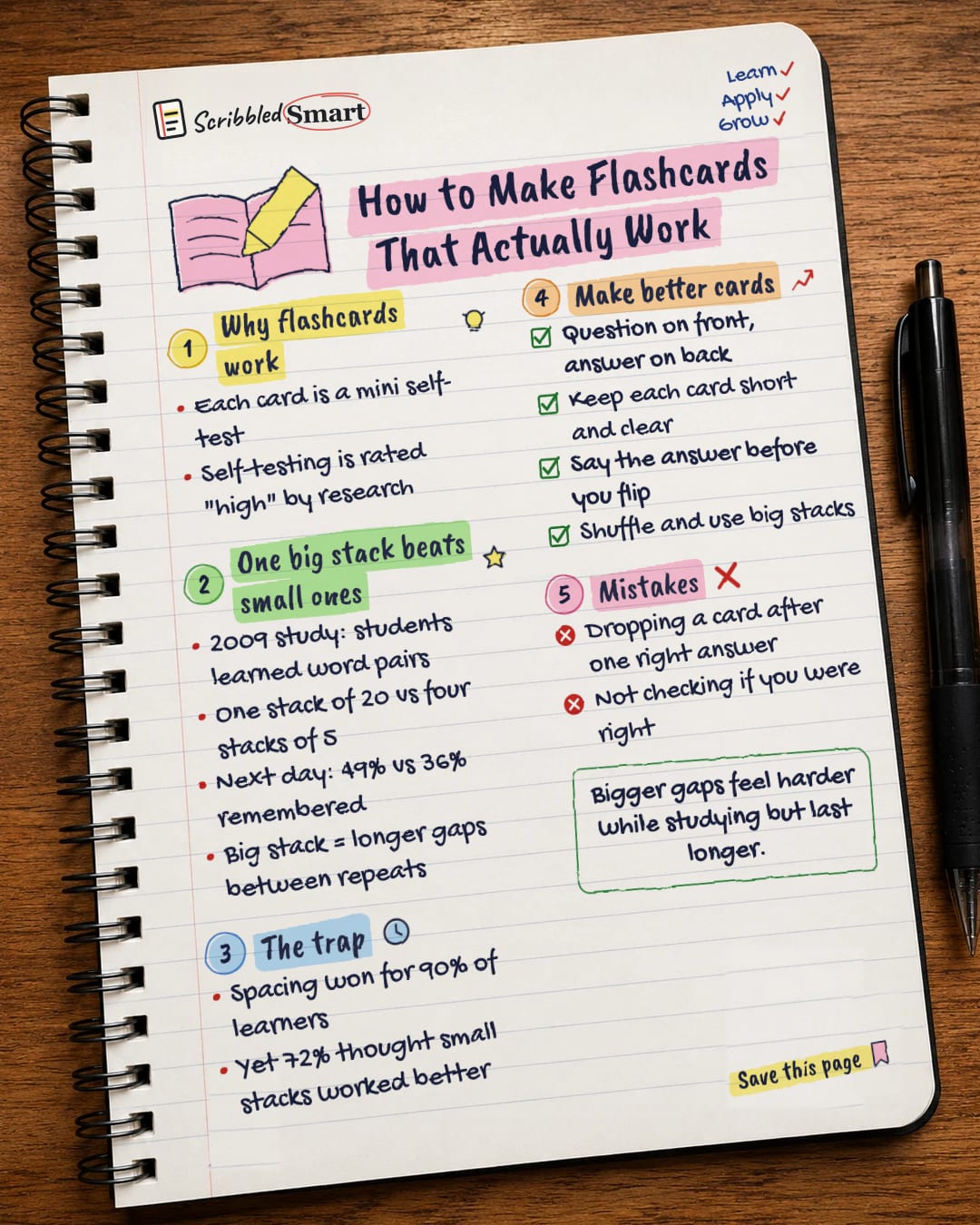
Why flashcards work
- Each card is a mini self-test
- Self-testing is rated "high" by research
One big stack beats small ones
- 2009 study: students learned word pairs
- One stack of 20 vs four stacks of 5
- Next day: 49% vs 36% remembered
- Big stack = longer gaps between repeats
The trap
- Spacing won for 90% of learners
- Yet 72% thought small stacks worked better
Make better cards
- Question on front, answer on back
- Keep each card short and clear
- Say the answer before you flip
- Shuffle and use big stacks
Mistakes
- Dropping a card after one right answer
- Not checking if you were right
Sources
How we checked this
Every fact on this note comes from the 4 sources listed here, checked against official or peer-reviewed sources where possible. AI tools help with drafting; a person checks every fact against the sources. How we research
Spotted a mistake? Tell us and we'll fix it and log it on the corrections page.


