
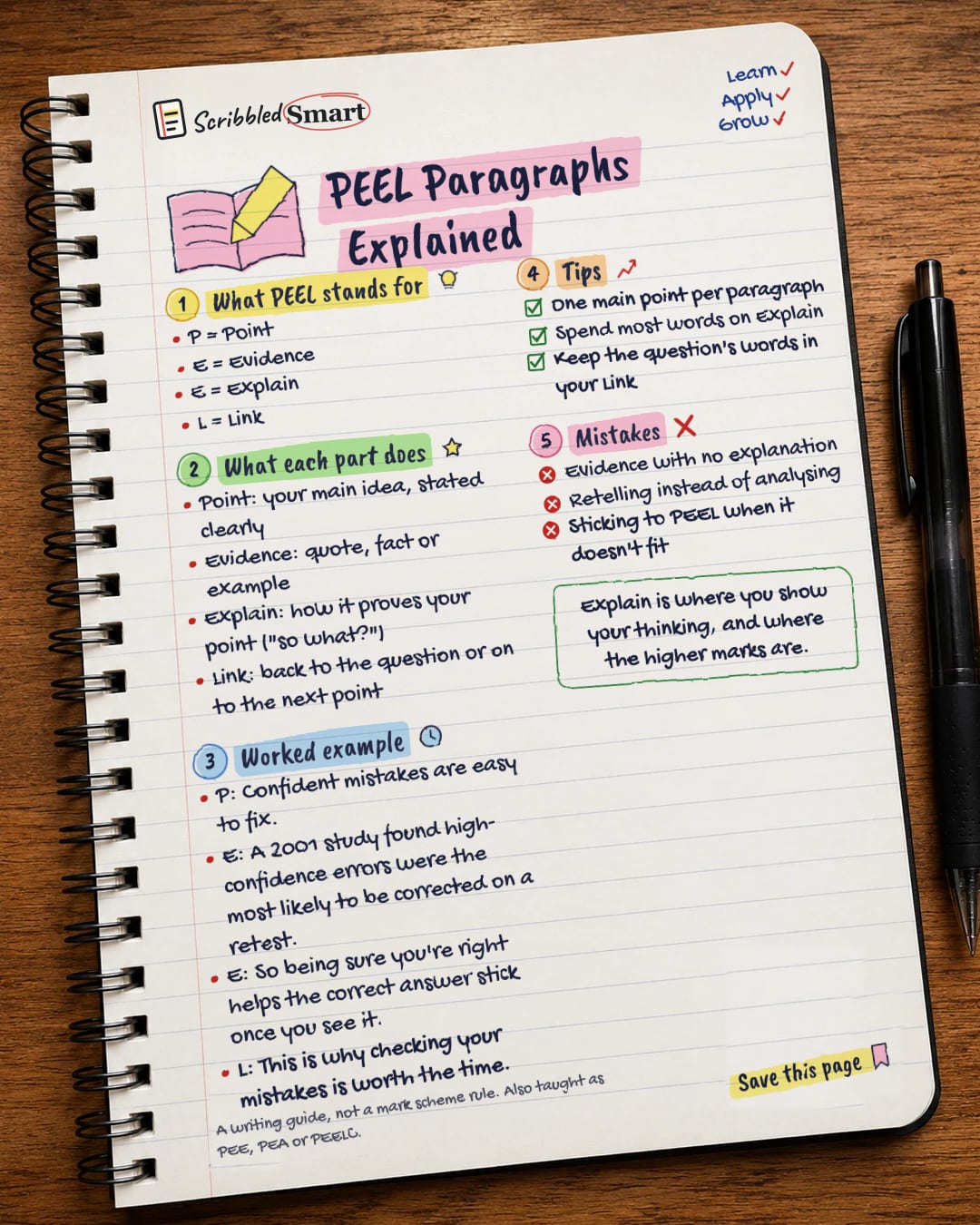
Study One-page note
PEEL Paragraphs Explained
Point, Evidence, Explain, Link: the paragraph structure that makes your argument clear. Save this page.
Good to know
A writing guide, not a mark scheme rule. Also taught as PEE, PEA or PEELC.
What's on the page
The note as text, so you can read it, copy it or use a screen reader.
What PEEL stands for
- P = Point
- E = Evidence
- E = Explain
- L = Link
What each part does
- Point: your main idea, stated clearly
- Evidence: quote, fact or example
- Explain: how it proves your point ("so what?")
- Link: back to the question or on to the next point
Worked example
- P: Confident mistakes are easy to fix.
- E: A 2001 study found high-confidence errors were the most likely to be corrected on a retest.
- E: So being sure you're right helps the correct answer stick once you see it.
- L: This is why checking your mistakes is worth the time.
Tips
- One main point per paragraph
- Spend most words on Explain
- Keep the question's words in your Link
Mistakes
- Evidence with no explanation
- Retelling instead of analysing
- Sticking to PEEL when it doesn't fit
Sources
How we checked this
Every fact on this note comes from the 5 sources listed here, checked against official or peer-reviewed sources where possible. AI tools help with drafting; a person checks every fact against the sources. How we research
Spotted a mistake? Tell us and we'll fix it and log it on the corrections page.


