
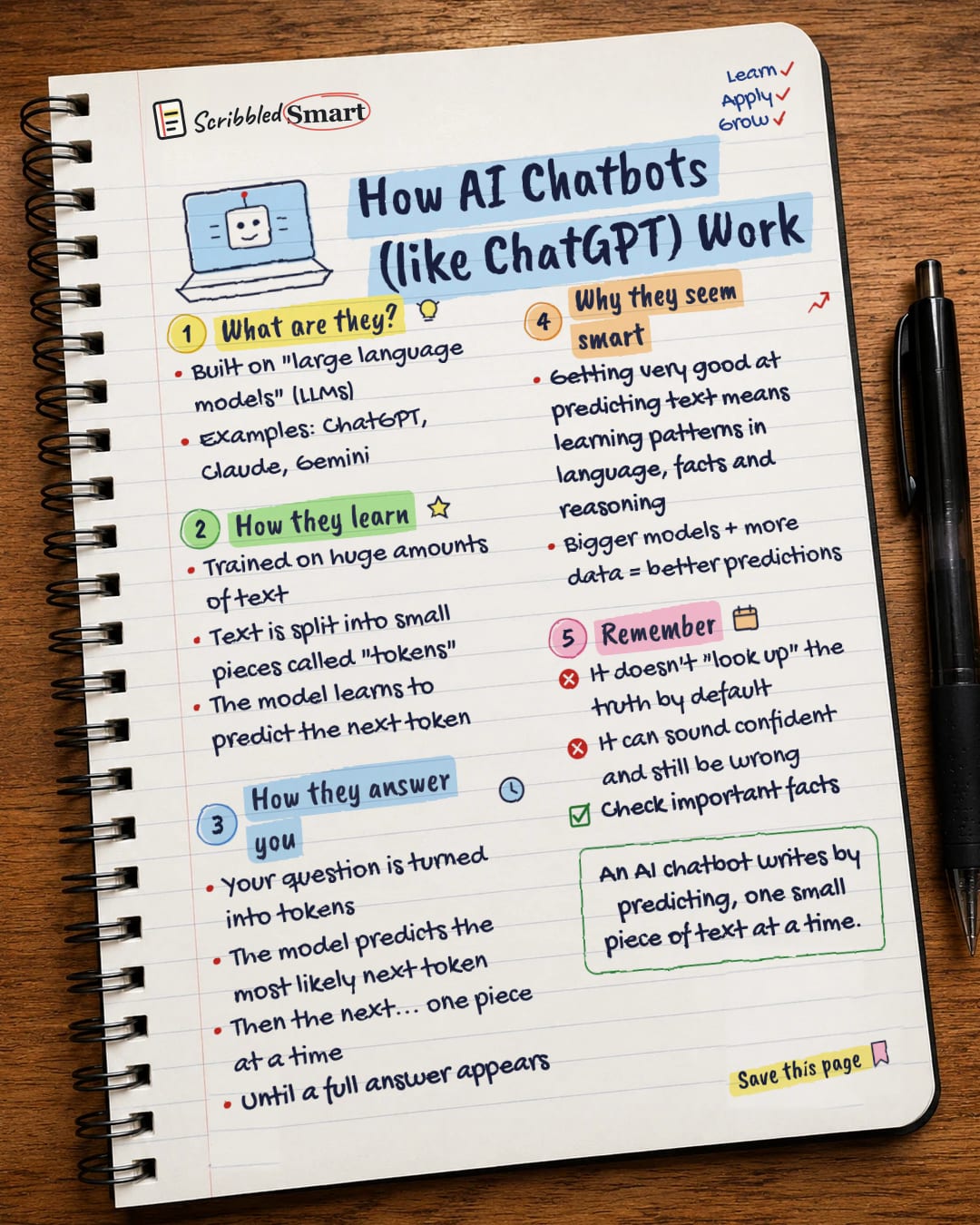
AI & Tech One-page note
How AI Chatbots (like ChatGPT) Work
ChatGPT isn't magic. It's predicting the next word, very, very well. Here's how. Save this page.
What's on the page
The note as text, so you can read it, copy it or use a screen reader.
What are they?
- Built on "large language models" (LLMs)
- Examples: ChatGPT, Claude, Gemini
How they learn
- Trained on huge amounts of text
- Text is split into small pieces called "tokens"
- The model learns to predict the next token
How they answer you
- Your question is turned into tokens
- The model predicts the most likely next token
- Then the next... one piece at a time
- Until a full answer appears
Why they seem smart
- Getting very good at predicting text means learning patterns in language, facts and reasoning
- Bigger models + more data = better predictions
Remember
- It doesn't "look up" the truth by default
- It can sound confident and still be wrong
- Check important facts
Sources
How we checked this
Every fact on this note comes from the 4 sources listed here, checked against official or peer-reviewed sources where possible. AI tools help with drafting; a person checks every fact against the sources. How we research
Spotted a mistake? Tell us and we'll fix it and log it on the corrections page.


