
AI & Tech One-page note
Why AI Makes Things Up ("Hallucinations")
AI can make things up and sound 100% sure. Here's why, from the people who build it. Save this page.
What's on the page
The note as text, so you can read it, copy it or use a screen reader.
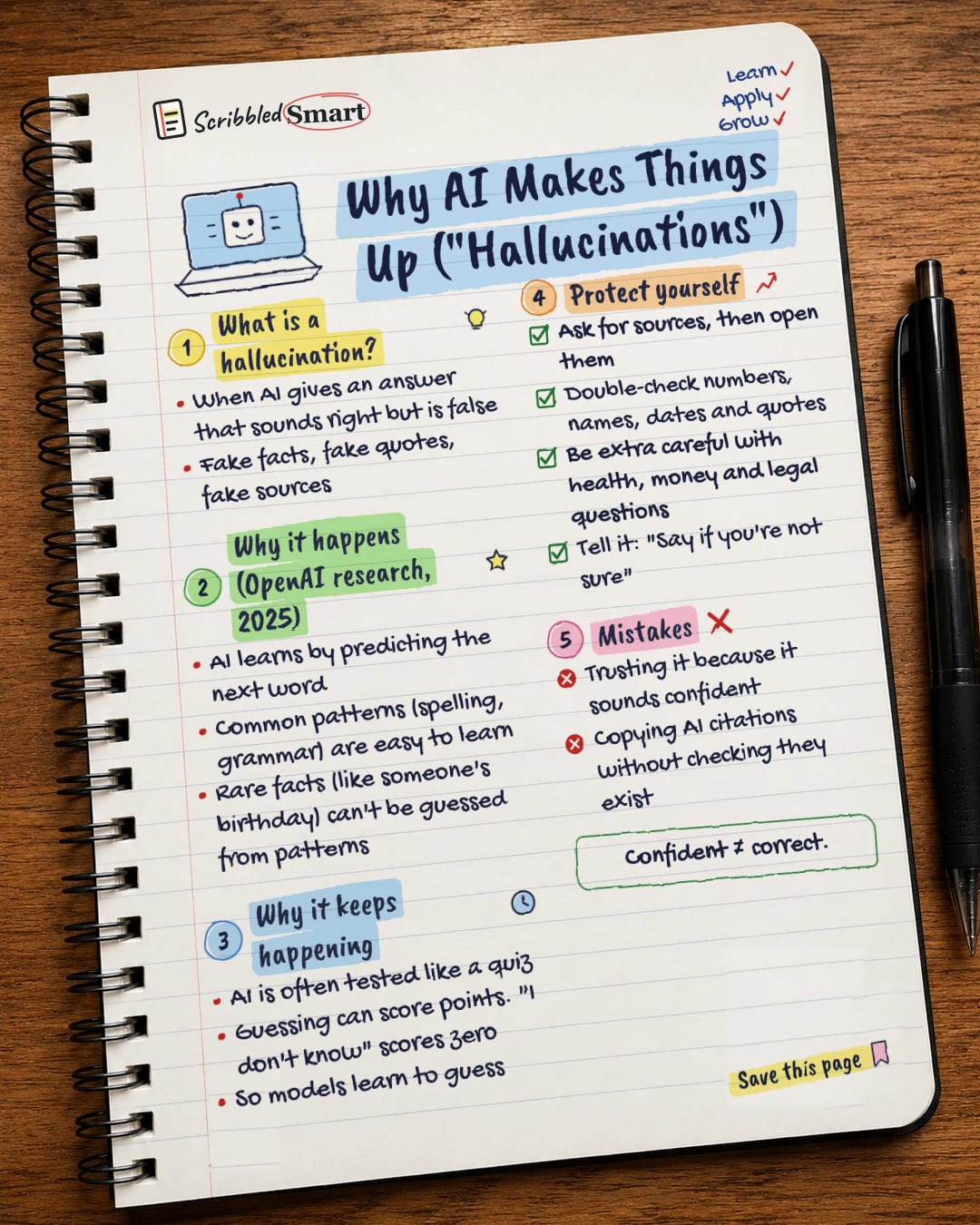
What is a hallucination?
- When AI gives an answer that sounds right but is false
- Fake facts, fake quotes, fake sources
Why it happens (OpenAI research, 2025)
- AI learns by predicting the next word
- Common patterns (spelling, grammar) are easy to learn
- Rare facts (like someone's birthday) can't be guessed from patterns
Why it keeps happening
- AI is often tested like a quiz
- Guessing can score points. "I don't know" scores zero
- So models learn to guess
Protect yourself
- Ask for sources, then open them
- Double-check numbers, names, dates and quotes
- Be extra careful with health, money and legal questions
- Tell it: "Say if you're not sure"
Mistakes
- Trusting it because it sounds confident
- Copying AI citations without checking they exist
Sources
How we checked this
Every fact on this note comes from the 3 sources listed here, checked against official or peer-reviewed sources where possible. AI tools help with drafting; a person checks every fact against the sources. How we research
Spotted a mistake? Tell us and we'll fix it and log it on the corrections page.


