
AI & Tech One-page note UK only
Is Public Wi-Fi Safe?
Café Wi-Fi, hotel Wi-Fi, airport Wi-Fi: what's actually risky, and when to switch to mobile data instead. Save this page.
Good to know
Based on UK (NCSC, Get Safe Online) and US (FTC) guidance. Checked Nov 2026.
What's on the page
The note as text, so you can read it, copy it or use a screen reader.
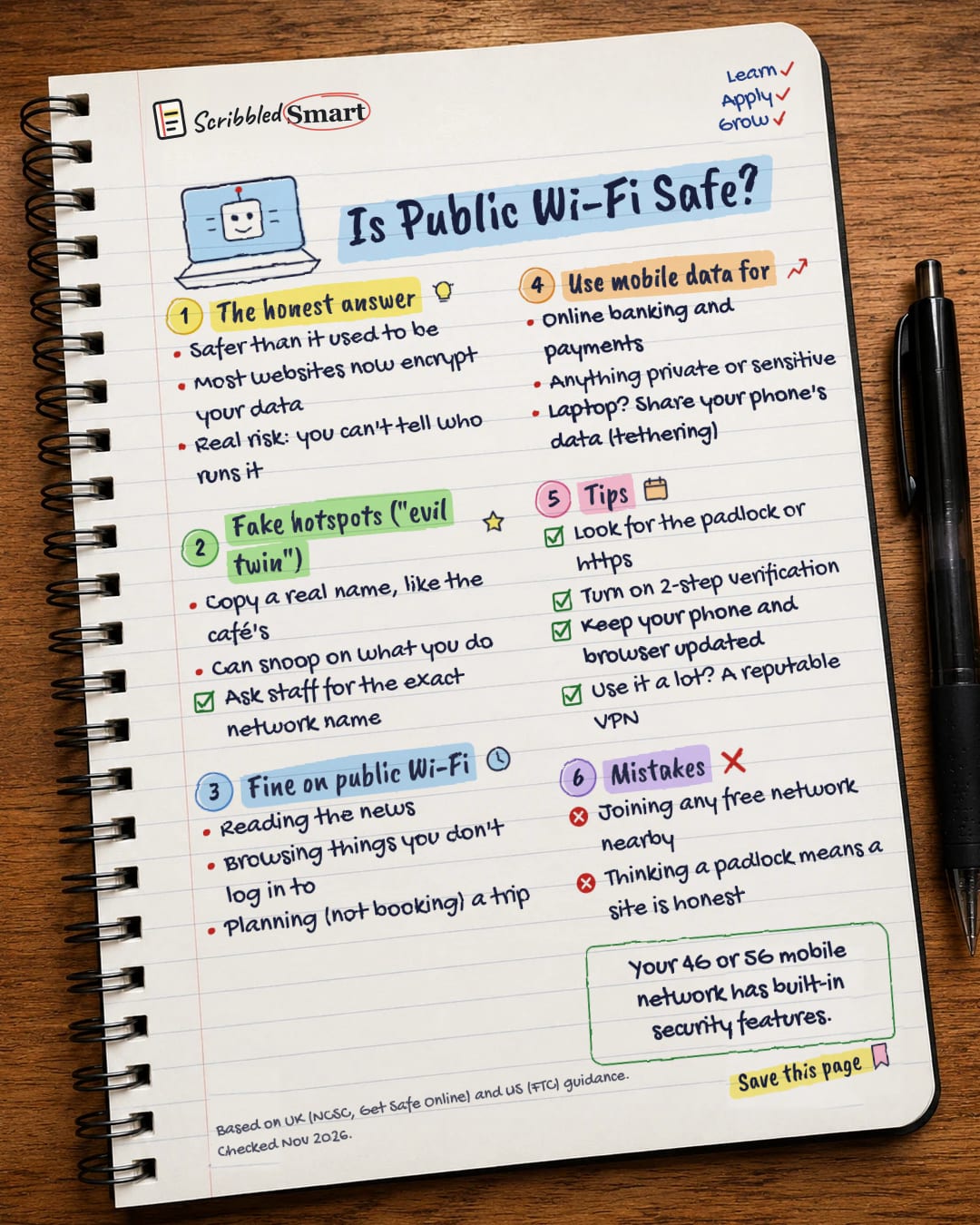
The honest answer
- Safer than it used to be
- Most websites now encrypt your data
- Real risk: you can't tell who runs it
Fake hotspots ("evil twin")
- Copy a real name, like the café's
- Can snoop on what you do
- Ask staff for the exact network name
Fine on public Wi-Fi
- Reading the news
- Browsing things you don't log in to
- Planning (not booking) a trip
Use mobile data for
- Online banking and payments
- Anything private or sensitive
- Laptop? Share your phone's data (tethering)
Tips
- Look for the padlock or https
- Turn on 2-step verification
- Keep your phone and browser updated
- Use it a lot? A reputable VPN
Mistakes
- Joining any free network nearby
- Thinking a padlock means a site is honest
Sources
- FTC Consumer Advice: Are public Wi-Fi networks safe? What you need to know
- NI Cyber Security Centre: Step 3, Keeping your mobile devices safe
- Canadian Centre for Cyber Security, Get Cyber Safe: Public Wi-Fi
- Government of Jersey: Public Wi-Fi
- Get Safe Online: Going online when you're out and about
- Get Safe Online: Warning on potential dangers of public Wi-Fi
- NCSC: 'Krack' Wi-Fi guidance
How we checked this
Every fact on this note comes from the 7 sources listed here, checked against official or peer-reviewed sources where possible. AI tools help with drafting; a person checks every fact against the sources. How we research
Spotted a mistake? Tell us and we'll fix it and log it on the corrections page.


