
AI & Tech One-page note
Quantum Computing Simply Explained
A normal bit is 0 or 1. A qubit can be both at once, until you look. Quantum computing explained simply, including what it means for your passwords. Save this page.
Good to know
Simplified. Sources: NIST, NCSC. Checked Nov 2026.
What's on the page
The note as text, so you can read it, copy it or use a screen reader.
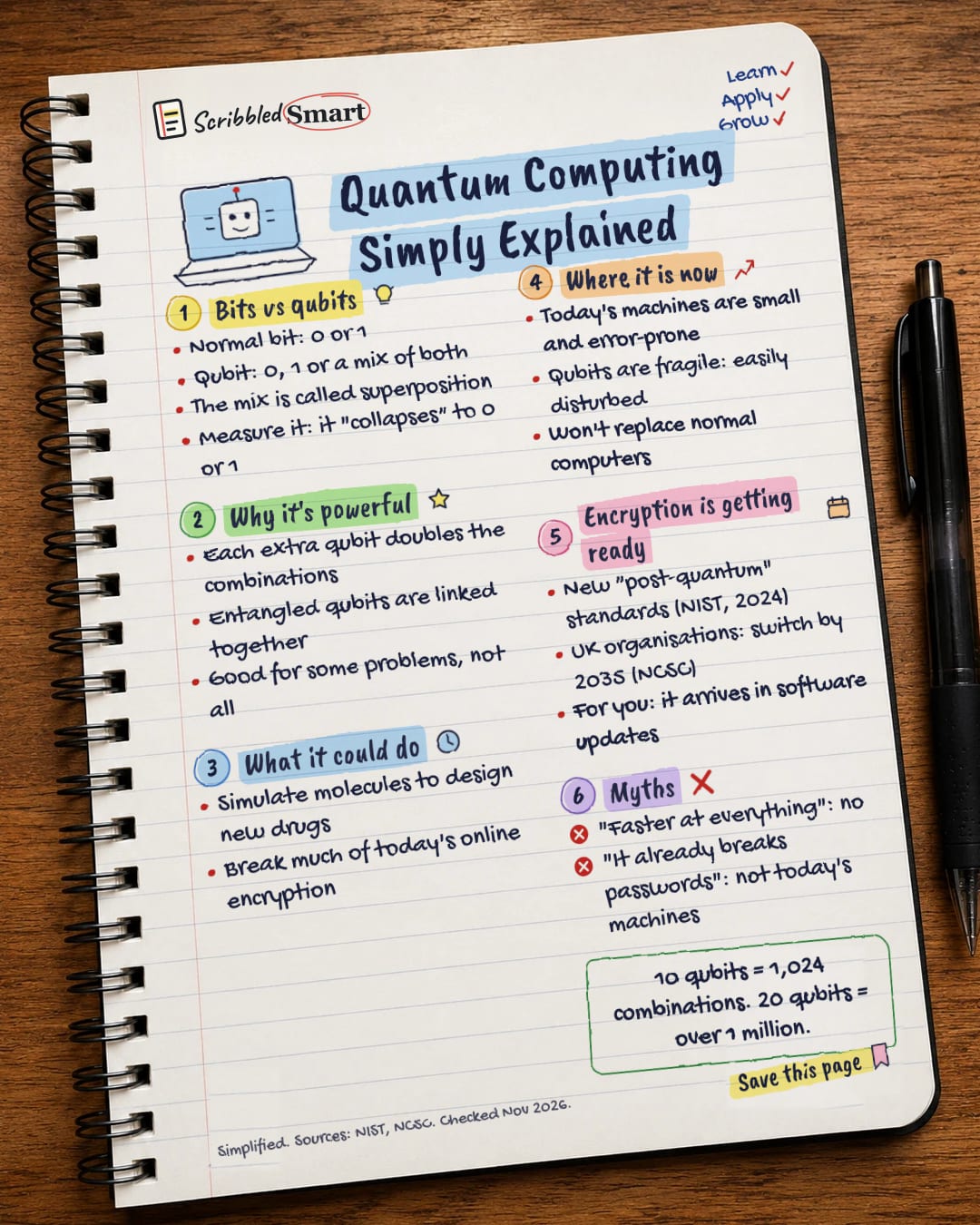
Bits vs qubits
- Normal bit: 0 or 1
- Qubit: 0, 1 or a mix of both
- The mix is called superposition
- Measure it: it "collapses" to 0 or 1
Why it's powerful
- Each extra qubit doubles the combinations
- Entangled qubits are linked together
- Good for some problems, not all
What it could do
- Simulate molecules to design new drugs
- Break much of today's online encryption
Where it is now
- Today's machines are small and error-prone
- Qubits are fragile: easily disturbed
- Won't replace normal computers
Encryption is getting ready
- New "post-quantum" standards (NIST, 2024)
- UK organisations: switch by 2035 (NCSC)
- For you: it arrives in software updates
Myths
- "Faster at everything": no
- "It already breaks passwords": not today's machines
Sources
- NIST: Quantum Computing Explained
- NIST: NIST Releases First 3 Finalized Post-Quantum Encryption Standards (13 Aug 2024)
- NCSC: Timelines for migration to post-quantum cryptography
- NCSC: Next steps in preparing for post-quantum cryptography
- UKRI: Science minister opens National Quantum Computing Centre
How we checked this
Every fact on this note comes from the 5 sources listed here, checked against official or peer-reviewed sources where possible. AI tools help with drafting; a person checks every fact against the sources. How we research
Spotted a mistake? Tell us and we'll fix it and log it on the corrections page.


