
AI & Tech One-page note UK only
How to Spot a Deepfake
Deepfakes are getting harder to spot by eye. Here are the clues that still help, and the check that matters most. Save this page.
Good to know
UK figures: Ofcom survey, June 2024.
What's on the page
The note as text, so you can read it, copy it or use a screen reader.
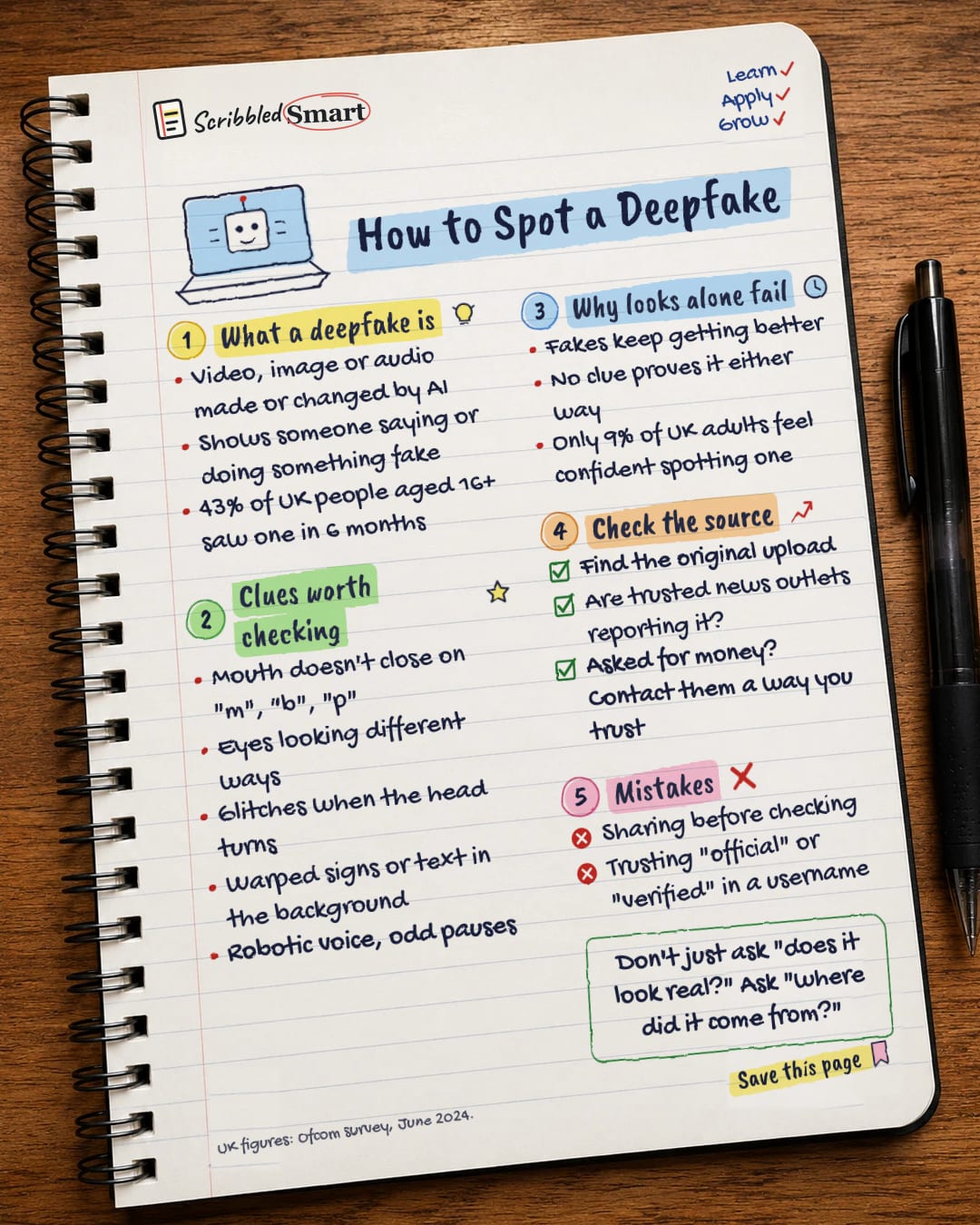
What a deepfake is
- Video, image or audio made or changed by AI
- Shows someone saying or doing something fake
- 43% of UK people aged 16+ saw one in 6 months
Clues worth checking
- Mouth doesn't close on "m", "b", "p"
- Eyes looking different ways
- Glitches when the head turns
- Warped signs or text in the background
- Robotic voice, odd pauses
Why looks alone fail
- Fakes keep getting better
- No clue proves it either way
- Only 9% of UK adults feel confident spotting one
Check the source
- Find the original upload
- Are trusted news outlets reporting it?
- Asked for money? Contact them a way you trust
Mistakes
- Sharing before checking
- Trusting "official" or "verified" in a username
Sources
- Ofcom: Deepfake Defences: Mitigating the Harms of Deceptive Deepfakes
- Ofcom: Deepfakes that demean, defraud, disinform
- Ofcom: Deepfake Defences 2 – The Attribution Toolkit
- UK Safer Internet Centre: Ofcom releases research into AI generated content
- Advanced Television: Ofcom advises how to identify deepfakes (11 Jul 2025)
- Full Fact: How to spot deepfake videos and AI audio
- Young Scot: How to spot deepfakes and misinformation
- NCSC: Phishing scams, how to spot them
How we checked this
Every fact on this note comes from the 8 sources listed here, checked against official or peer-reviewed sources where possible. AI tools help with drafting; a person checks every fact against the sources. How we research
Spotted a mistake? Tell us and we'll fix it and log it on the corrections page.


