
General knowledge One-page note
How Lightning and Thunder Work
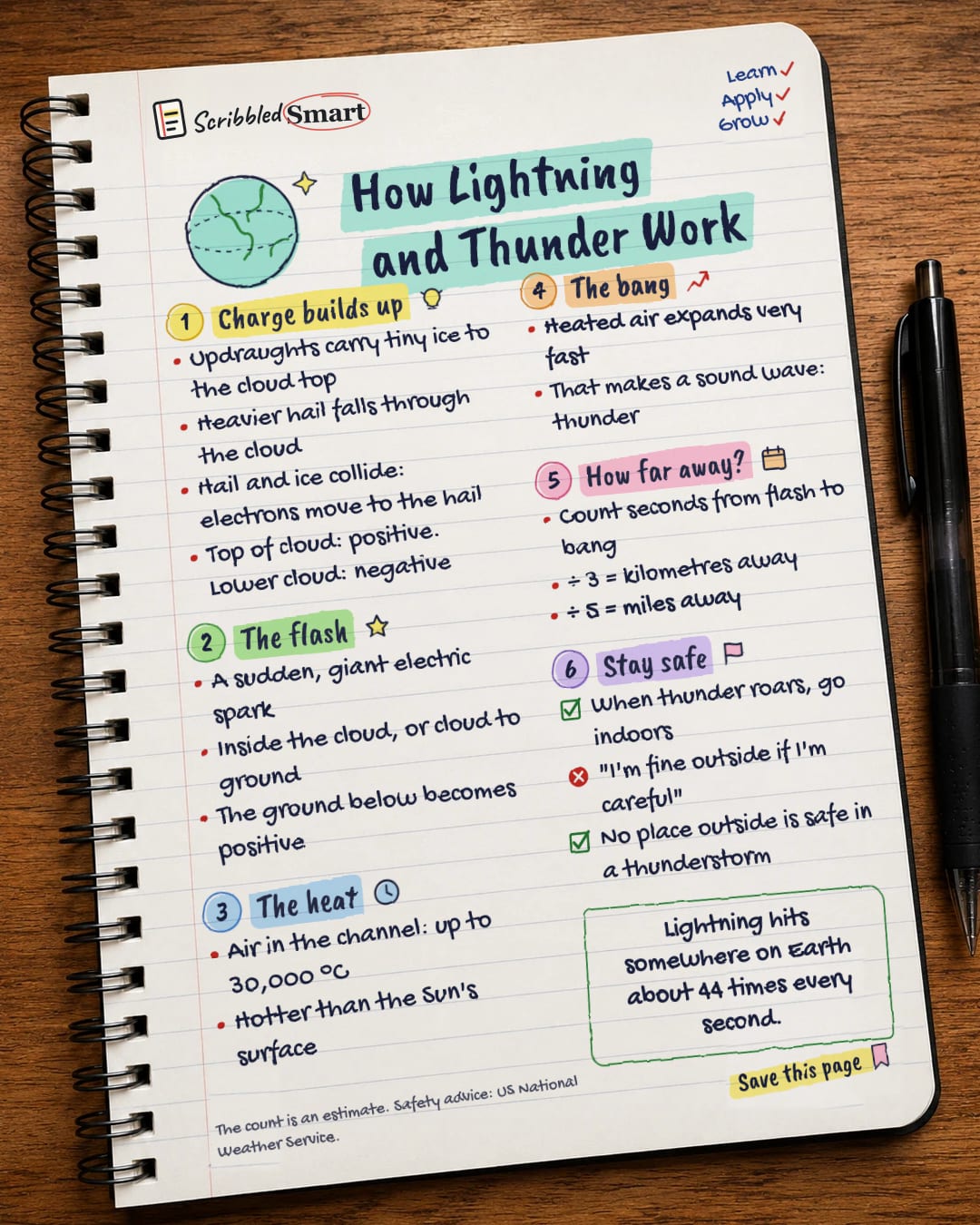
Count the seconds between the flash and the bang, and you know how far away the storm is. Save this page.
Good to know
The count is an estimate. Safety advice: US National Weather Service.
What's on the page
The note as text, so you can read it, copy it or use a screen reader.
Charge builds up
- Updraughts carry tiny ice to the cloud top
- Heavier hail falls through the cloud
- Hail and ice collide: electrons move to the hail
- Top of cloud: positive. Lower cloud: negative
The flash
- A sudden, giant electric spark
- Inside the cloud, or cloud to ground
- The ground below becomes positive
The heat
- Air in the channel: up to 30,000 °C
- Hotter than the Sun's surface
The bang
- Heated air expands very fast
- That makes a sound wave: thunder
How far away?
- Count seconds from flash to bang
- ÷ 3 = kilometres away
- ÷ 5 = miles away
Stay safe
- When thunder roars, go indoors
- "I'm fine outside if I'm careful"
- No place outside is safe in a thunderstorm
Sources
- Met Office: Thunder and lightning
- Met Office blog: What is lightning and how does the Met Office monitor it? (12 May 2025)
- Met Office: Weather words (search summary)
- NOAA National Weather Service: Lightning science overview
- NOAA National Weather Service: Lightning safety
- NOAA National Weather Service: Lightning (US strike count)
How we checked this
Every fact on this note comes from the 6 sources listed here, checked against official or peer-reviewed sources where possible. AI tools help with drafting; a person checks every fact against the sources. How we research
Spotted a mistake? Tell us and we'll fix it and log it on the corrections page.


