
General knowledge One-page note
How Volcanoes Work
Why do some volcanoes ooze and others explode? Magma, plates and gas, explained in one page. Save this page.
What's on the page
The note as text, so you can read it, copy it or use a screen reader.
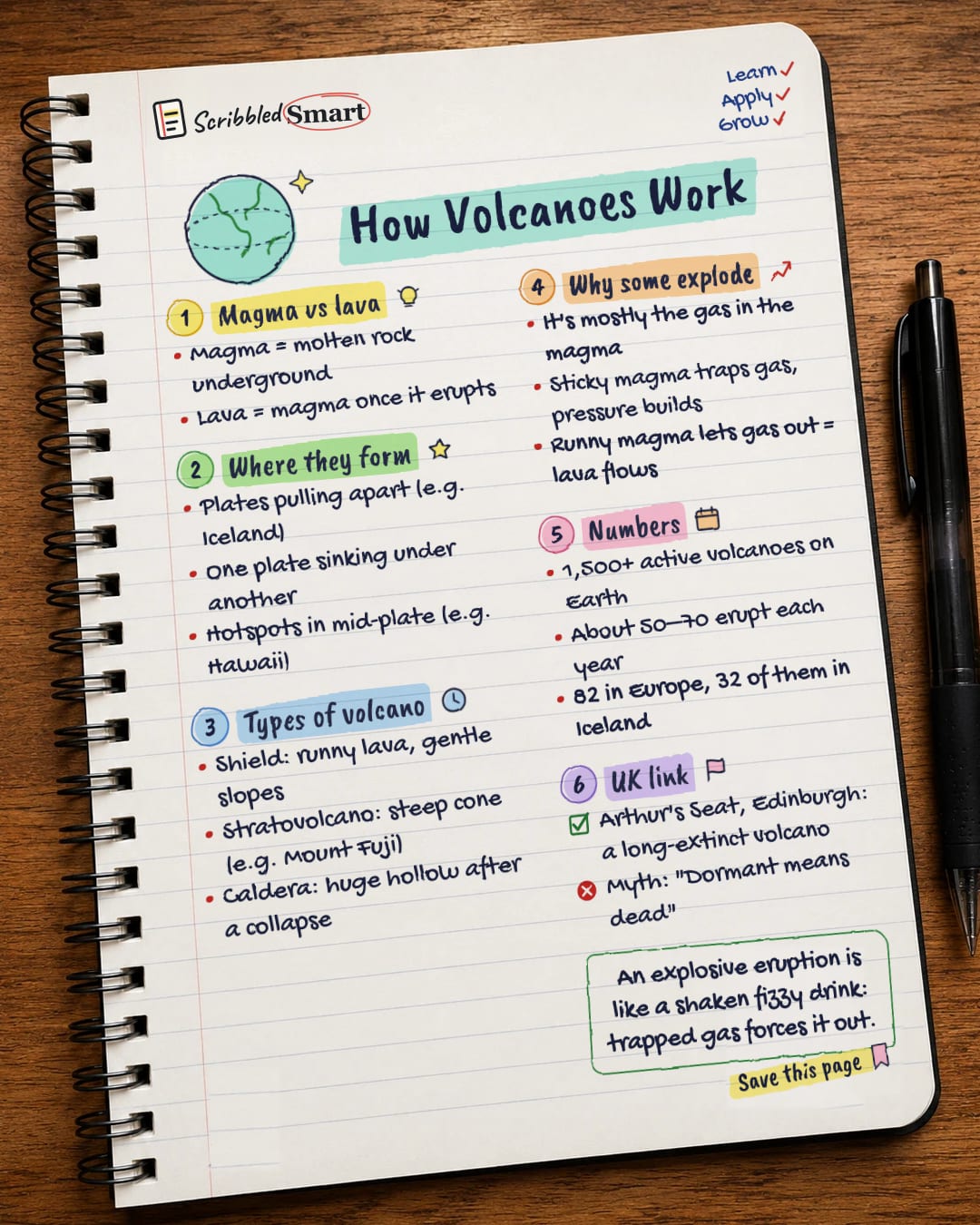
Magma vs lava
- Magma = molten rock underground
- Lava = magma once it erupts
Where they form
- Plates pulling apart (e.g. Iceland)
- One plate sinking under another
- Hotspots in mid-plate (e.g. Hawaii)
Types of volcano
- Shield: runny lava, gentle slopes
- Stratovolcano: steep cone (e.g. Mount Fuji)
- Caldera: huge hollow after a collapse
Why some explode
- It's mostly the gas in the magma
- Sticky magma traps gas, pressure builds
- Runny magma lets gas out = lava flows
Numbers
- 1,500+ active volcanoes on Earth
- About 50–70 erupt each year
- 82 in Europe, 32 of them in Iceland
UK link
- Arthur's Seat, Edinburgh: a long-extinct volcano
- Myth: "Dormant means dead"
Sources
How we checked this
Every fact on this note comes from the 5 sources listed here, checked against official or peer-reviewed sources where possible. AI tools help with drafting; a person checks every fact against the sources. How we research
Spotted a mistake? Tell us and we'll fix it and log it on the corrections page.


