
General knowledge One-page note UK only
How Tides Work
Why the sea comes in twice a day, and why spring tides have nothing to do with spring. Save this page.
Good to know
UK tides. Always check local tide times before you go out. Checked November 2026.
What's on the page
The note as text, so you can read it, copy it or use a screen reader.
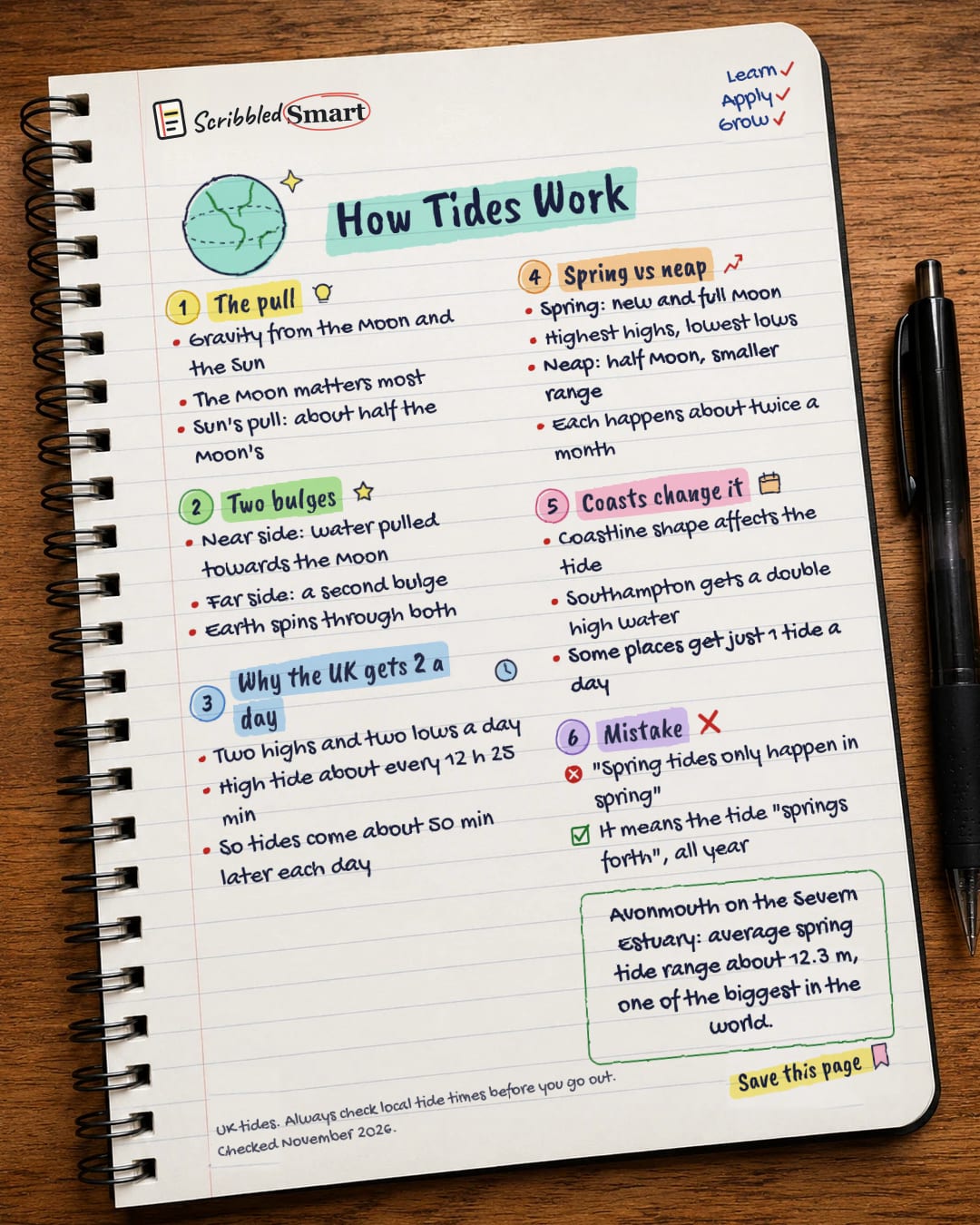
The pull
- Gravity from the Moon and the Sun
- The Moon matters most
- Sun's pull: about half the Moon's
Two bulges
- Near side: water pulled towards the Moon
- Far side: a second bulge
- Earth spins through both
Why the UK gets 2 a day
- Two highs and two lows a day
- High tide about every 12 h 25 min
- So tides come about 50 min later each day
Spring vs neap
- Spring: new and full Moon
- Highest highs, lowest lows
- Neap: half Moon, smaller range
- Each happens about twice a month
Coasts change it
- Coastline shape affects the tide
- Southampton gets a double high water
- Some places get just 1 tide a day
Mistake
- "Spring tides only happen in spring"
- It means the tide "springs forth", all year
Sources
- NOAA National Ocean Service: Tides tutorial, What causes tides?
- NOAA National Ocean Service: Gravity, inertia and the two bulges
- NOAA National Ocean Service: The lunar day
- NOAA National Ocean Service: Types and causes of tidal cycles
- NOAA National Ocean Service: What is a spring tide?
- National Oceanography Centre: Tides explained
- National Tidal and Sea Level Facility: Tides FAQ
- Met Office: Beach forecast and tide times explained
- Ramsar: Severn Estuary information sheet
How we checked this
Every fact on this note comes from the 9 sources listed here, checked against official or peer-reviewed sources where possible. AI tools help with drafting; a person checks every fact against the sources. How we research
Spotted a mistake? Tell us and we'll fix it and log it on the corrections page.


