
Language One-page note
How to Pronounce -ed Endings
Walked, played, wanted: why does -ed sound different every time? The three -ed sounds and the simple rule behind them. Save this page.
Good to know
Rules and examples from VOA Learning English and the Longman Dictionary.
What's on the page
The note as text, so you can read it, copy it or use a screen reader.
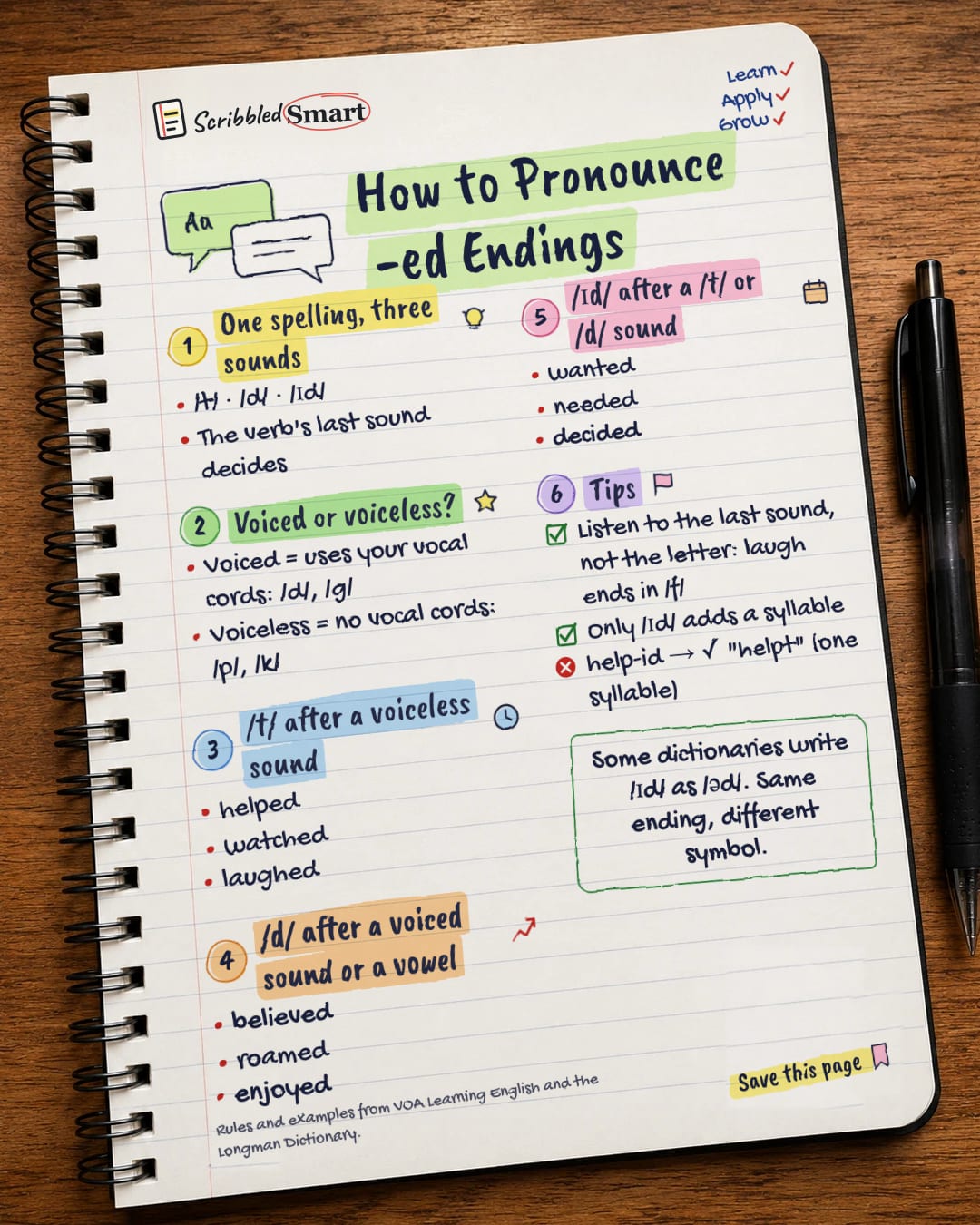
One spelling, three sounds
- /t/ · /d/ · /ɪd/
- The verb's last sound decides
Voiced or voiceless?
- Voiced = uses your vocal cords: /d/, /g/
- Voiceless = no vocal cords: /p/, /k/
/t/ after a voiceless sound
- helped
- watched
- laughed
/d/ after a voiced sound or a vowel
- believed
- roamed
- enjoyed
/ɪd/ after a /t/ or /d/ sound
- wanted
- needed
- decided
Tips
- Listen to the last sound, not the letter: laugh ends in /f/
- Only /ɪd/ adds a syllable
- help-id → ✓ "helpt" (one syllable)
Sources
How we checked this
Every fact on this note comes from the 3 sources listed here, checked against official or peer-reviewed sources where possible. AI tools help with drafting; a person checks every fact against the sources. How we research
Spotted a mistake? Tell us and we'll fix it and log it on the corrections page.


