
Language One-page note UK only
Quite, Rather, Fairly: What They Really Mean
Is "quite good" good? In the UK it means fairly good; in the US it means very good. Here's what quite, rather, fairly and pretty really mean. Save this page.
Good to know
Meanings from British Council LearnEnglish and the Longman Dictionary. UK and US usage differ.
What's on the page
The note as text, so you can read it, copy it or use a screen reader.
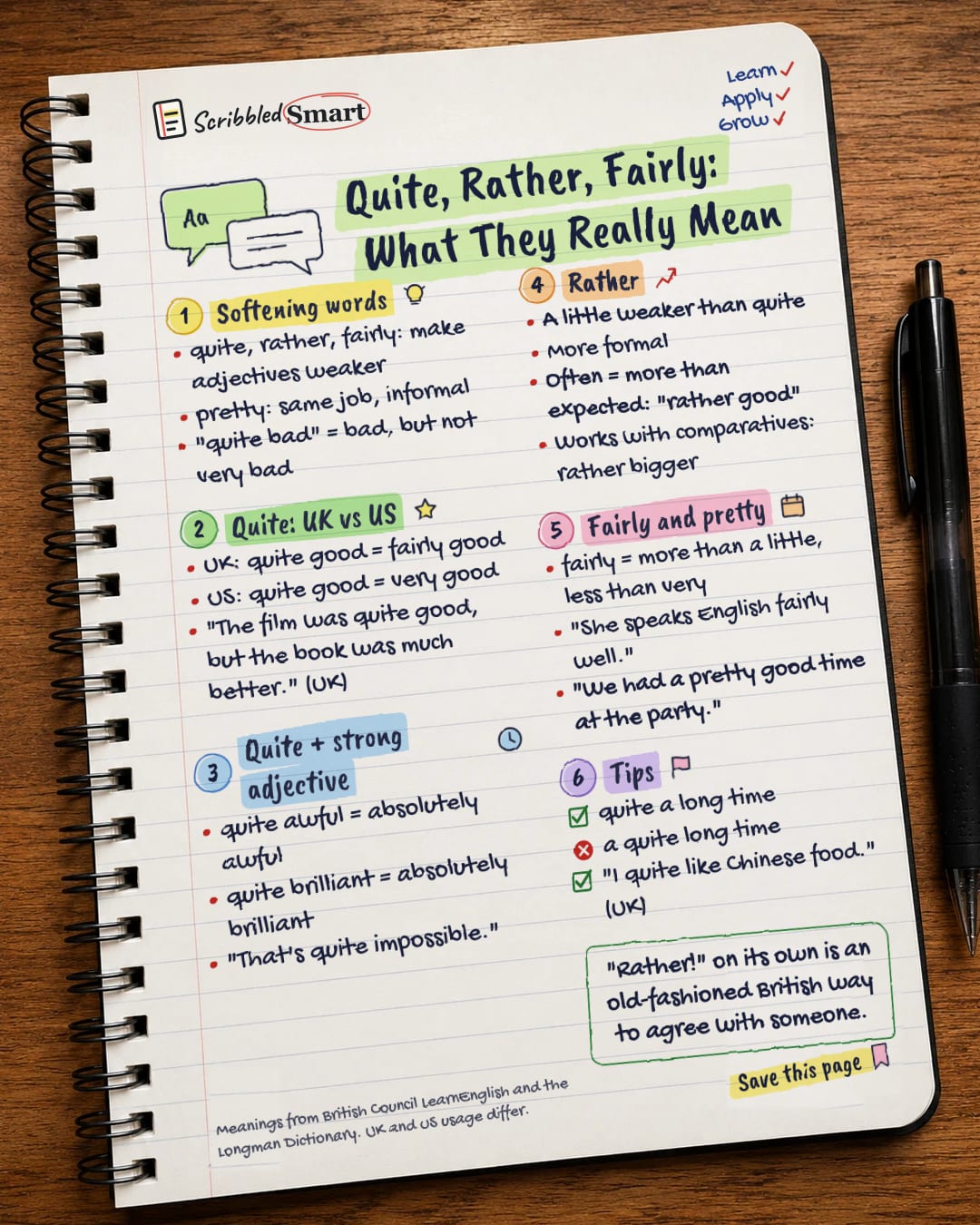
Softening words
- quite, rather, fairly: make adjectives weaker
- pretty: same job, informal
- "quite bad" = bad, but not very bad
Quite: UK vs US
- UK: quite good = fairly good
- US: quite good = very good
- "The film was quite good, but the book was much better." (UK)
Quite + strong adjective
- quite awful = absolutely awful
- quite brilliant = absolutely brilliant
- "That's quite impossible."
Rather
- A little weaker than quite
- More formal
- Often = more than expected: "rather good"
- Works with comparatives: rather bigger
Fairly and pretty
- fairly = more than a little, less than very
- "She speaks English fairly well."
- "We had a pretty good time at the party."
Tips
- quite a long time
- a quite long time
- "I quite like Chinese food." (UK)
Sources
How we checked this
Every fact on this note comes from the 3 sources listed here, checked against official or peer-reviewed sources where possible. AI tools help with drafting; a person checks every fact against the sources. How we research
Spotted a mistake? Tell us and we'll fix it and log it on the corrections page.


