
Money One-page note UK only
Paying Off Debt: Avalanche vs Snowball
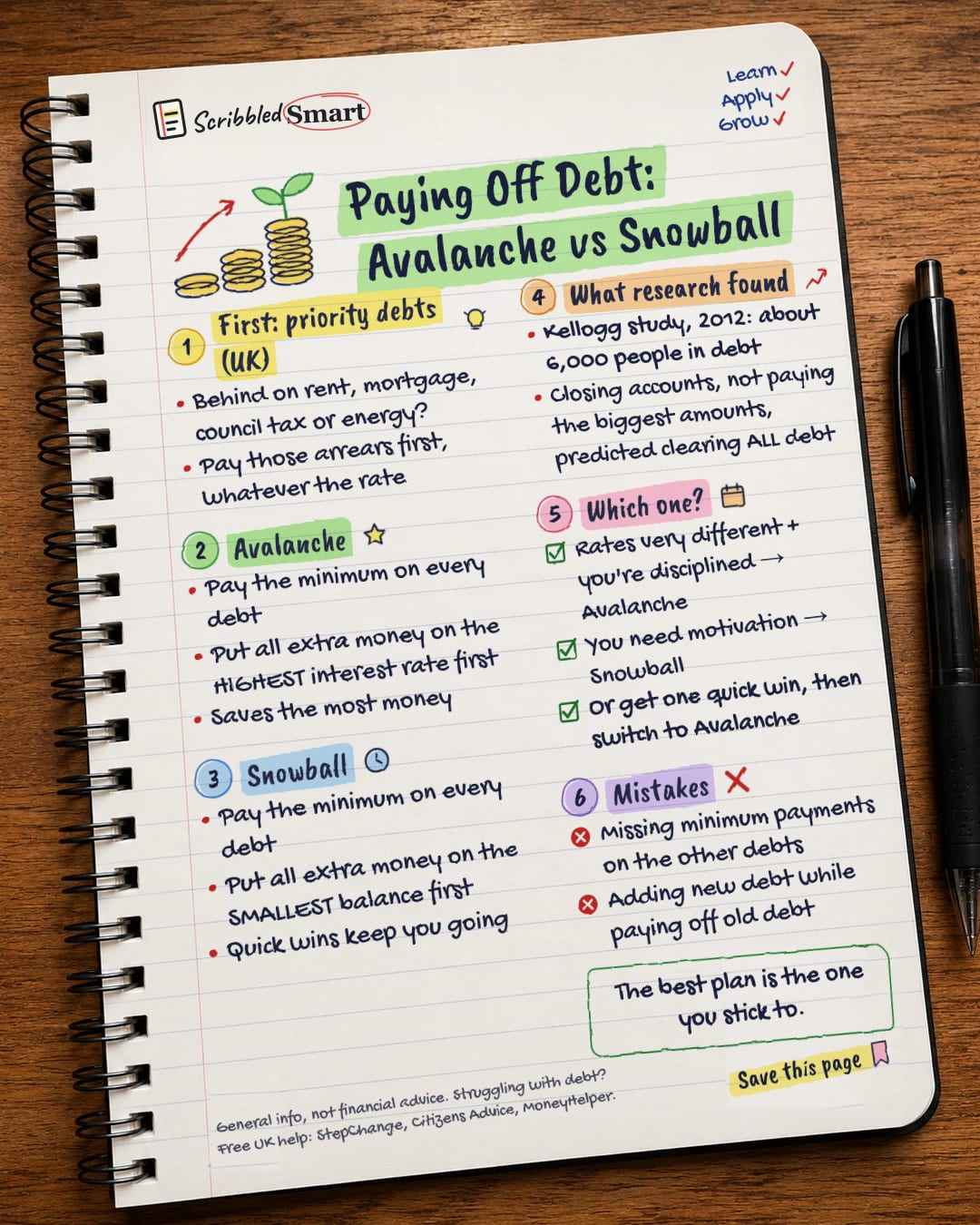
Two ways to pay off debt. One saves the most money, the other keeps you going. Which one are you? Save this page.
Good to know
General info, not financial advice. Struggling with debt? Free UK help: StepChange, Citizens Advice, MoneyHelper.
What's on the page
The note as text, so you can read it, copy it or use a screen reader.
First: priority debts (UK)
- Behind on rent, mortgage, council tax or energy?
- Pay those arrears first, whatever the rate
Avalanche
- Pay the minimum on every debt
- Put all extra money on the HIGHEST interest rate first
- Saves the most money
Snowball
- Pay the minimum on every debt
- Put all extra money on the SMALLEST balance first
- Quick wins keep you going
What research found
- Kellogg study, 2012: about 6,000 people in debt
- Closing accounts, not paying the biggest amounts, predicted clearing ALL debt
Which one?
- Rates very different + you're disciplined → Avalanche
- You need motivation → Snowball
- Or get one quick win, then switch to Avalanche
Mistakes
- Missing minimum payments on the other debts
- Adding new debt while paying off old debt
Sources
- National Debtline: How to manage debt: a step-by-step plan to get back in control
- StepChange: Responsible use of credit (Get Credit Confident)
- StepChange: Default notices, missed payments and your credit file
- StepChange: How we work out debt repayments
- Financial Advice Working Group for HM Treasury and the FCA: Rules of Thumb and Nudges (2017)
- Kellogg School of Management: The snowball approach to debt (2012)
- CBS News: Study: To get out of debt, start small
- Money Crashers: Debt avalanche vs snowball
- Benzinga: Debt Avalanche vs. Debt Snowball
- Credit.com: Debt Snowball vs. Debt Avalanche
- Tiller: Best credit card payoff strategy
How we checked this
Every fact on this note comes from the 11 sources listed here, checked against official or peer-reviewed sources where possible. AI tools help with drafting; a person checks every fact against the sources. How we research
Spotted a mistake? Tell us and we'll fix it and log it on the corrections page.


