
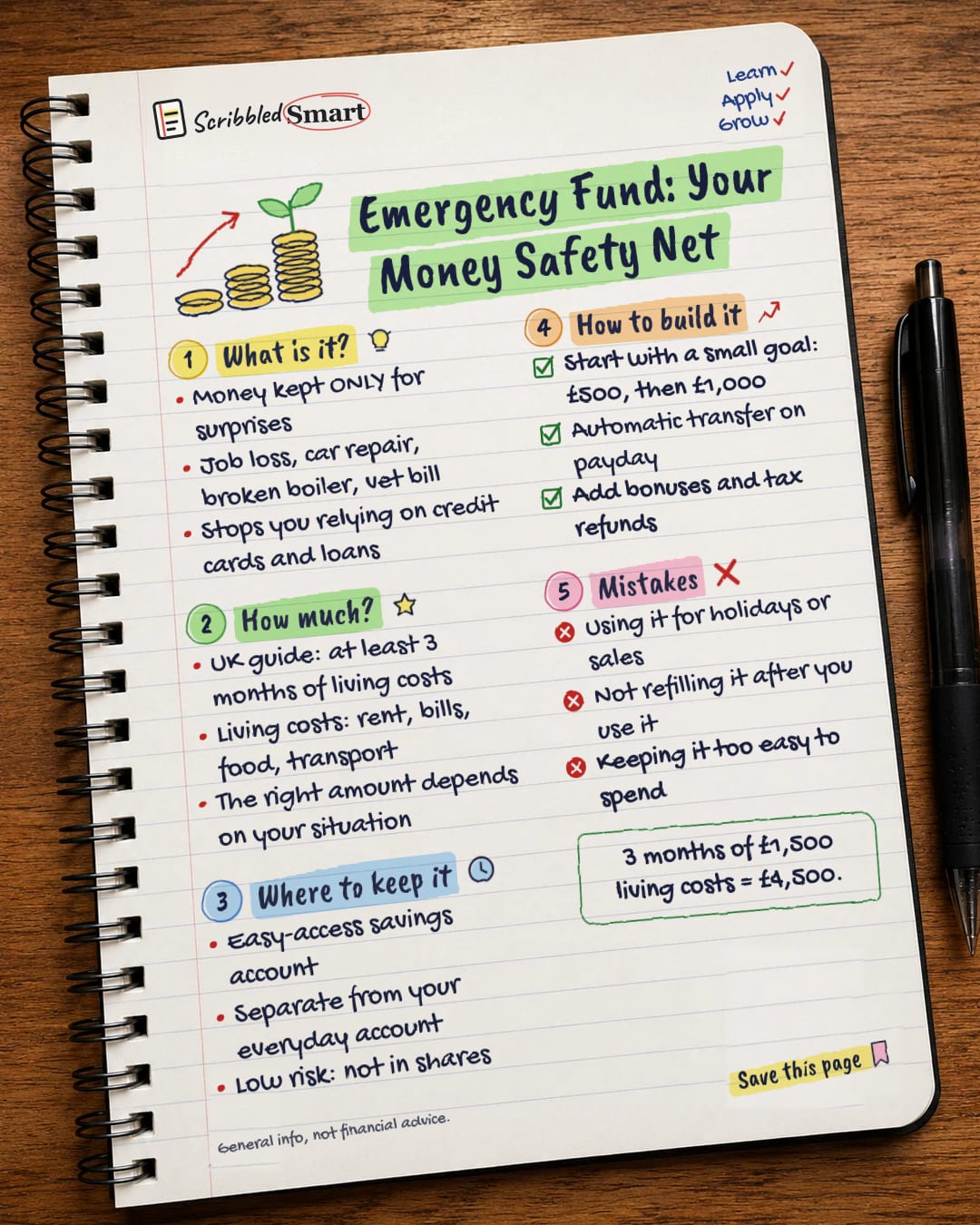
Money One-page note
Emergency Fund: Your Money Safety Net
The most boring money tip is the one that saves you most. How many months could you cover today? Save this page.
Good to know
General info, not financial advice.
What's on the page
The note as text, so you can read it, copy it or use a screen reader.
What is it?
- Money kept ONLY for surprises
- Job loss, car repair, broken boiler, vet bill
- Stops you relying on credit cards and loans
How much?
- UK guide: at least 3 months of living costs
- Living costs: rent, bills, food, transport
- The right amount depends on your situation
Where to keep it
- Easy-access savings account
- Separate from your everyday account
- Low risk: not in shares
How to build it
- Start with a small goal: £500, then £1,000
- Automatic transfer on payday
- Add bonuses and tax refunds
Mistakes
- Using it for holidays or sales
- Not refilling it after you use it
- Keeping it too easy to spend
Sources
- StepChange: How can I save money for an emergency or rainy day?
- CFPB: Explore saving (teens and young adults)
- Citi: How much should you save for an emergency fund?
- Chase: Guide to emergency funds
- Ally: How much do you need in your emergency fund?
- Experian: How much should you have in an emergency fund?
- One Pay: How much should you have in emergency savings?
- Amplify: Saving an emergency fund
- FCA: Rules of thumb and nudges
- FSCS: Deposit protection limit
- MoneyHelper: Building an emergency savings fund (further reading)
How we checked this
Every fact on this note comes from the 11 sources listed here, checked against official or peer-reviewed sources where possible. AI tools help with drafting; a person checks every fact against the sources. How we research
Spotted a mistake? Tell us and we'll fix it and log it on the corrections page.


