
Money One-page note UK only
Gilts Explained
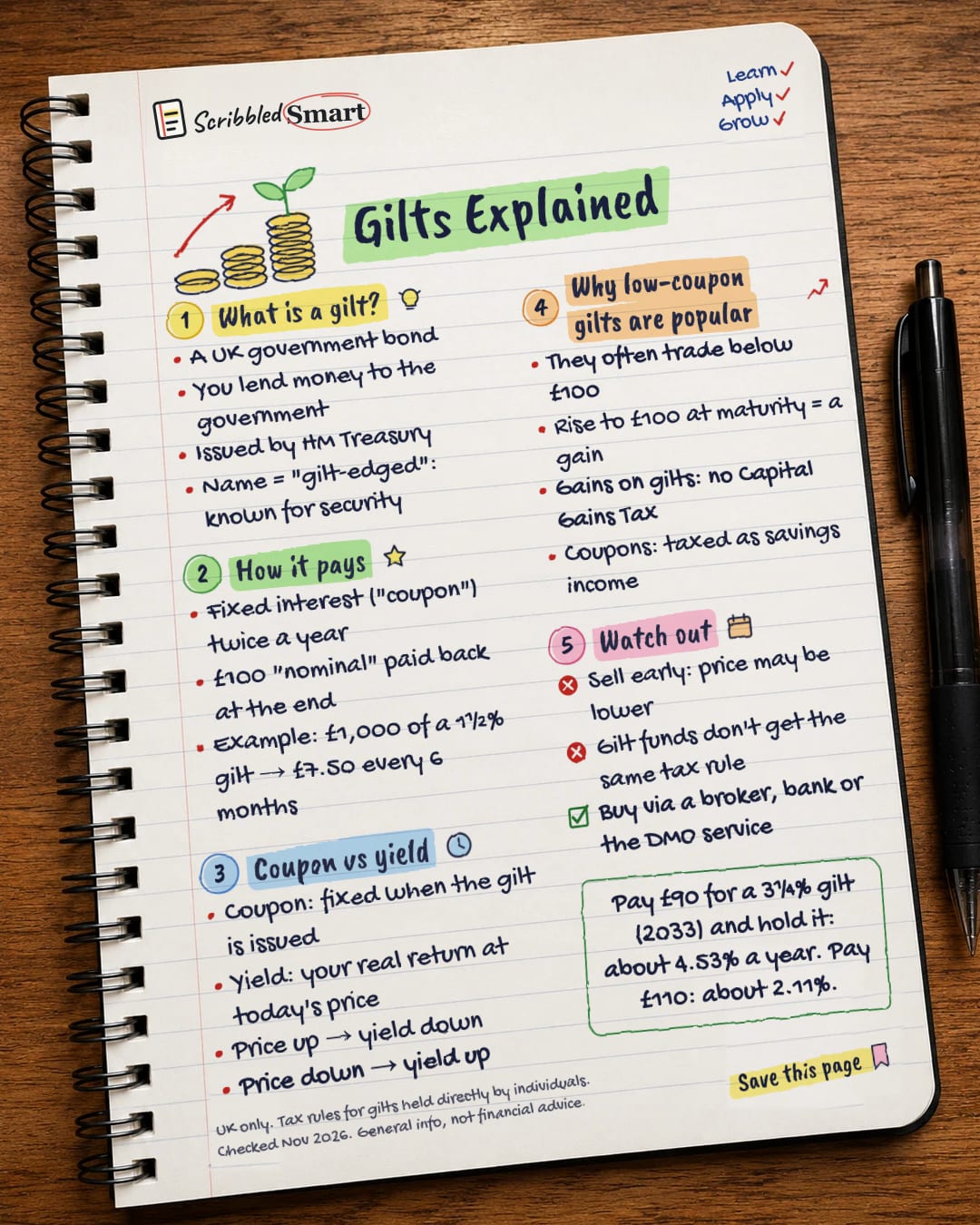
Gilts are how you lend money to the UK government. Here's coupon vs yield, and why low-coupon gilts are popular with savers. Save this page.
Good to know
UK only. Tax rules for gilts held directly by individuals. Checked Nov 2026. General info, not financial advice.
What's on the page
The note as text, so you can read it, copy it or use a screen reader.
What is a gilt?
- A UK government bond
- You lend money to the government
- Issued by HM Treasury
- Name = "gilt-edged": known for security
How it pays
- Fixed interest ("coupon") twice a year
- £100 "nominal" paid back at the end
- Example: £1,000 of a 1½% gilt → £7.50 every 6 months
Coupon vs yield
- Coupon: fixed when the gilt is issued
- Yield: your real return at today's price
- Price up → yield down
- Price down → yield up
Why low-coupon gilts are popular
- They often trade below £100
- Rise to £100 at maturity = a gain
- Gains on gilts: no Capital Gains Tax
- Coupons: taxed as savings income
Watch out
- Sell early: price may be lower
- Gilt funds don't get the same tax rule
- Buy via a broker, bank or the DMO service
Sources
How we checked this
Every fact on this note comes from the 5 sources listed here, checked against official or peer-reviewed sources where possible. AI tools help with drafting; a person checks every fact against the sources. How we research
Spotted a mistake? Tell us and we'll fix it and log it on the corrections page.


