
Money One-page note UK only
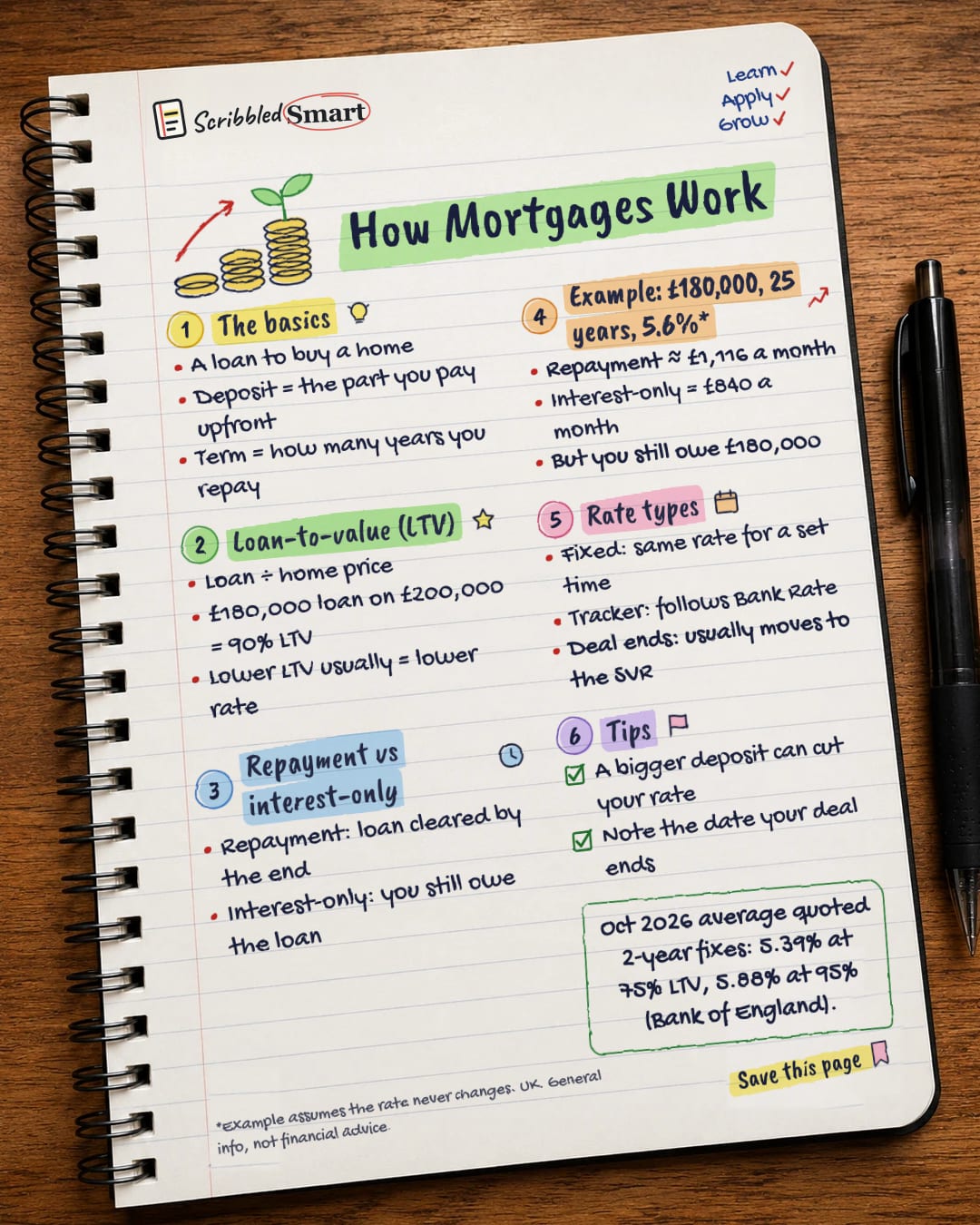
How Mortgages Work
Deposit, LTV, fixed or tracker? How a mortgage actually works, in one page. UK only. Save this page.
Good to know
*Example assumes the rate never changes. UK. General info, not financial advice.
What's on the page
The note as text, so you can read it, copy it or use a screen reader.
The basics
- A loan to buy a home
- Deposit = the part you pay upfront
- Term = how many years you repay
Loan-to-value (LTV)
- Loan ÷ home price
- £180,000 loan on £200,000 = 90% LTV
- Lower LTV usually = lower rate
Repayment vs interest-only
- Repayment: loan cleared by the end
- Interest-only: you still owe the loan
Example: £180,000, 25 years, 5.6%*
- Repayment ≈ £1,116 a month
- Interest-only = £840 a month
- But you still owe £180,000
Rate types
- Fixed: same rate for a set time
- Tracker: follows Bank Rate
- Deal ends: usually moves to the SVR
Tips
- A bigger deposit can cut your rate
- Note the date your deal ends
Sources
- Bank of England: Quoted household interest rates (database)
- Bank of England: Further details about quoted household interest rates data
- Bank of England: Monetary Policy Report November 2026
- Bank of England: Staff Working Paper 1,203 (Aug 2026), Locking in the rate or staying flexible
- MoneyHelper: Mortgage repayment options
- FCA Handbook: MCOB 11 Responsible lending
- FCA: Research note, interest-only mortgages
How we checked this
Every fact on this note comes from the 7 sources listed here, checked against official or peer-reviewed sources where possible. AI tools help with drafting; a person checks every fact against the sources. How we research
Spotted a mistake? Tell us and we'll fix it and log it on the corrections page.


