
Money One-page note UK only
VAT Explained in One Page
Why does a £100 thing cost £120? VAT. Here are the rates, the maths and when a business has to register. Save this page.
Good to know
UK. 2026–27 (threshold unchanged for 2027–28). General info, not financial or tax advice.
What's on the page
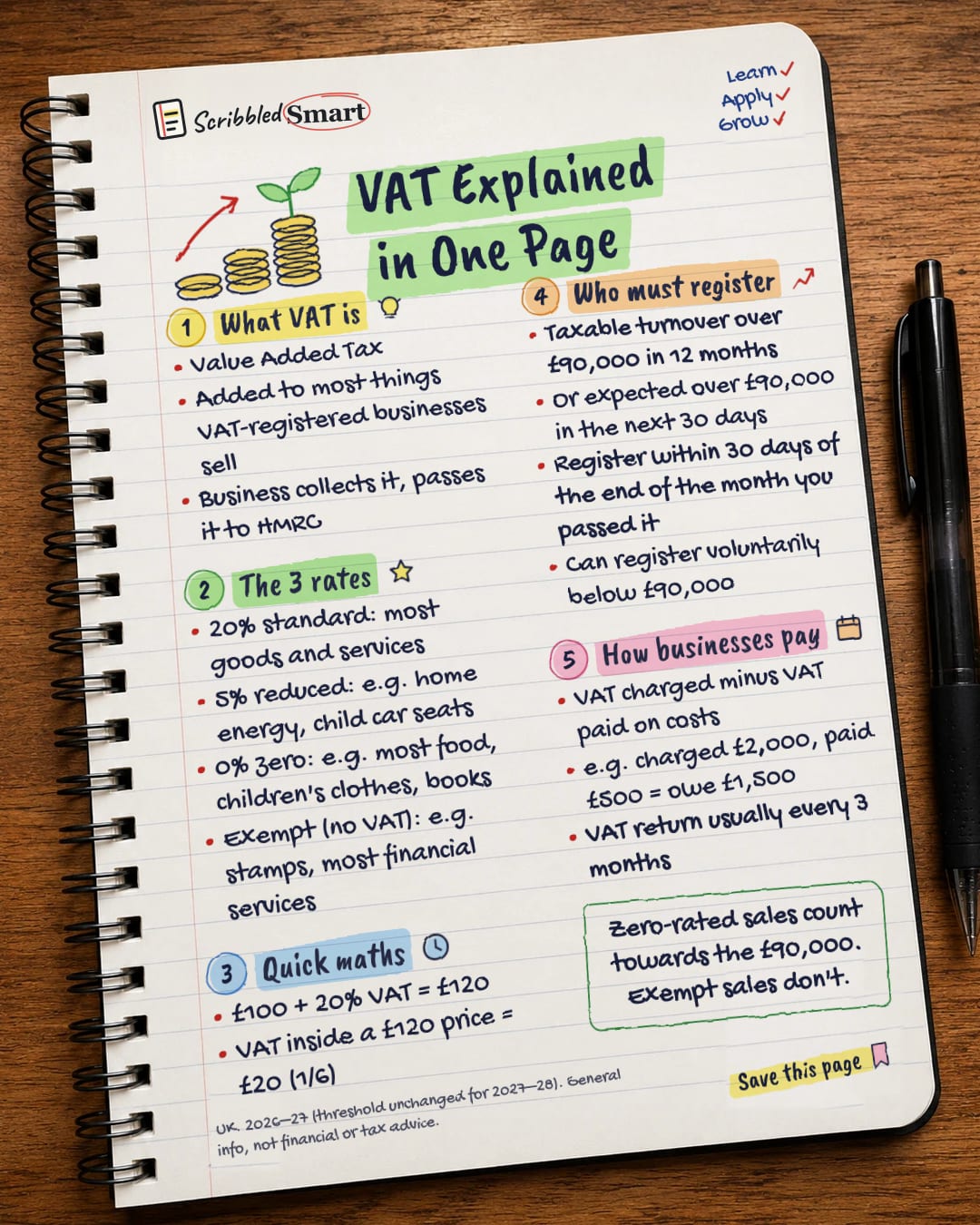
The note as text, so you can read it, copy it or use a screen reader.
What VAT is
- Value Added Tax
- Added to most things VAT-registered businesses sell
- Business collects it, passes it to HMRC
The 3 rates
- 20% standard: most goods and services
- 5% reduced: e.g. home energy, child car seats
- 0% zero: e.g. most food, children's clothes, books
- Exempt (no VAT): e.g. stamps, most financial services
Quick maths
- £100 + 20% VAT = £120
- VAT inside a £120 price = £20 (1/6)
Who must register
- Taxable turnover over £90,000 in 12 months
- Or expected over £90,000 in the next 30 days
- Register within 30 days of the end of the month you passed it
- Can register voluntarily below £90,000
How businesses pay
- VAT charged minus VAT paid on costs
- e.g. charged £2,000, paid £500 = owe £1,500
- VAT return usually every 3 months
Sources
How we checked this
Every fact on this note comes from the 4 sources listed here, checked against official or peer-reviewed sources where possible. AI tools help with drafting; a person checks every fact against the sources. How we research
Spotted a mistake? Tell us and we'll fix it and log it on the corrections page.


