
Money One-page note UK only
Cash Stuffing: Does the Envelope Method Work?
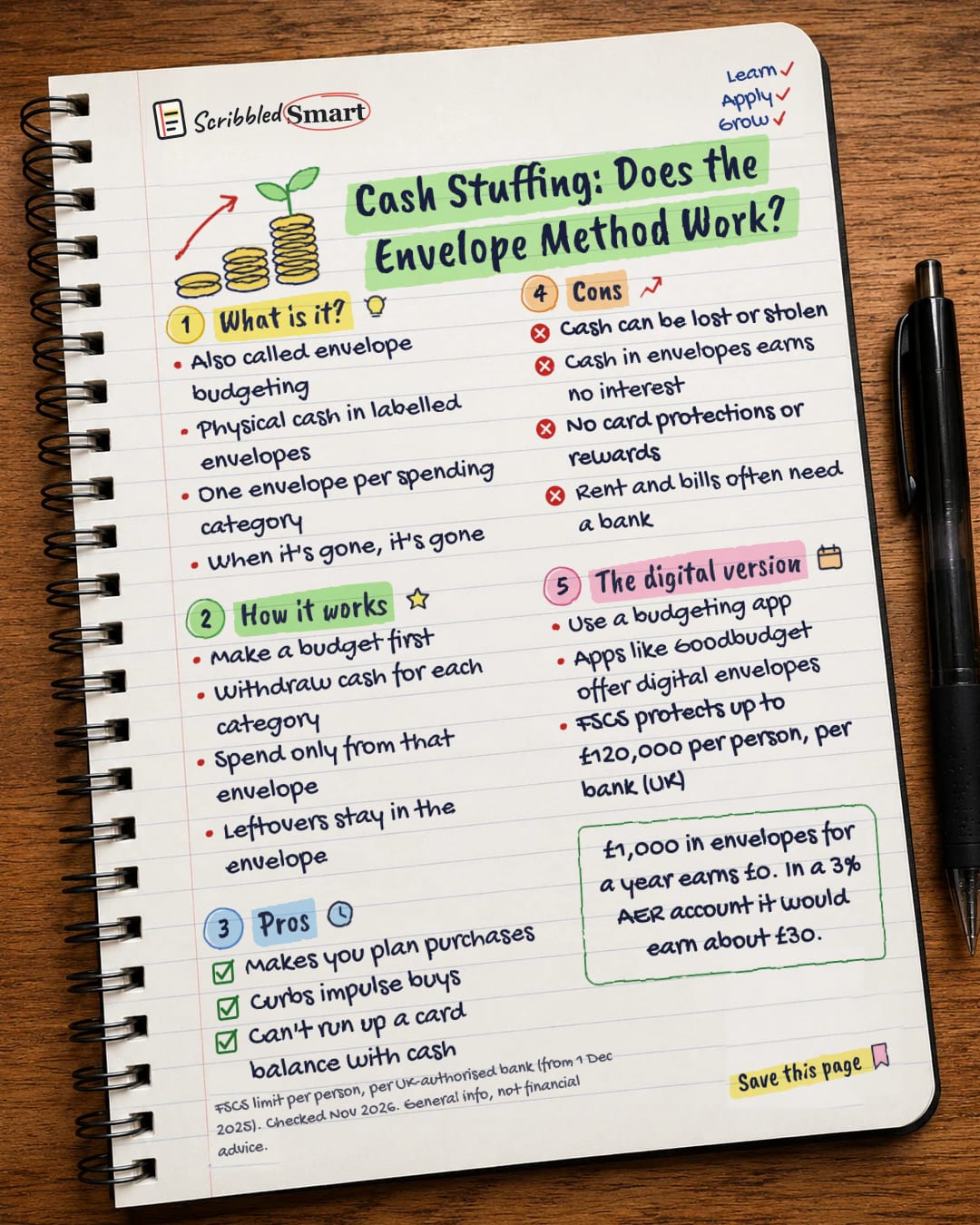
Cash stuffing means budgeting with cash envelopes. It can curb impulse spending, but your envelopes earn no interest and have no card protections. Here's the trade-off. Save this page.
Good to know
FSCS limit per person, per UK-authorised bank (from 1 Dec 2025). Checked Nov 2026. General info, not financial advice.
What's on the page
The note as text, so you can read it, copy it or use a screen reader.
What is it?
- Also called envelope budgeting
- Physical cash in labelled envelopes
- One envelope per spending category
- When it's gone, it's gone
How it works
- Make a budget first
- Withdraw cash for each category
- Spend only from that envelope
- Leftovers stay in the envelope
Pros
- Makes you plan purchases
- Curbs impulse buys
- Can't run up a card balance with cash
Cons
- Cash can be lost or stolen
- Cash in envelopes earns no interest
- No card protections or rewards
- Rent and bills often need a bank
The digital version
- Use a budgeting app
- Apps like Goodbudget offer digital envelopes
- FSCS protects up to £120,000 per person, per bank (UK)
Sources
How we checked this
Every fact on this note comes from the 2 sources listed here, checked against official or peer-reviewed sources where possible. AI tools help with drafting; a person checks every fact against the sources. How we research
Spotted a mistake? Tell us and we'll fix it and log it on the corrections page.


