
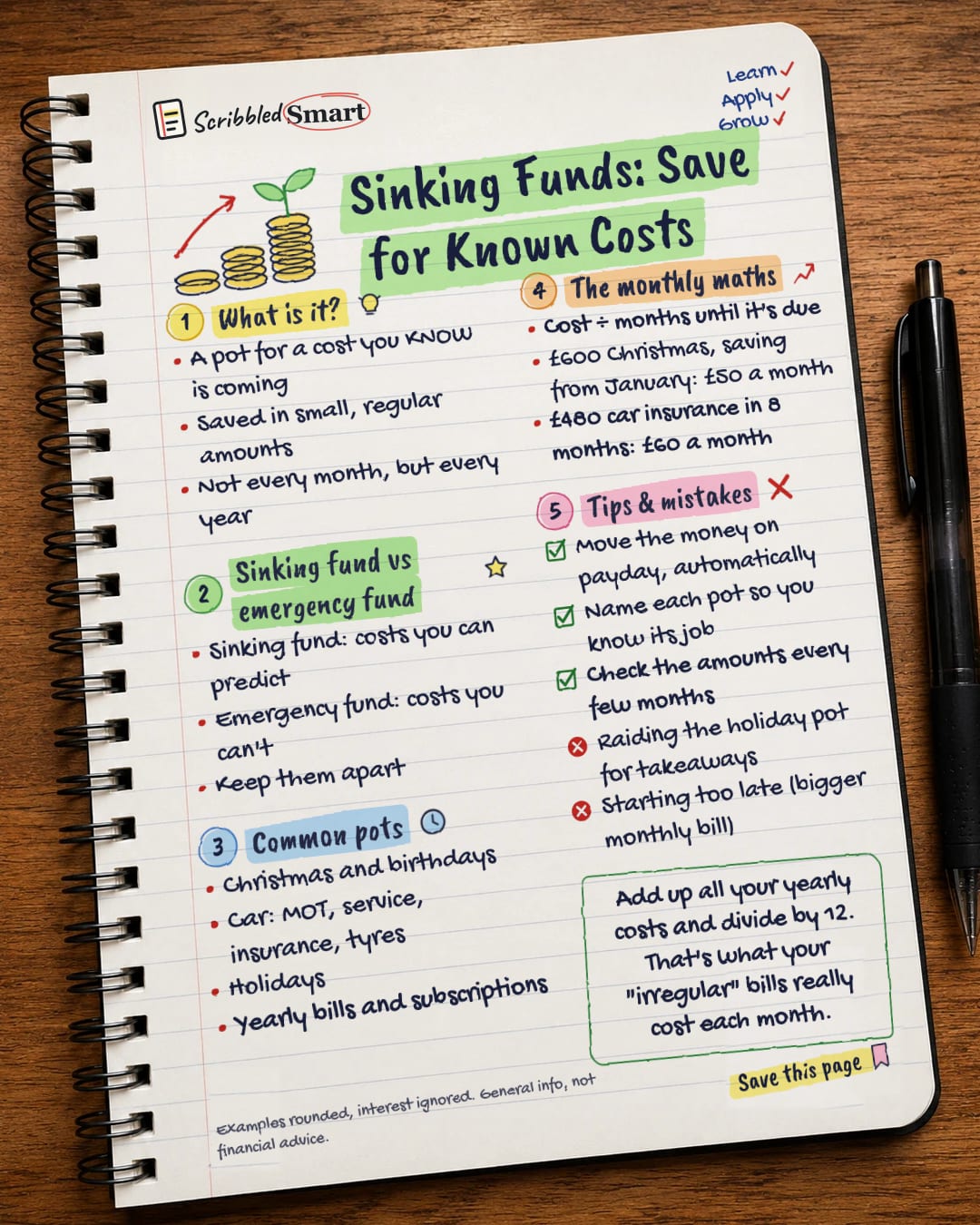
Money One-page note
Sinking Funds: Save for Known Costs
Christmas isn't an emergency. It's on the same date every year. Sinking funds turn big known costs into small monthly ones. Save this page.
Good to know
Examples rounded, interest ignored. General info, not financial advice.
What's on the page
The note as text, so you can read it, copy it or use a screen reader.
What is it?
- A pot for a cost you KNOW is coming
- Saved in small, regular amounts
- Not every month, but every year
Sinking fund vs emergency fund
- Sinking fund: costs you can predict
- Emergency fund: costs you can't
- Keep them apart
Common pots
- Christmas and birthdays
- Car: MOT, service, insurance, tyres
- Holidays
- Yearly bills and subscriptions
The monthly maths
- Cost ÷ months until it's due
- £600 Christmas, saving from January: £50 a month
- £480 car insurance in 8 months: £60 a month
Tips & mistakes
- Move the money on payday, automatically
- Name each pot so you know its job
- Check the amounts every few months
- Raiding the holiday pot for takeaways
- Starting too late (bigger monthly bill)
Sources
- SuperMoney: What Is a Sinking Fund? How to Save for Expenses You Know Are Coming
- Monarch: Planning for the unexpected: non-monthly expenses (search summary; page returned 404 when fetched)
- Lunch Money: How to budget for periodic expenses (search result)
- Credit Canada: Saving for irregular expenses (search result)
- Citizens Advice: Work out your budget (checked; does not cover sinking funds)
How we checked this
Every fact on this note comes from the 5 sources listed here, checked against official or peer-reviewed sources where possible. AI tools help with drafting; a person checks every fact against the sources. How we research
Spotted a mistake? Tell us and we'll fix it and log it on the corrections page.


