
Productivity One-page note
Deep Work in One Page
Ever switch tasks and feel your brain is still on the last one? That's attention residue. Save this page.
What's on the page
The note as text, so you can read it, copy it or use a screen reader.
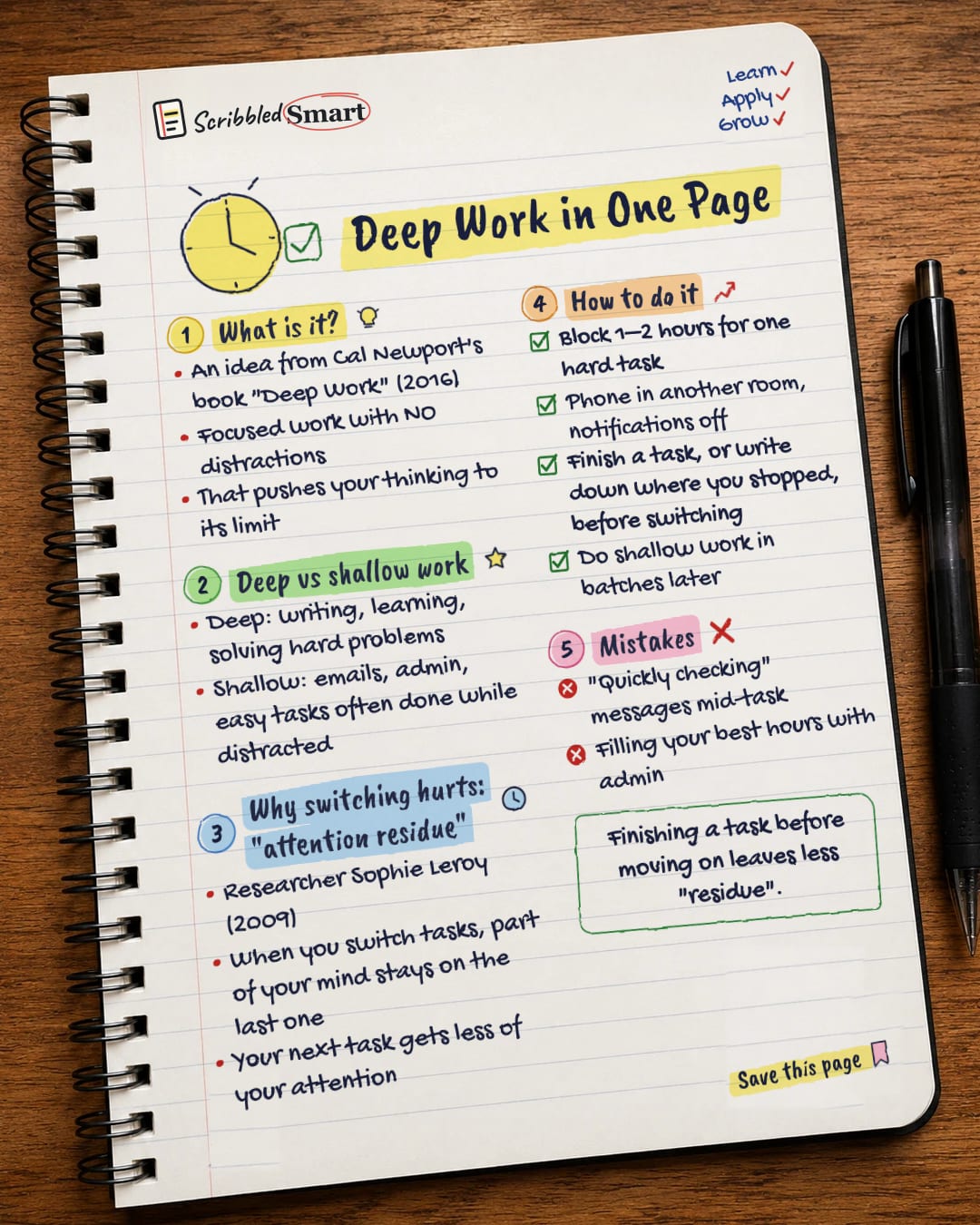
What is it?
- An idea from Cal Newport's book "Deep Work" (2016)
- Focused work with NO distractions
- That pushes your thinking to its limit
Deep vs shallow work
- Deep: writing, learning, solving hard problems
- Shallow: emails, admin, easy tasks often done while distracted
Why switching hurts: "attention residue"
- Researcher Sophie Leroy (2009)
- When you switch tasks, part of your mind stays on the last one
- Your next task gets less of your attention
How to do it
- Block 1–2 hours for one hard task
- Phone in another room, notifications off
- Finish a task, or write down where you stopped, before switching
- Do shallow work in batches later
Mistakes
- "Quickly checking" messages mid-task
- Filling your best hours with admin
Sources
- EconPapers: Leroy (2009), Why is it so hard to do my work?
- strategy+business: Attention residue
- BPS Research Digest: The surprising benefits of time pressure at work
- Graham Mann: Deep Work book notes
- Shortform: Deep Work summary
- INFORMS (Organization Science): Leroy & Glomb (2018), Tasks interrupted
How we checked this
Every fact on this note comes from the 6 sources listed here, checked against official or peer-reviewed sources where possible. AI tools help with drafting; a person checks every fact against the sources. How we research
Spotted a mistake? Tell us and we'll fix it and log it on the corrections page.


