
Productivity One-page note
The Multitasking Myth
You're not multitasking. You're switching, and it costs more than you think. Save this page.
What's on the page
The note as text, so you can read it, copy it or use a screen reader.
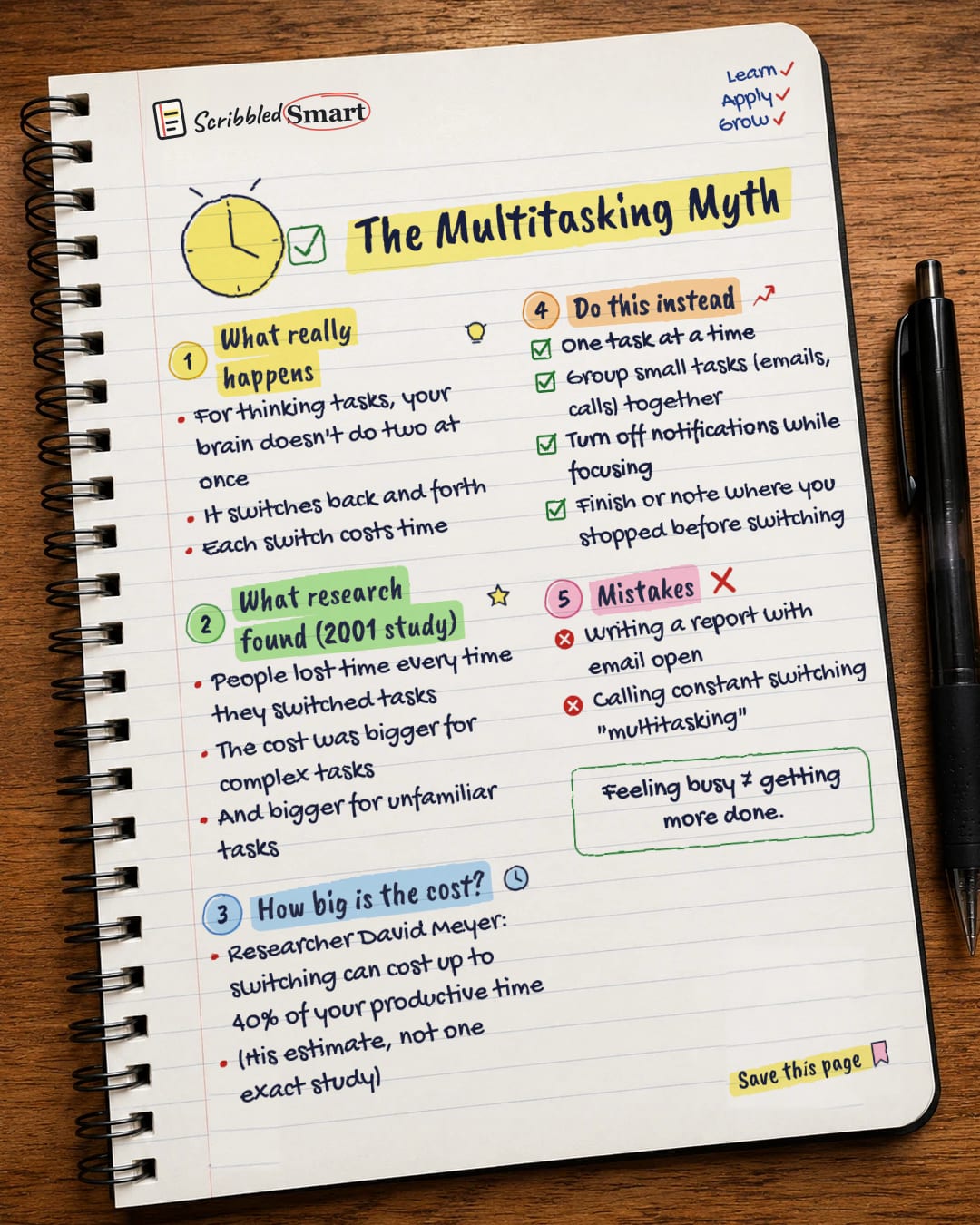
What really happens
- For thinking tasks, your brain doesn't do two at once
- It switches back and forth
- Each switch costs time
What research found (2001 study)
- People lost time every time they switched tasks
- The cost was bigger for complex tasks
- And bigger for unfamiliar tasks
How big is the cost?
- Researcher David Meyer: switching can cost up to 40% of your productive time
- (His estimate, not one exact study)
Do this instead
- One task at a time
- Group small tasks (emails, calls) together
- Turn off notifications while focusing
- Finish or note where you stopped before switching
Mistakes
- Writing a report with email open
- Calling constant switching "multitasking"
Sources
How we checked this
Every fact on this note comes from the 3 sources listed here, checked against official or peer-reviewed sources where possible. AI tools help with drafting; a person checks every fact against the sources. How we research
Spotted a mistake? Tell us and we'll fix it and log it on the corrections page.


