
Productivity One-page note UK only
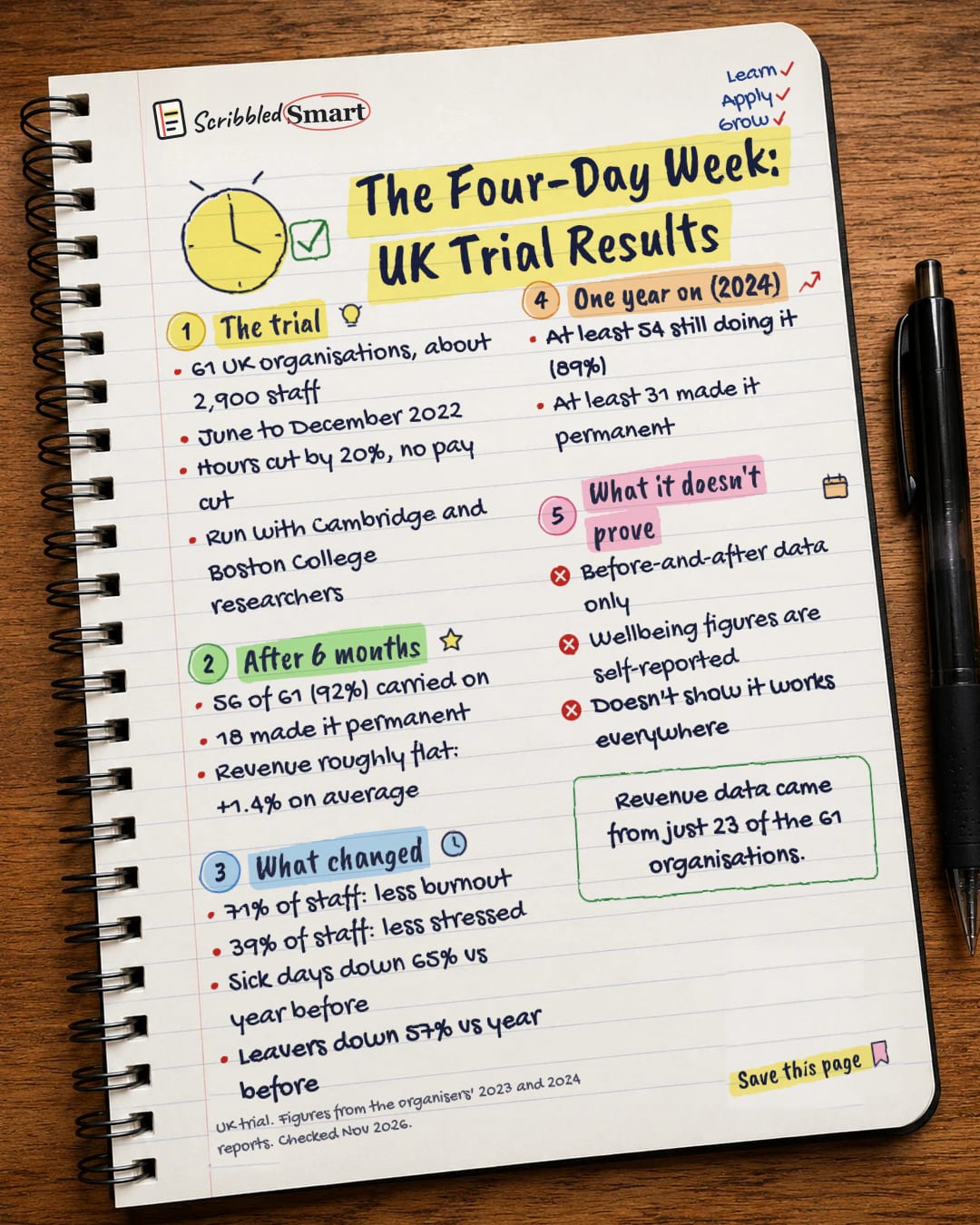
The Four-Day Week: UK Trial Results
Could you do five days' work in four? 61 UK firms tried it. Here's what happened. Save this page.
Good to know
UK trial. Figures from the organisers' 2023 and 2024 reports. Checked Nov 2026.
What's on the page
The note as text, so you can read it, copy it or use a screen reader.
The trial
- 61 UK organisations, about 2,900 staff
- June to December 2022
- Hours cut by 20%, no pay cut
- Run with Cambridge and Boston College researchers
After 6 months
- 56 of 61 (92%) carried on
- 18 made it permanent
- Revenue roughly flat: +1.4% on average
Staff said
- 71% less burnout
- 39% less stressed
- Sick days down 65%
- Leavers down 57%
One year on (2024)
- At least 54 still doing it (89%)
- At least 31 made it permanent
What it doesn't prove
- Firms chose to take part
- No comparison group
- Much of it self-reported
- Doesn't show it works everywhere
Sources
- Autonomy: "The results are in: The UK's four-day week pilot" (2023)
- Autonomy: "Making It Stick: The UK Four-Day Week Pilot One Year On" (2024)
- University of Cambridge, Department of Sociology: "New results from the world's largest trial of a four-day working week" (2023)
- What Works Wellbeing: "Findings from four-day work week trial" (2023)
- Autonomy: "Critics of shorter working week trials consistently miss the mark" (2025)
How we checked this
Every fact on this note comes from the 5 sources listed here, checked against official or peer-reviewed sources where possible. AI tools help with drafting; a person checks every fact against the sources. How we research
Spotted a mistake? Tell us and we'll fix it and log it on the corrections page.


