
Productivity One-page note
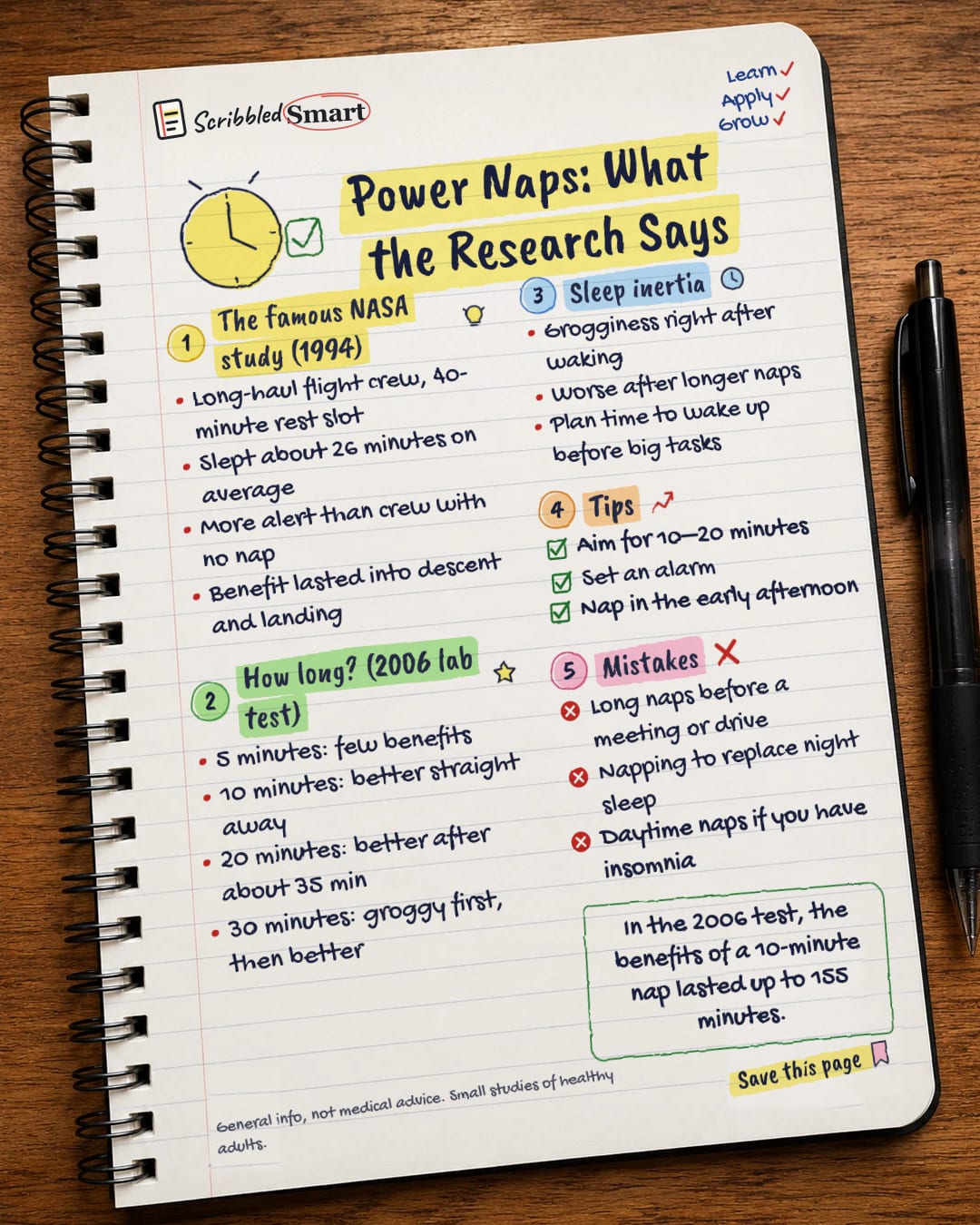
Power Naps: What the Research Says
How long should a power nap be? Shorter than you think. Here's what the studies found. Save this page.
Good to know
General info, not medical advice. Small studies of healthy adults.
What's on the page
The note as text, so you can read it, copy it or use a screen reader.
The famous NASA study (1994)
- Long-haul flight crew, 40-minute rest slot
- Slept about 26 minutes on average
- More alert than crew with no nap
- Benefit lasted into descent and landing
How long? (2006 lab test)
- 5 minutes: few benefits
- 10 minutes: better straight away
- 20 minutes: better after about 35 min
- 30 minutes: groggy first, then better
Sleep inertia
- Grogginess right after waking
- Worse after longer naps
- Plan time to wake up before big tasks
Tips
- Aim for 10–20 minutes
- Set an alarm
- Nap in the early afternoon
Mistakes
- Long naps before a meeting or drive
- Napping to replace night sleep
- Daytime naps if you have insomnia
Sources
- NASA NTRS: Crew Factors in Flight Operations IX (1994)
- Journal of Sleep Research: Rosekind et al. (1995)
- Europe PMC: Rosekind et al. (1995) abstract record, PMID 10607214
- Sleep: Brooks & Lack (2006)
- NHS: Insomnia
- NHS Every Mind Matters: Sleep problems
- Sleep Foundation: NASA nap (context only, for the 34%/54% claim)
How we checked this
Every fact on this note comes from the 7 sources listed here, checked against official or peer-reviewed sources where possible. AI tools help with drafting; a person checks every fact against the sources. How we research
Spotted a mistake? Tell us and we'll fix it and log it on the corrections page.


