
Productivity One-page note
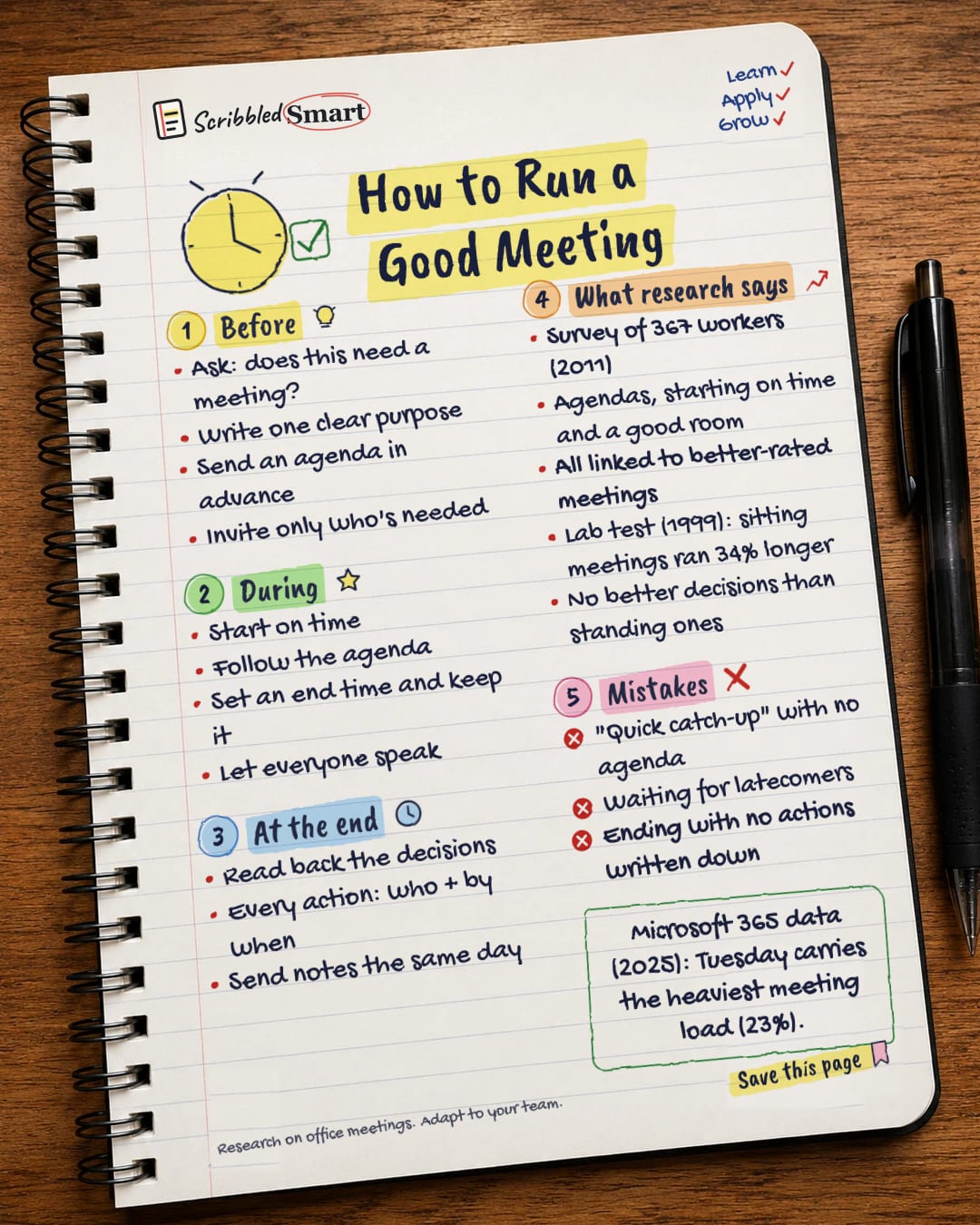
How to Run a Good Meeting
Most meetings could be shorter, and some could be an email. Here's how to run one that's worth it. Save this page.
Good to know
Research on office meetings. Adapt to your team.
What's on the page
The note as text, so you can read it, copy it or use a screen reader.
Before
- Ask: does this need a meeting?
- Write one clear purpose
- Send an agenda in advance
- Invite only who's needed
During
- Start on time
- Follow the agenda
- Set an end time and keep it
- Let everyone speak
At the end
- Read back the decisions
- Every action: who + by when
- Send notes the same day
What research says
- Survey of 367 workers (2011)
- Agendas, starting on time and a good room
- All linked to better-rated meetings
- Lab test (1999): sitting meetings ran 34% longer
- No better decisions than standing ones
Mistakes
- "Quick catch-up" with no agenda
- Waiting for latecomers
- Ending with no actions written down
Sources
How we checked this
Every fact on this note comes from the 5 sources listed here, checked against official or peer-reviewed sources where possible. AI tools help with drafting; a person checks every fact against the sources. How we research
Spotted a mistake? Tell us and we'll fix it and log it on the corrections page.


