
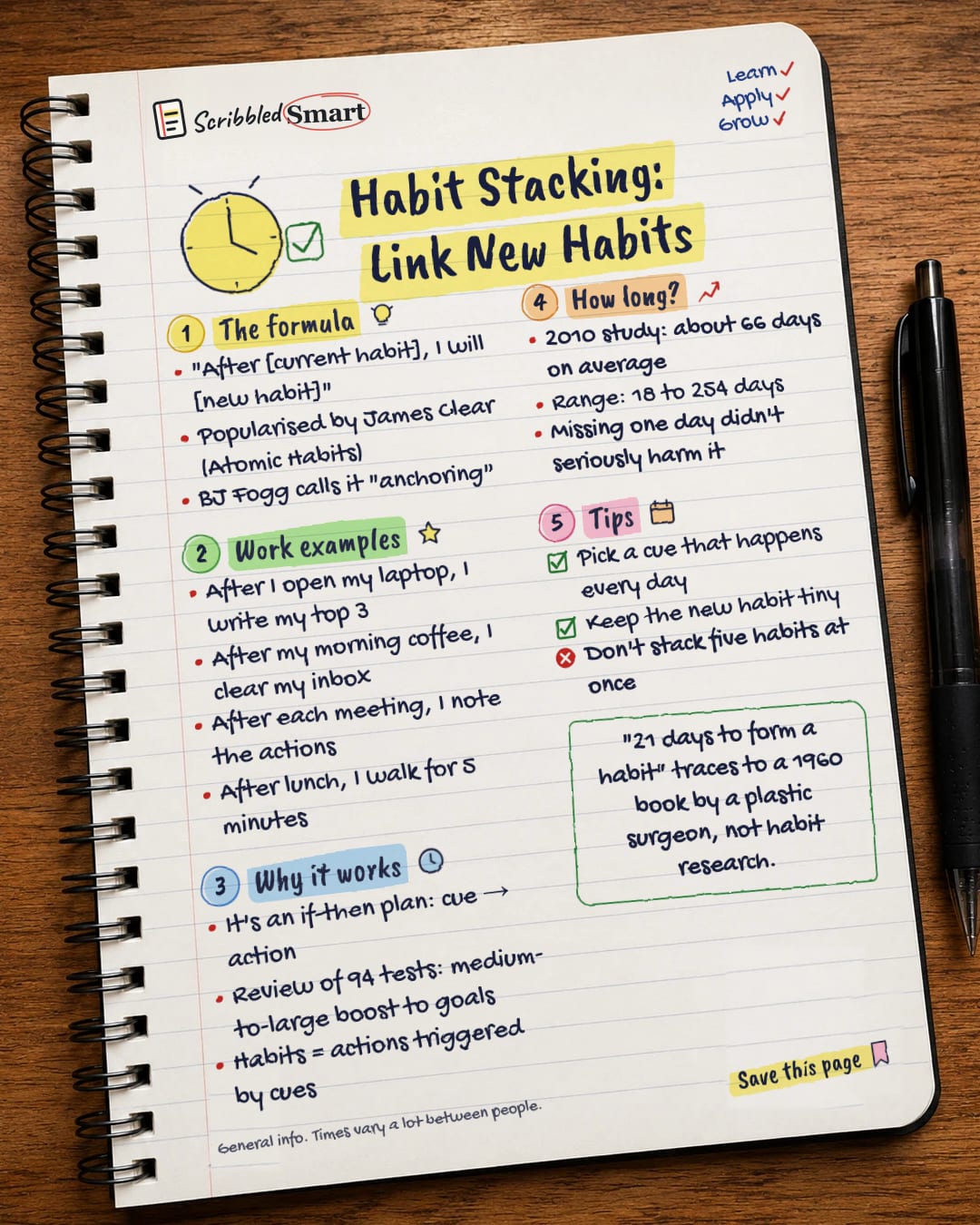
Productivity One-page note
Habit Stacking: Link New Habits
Don't find time for a new habit. Attach it to one you already have. Save this page.
Good to know
General info. Times vary a lot between people.
What's on the page
The note as text, so you can read it, copy it or use a screen reader.
The formula
- "After [current habit], I will [new habit]"
- Popularised by James Clear (Atomic Habits)
- BJ Fogg calls it "anchoring"
Work examples
- After I open my laptop, I write my top 3
- After my morning coffee, I clear my inbox
- After each meeting, I note the actions
- After lunch, I walk for 5 minutes
Why it works
- It's an if-then plan: cue → action
- Review of 94 tests: medium-to-large boost to goals
- Habits = actions triggered by cues
How long?
- 2010 study: about 66 days on average
- Range: 18 to 254 days
- Missing one day didn't seriously harm it
Tips
- Pick a cue that happens every day
- Keep the new habit tiny
- Don't stack five habits at once
Sources
- James Clear: "How to Build New Habits by Taking Advantage of Old Ones"
- University of Konstanz (KOPS): Gollwitzer & Sheeran (2006)
- PMC: Gardner, Lally & Wardle (2012), "Making health habitual"
- UCL Health Chatter: "Busting the 21 days habit formation myth" (2012)
- BPS Research Digest: "How to form a habit"
How we checked this
Every fact on this note comes from the 5 sources listed here, checked against official or peer-reviewed sources where possible. AI tools help with drafting; a person checks every fact against the sources. How we research
Spotted a mistake? Tell us and we'll fix it and log it on the corrections page.


