
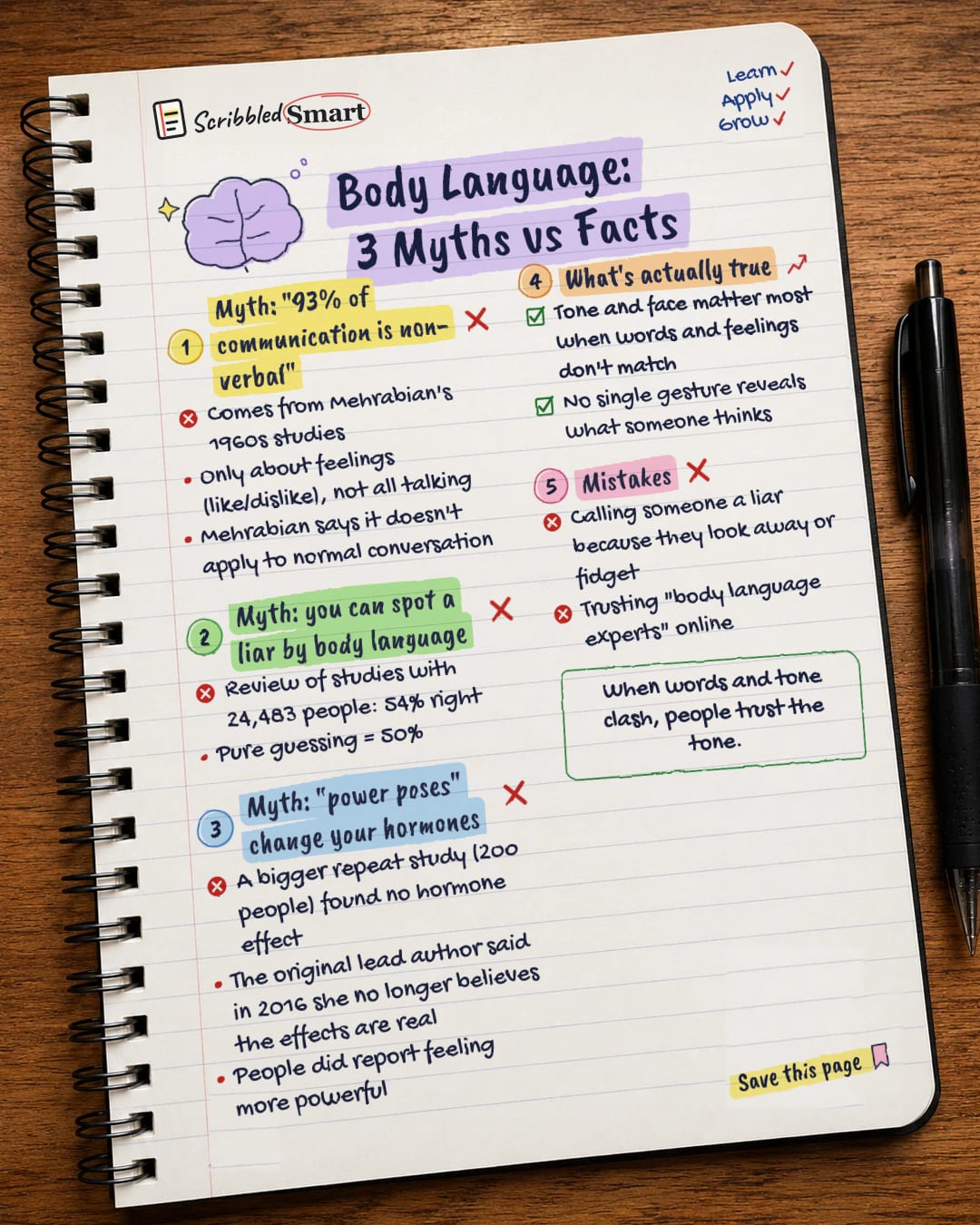
Psychology One-page note
Body Language: 3 Myths vs Facts
You've probably heard all 3 of these. The research says otherwise. Save this page.
What's on the page
The note as text, so you can read it, copy it or use a screen reader.
Myth: "93% of communication is non-verbal"
- Comes from Mehrabian's 1960s studies
- Only about feelings (like/dislike), not all talking
- Mehrabian says it doesn't apply to normal conversation
Myth: you can spot a liar by body language
- Review of studies with 24,483 people: 54% right
- Pure guessing = 50%
Myth: "power poses" change your hormones
- A bigger repeat study (200 people) found no hormone effect
- The original lead author said in 2016 she no longer believes the effects are real
- People did report feeling more powerful
What's actually true
- Tone and face matter most when words and feelings don't match
- No single gesture reveals what someone thinks
Mistakes
- Calling someone a liar because they look away or fidget
- Trusting "body language experts" online
Sources
- Bond & DePaulo (2006): Accuracy of deception judgments (PDF)
- PubMed: Accuracy of deception judgments (16859438)
- Wikipedia: Albert Mehrabian
- Big Think: The 7-38-55 rule, debunked
- Wikipedia: Power posing
- BPS The Psychologist: Power posing
- University of Hertfordshire: The perils of power posing research
- FORRT Open Social Psychology, ch. 27: Power posing
- Europe PMC: DePaulo et al. (2003), Cues to deception
How we checked this
Every fact on this note comes from the 9 sources listed here, checked against official or peer-reviewed sources where possible. AI tools help with drafting; a person checks every fact against the sources. How we research
Spotted a mistake? Tell us and we'll fix it and log it on the corrections page.


