
Psychology One-page note
How Habits Really Form
21 days to build a habit? The research says it's closer to 66, and that's good news. Save this page.
What's on the page
The note as text, so you can read it, copy it or use a screen reader.
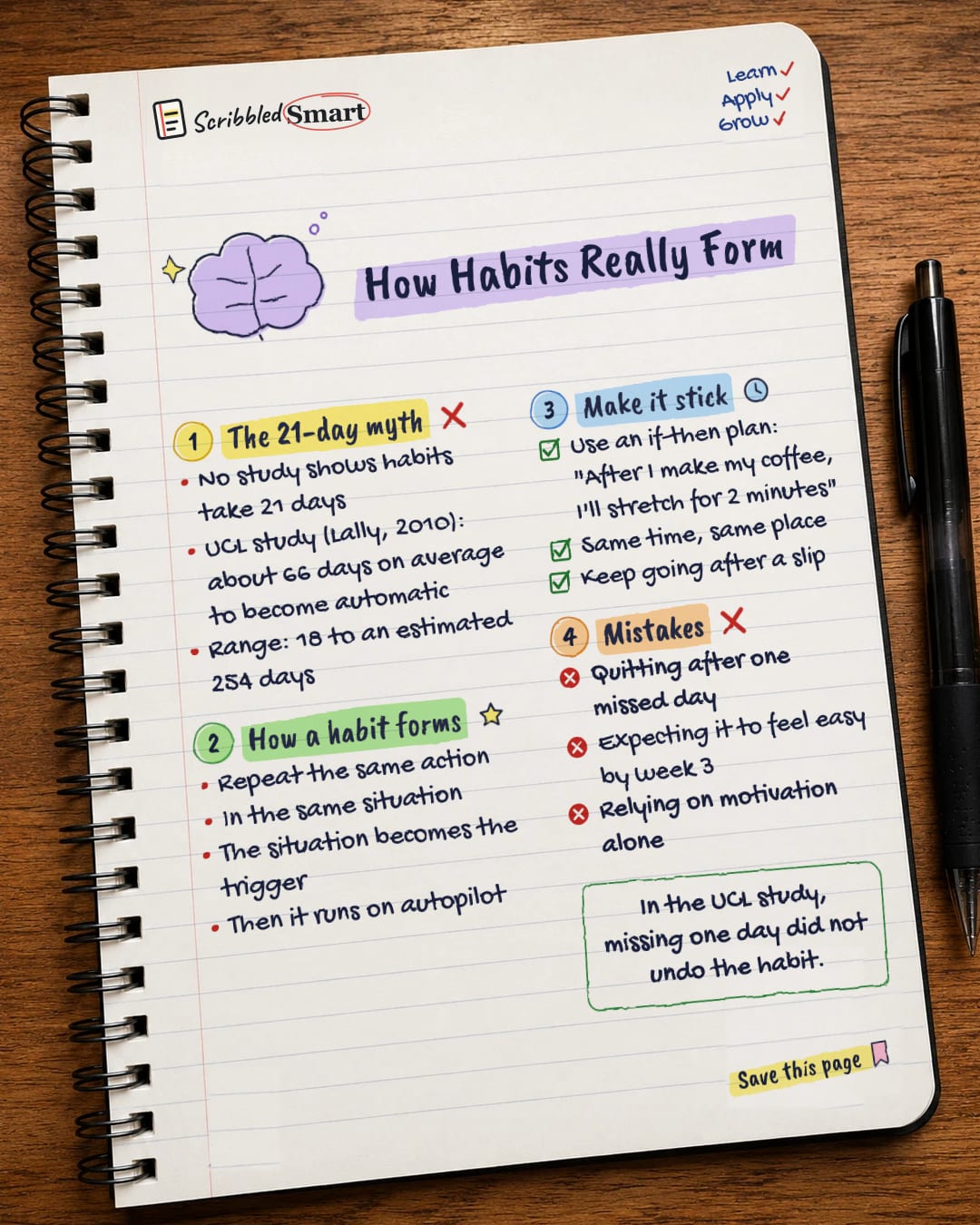
The 21-day myth
- No study shows habits take 21 days
- UCL study (Lally, 2010): about 66 days on average to become automatic
- Range: 18 to an estimated 254 days
How a habit forms
- Repeat the same action
- In the same situation
- The situation becomes the trigger
- Then it runs on autopilot
Make it stick
- Use an if-then plan: "After I make my coffee, I'll stretch for 2 minutes"
- Same time, same place
- Keep going after a slip
Mistakes
- Quitting after one missed day
- Expecting it to feel easy by week 3
- Relying on motivation alone
Sources
How we checked this
Every fact on this note comes from the 6 sources listed here, checked against official or peer-reviewed sources where possible. AI tools help with drafting; a person checks every fact against the sources. How we research
Spotted a mistake? Tell us and we'll fix it and log it on the corrections page.


