
Psychology One-page note
CBT Explained: How It Works
CBT is one of the most recommended talking therapies. Here's what actually happens in it, and how to get it free in England. Save this page.
Good to know
General info, not medical advice. 🇬🇧 England: NHS Talking Therapies; waits vary by area. Checked Nov 2026.
What's on the page
The note as text, so you can read it, copy it or use a screen reader.
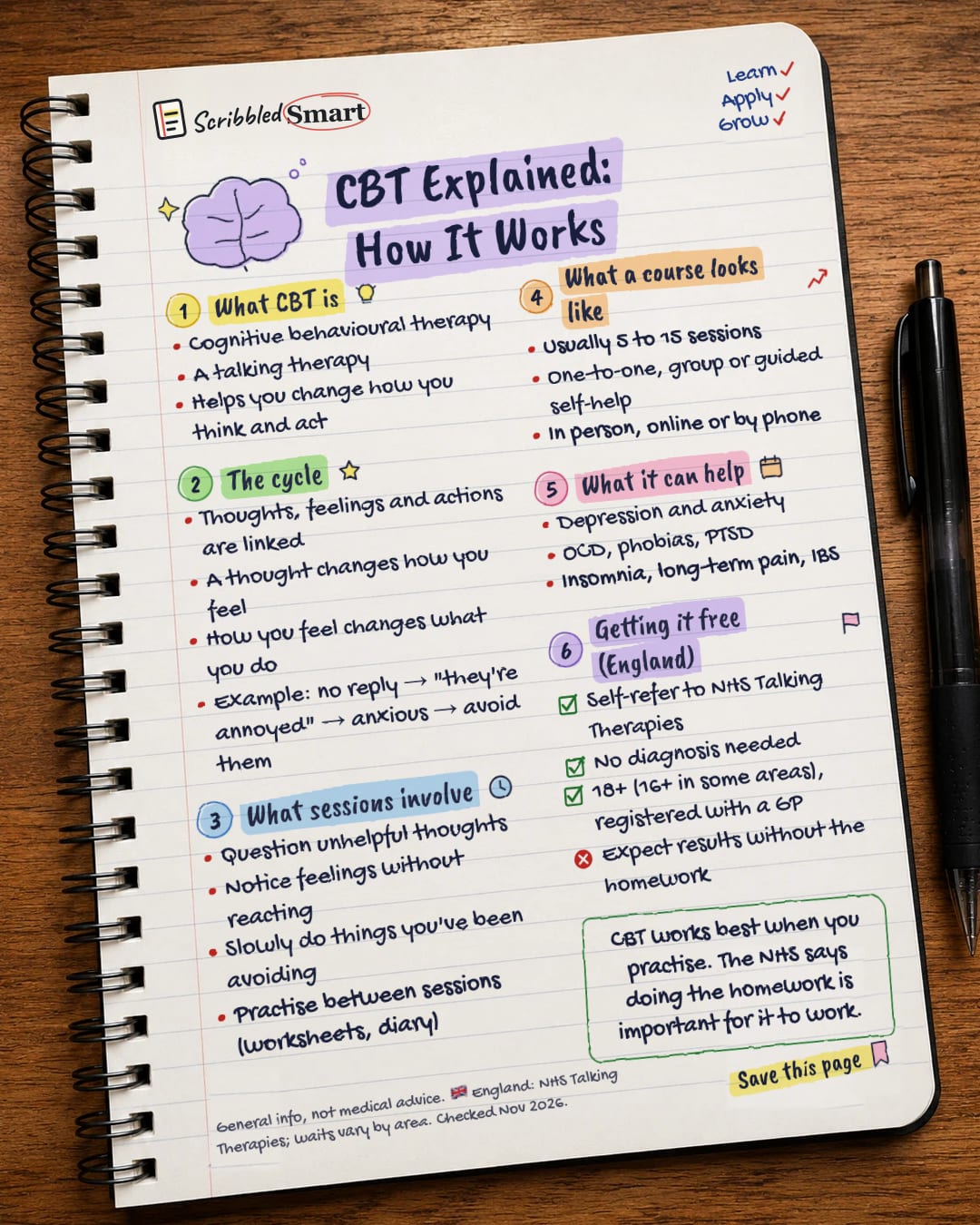
What CBT is
- Cognitive behavioural therapy
- A talking therapy
- Helps you change how you think and act
The cycle
- Thoughts, feelings and actions are linked
- A thought changes how you feel
- How you feel changes what you do
- Example: no reply → "they're annoyed" → anxious → avoid them
What sessions involve
- Question unhelpful thoughts
- Notice feelings without reacting
- Slowly do things you've been avoiding
- Practise between sessions (worksheets, diary)
What a course looks like
- Usually 5 to 15 sessions
- One-to-one, group or guided self-help
- In person, online or by phone
What it can help
- Depression and anxiety
- OCD, phobias, PTSD
- Insomnia, long-term pain, IBS
Getting it free (England)
- Self-refer to NHS Talking Therapies
- No diagnosis needed
- 18+ (16+ in some areas), registered with a GP
- Expect results without the homework
Sources
How we checked this
Every fact on this note comes from the 4 sources listed here, checked against official or peer-reviewed sources where possible. AI tools help with drafting; a person checks every fact against the sources. How we research
Spotted a mistake? Tell us and we'll fix it and log it on the corrections page.


