
Psychology One-page note UK only
Intrusive Thoughts: Normal or Not?
Ever had a horrible thought pop into your head uninvited? You're far from alone. Save this page.
Good to know
General info, not medical advice. Struggling? Samaritans 116 123, free, 24/7 (UK & Ireland).
What's on the page
The note as text, so you can read it, copy it or use a screen reader.
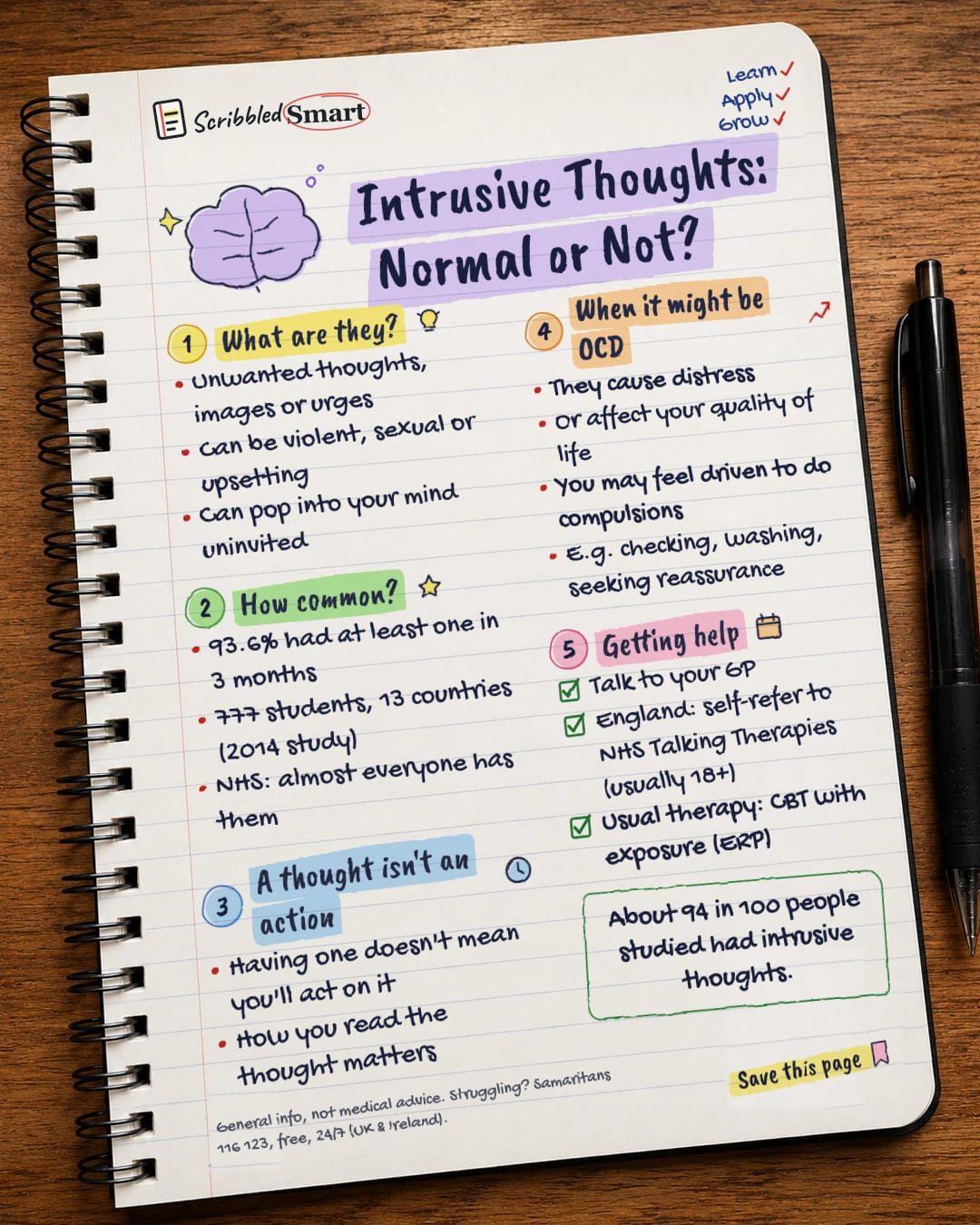
What are they?
- Unwanted thoughts, images or urges
- Can be violent, sexual or upsetting
- Can pop into your mind uninvited
How common?
- 93.6% had at least one in 3 months
- 777 students, 13 countries (2014 study)
- NHS: almost everyone has them
A thought isn't an action
- Having one doesn't mean you'll act on it
- How you read the thought matters
When it might be OCD
- They cause distress
- Or affect your quality of life
- You may feel driven to do compulsions
- E.g. checking, washing, seeking reassurance
Getting help
- Talk to your GP
- England: self-refer to NHS Talking Therapies (usually 18+)
- Usual therapy: CBT with exposure (ERP)
Sources
- NHS: Obsessive compulsive disorder (OCD), overview
- NHS: OCD symptoms
- NHS: OCD treatment
- NHS: NHS talking therapies
- Radomsky, A. S. et al. (2014): Part 1, You can run but you can't hide: Intrusive thoughts on six continents
- Radomsky, A. S. et al. (2014), abstract on the UNIC repository (opened 2026-11-17)
- OCD-UK: Types of OCD
- OCD-UK: About OCD
- Samaritans: Contact us
- NHS: Find an NHS talking therapies service (opened 2026-11-17)
- Samaritans Ireland (opened 2026-11-17)
How we checked this
Every fact on this note comes from the 11 sources listed here, checked against official or peer-reviewed sources where possible. AI tools help with drafting; a person checks every fact against the sources. How we research
Spotted a mistake? Tell us and we'll fix it and log it on the corrections page.


