
Psychology One-page note
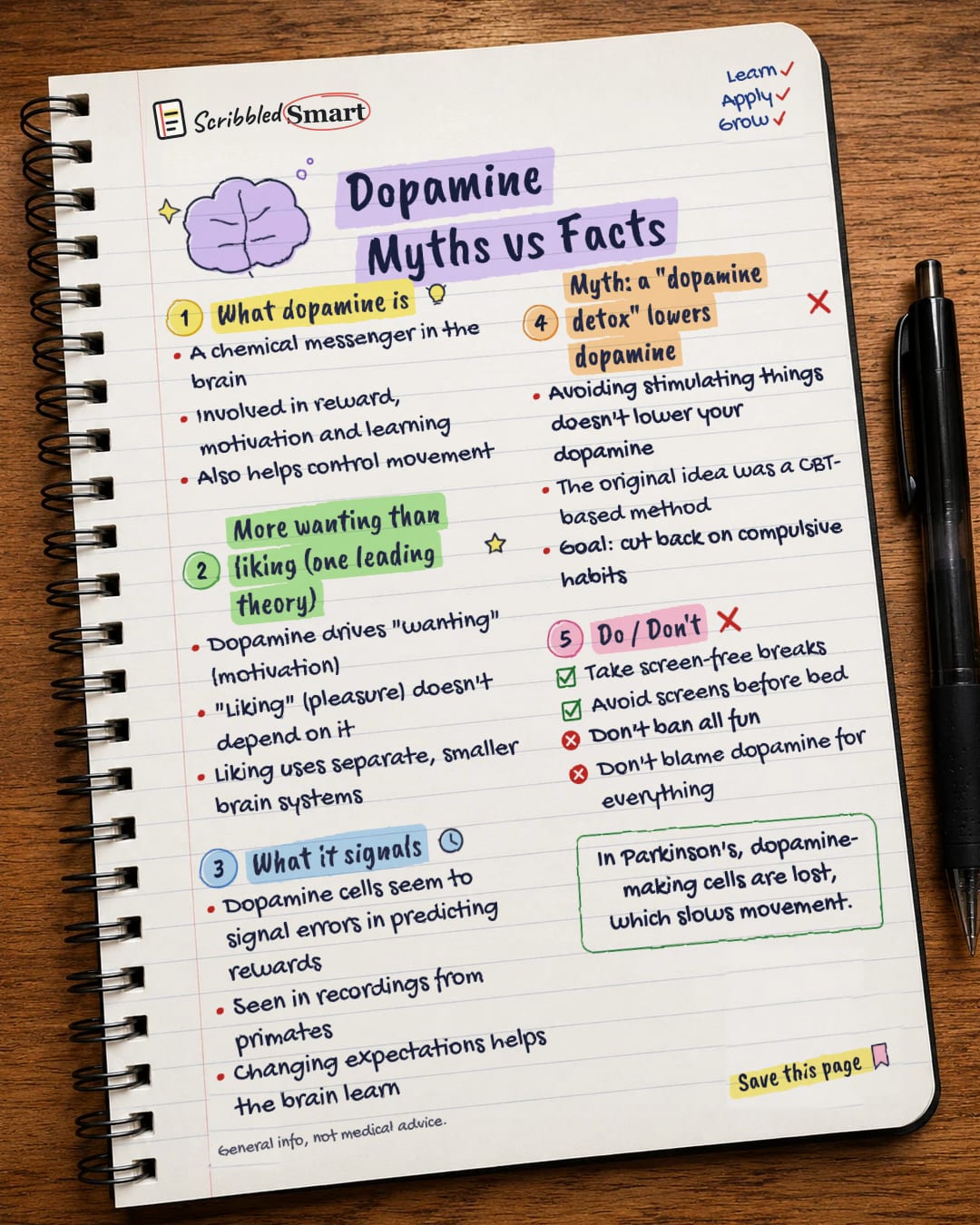
Dopamine Myths vs Facts
Dopamine is more about wanting than liking (one leading theory), and a detox doesn't lower dopamine. Here's what it really does. Save this page.
Good to know
General info, not medical advice.
What's on the page
The note as text, so you can read it, copy it or use a screen reader.
What dopamine is
- A chemical messenger in the brain
- Involved in reward, motivation and learning
- Also helps control movement
More wanting than liking (one leading theory)
- Dopamine drives "wanting" (motivation)
- "Liking" (pleasure) doesn't depend on it
- Liking uses separate, smaller brain systems
What it signals
- Dopamine cells seem to signal errors in predicting rewards
- Seen in recordings from primates
- Changing expectations helps the brain learn
Myth: a "dopamine detox" lowers dopamine
- Avoiding stimulating things doesn't lower your dopamine
- The original idea was a CBT-based method
- Goal: cut back on compulsive habits
Do / Don't
- Take screen-free breaks
- Avoid screens before bed
- Don't ban all fun
- Don't blame dopamine for everything
Sources
- Berridge, K. C. & Robinson, T. E. (2016): Liking, wanting, and the incentive-sensitization theory of addiction. American Psychologist
- Schultz, W., Dayan, P. & Montague, P. R. (1997): A neural substrate of prediction and reward. Science
- Harvard Health Publishing (Peter Grinspoon, Feb 2020): Dopamine fasting: Misunderstanding science spawns a maladaptive fad
- NHS: Parkinson's disease, causes
How we checked this
Every fact on this note comes from the 4 sources listed here, checked against official or peer-reviewed sources where possible. AI tools help with drafting; a person checks every fact against the sources. How we research
Spotted a mistake? Tell us and we'll fix it and log it on the corrections page.


