
Psychology One-page note
Love Languages: What the Research Says
What's your love language? Research suggests a better question: are you giving all of them? Save this page.
What's on the page
The note as text, so you can read it, copy it or use a screen reader.
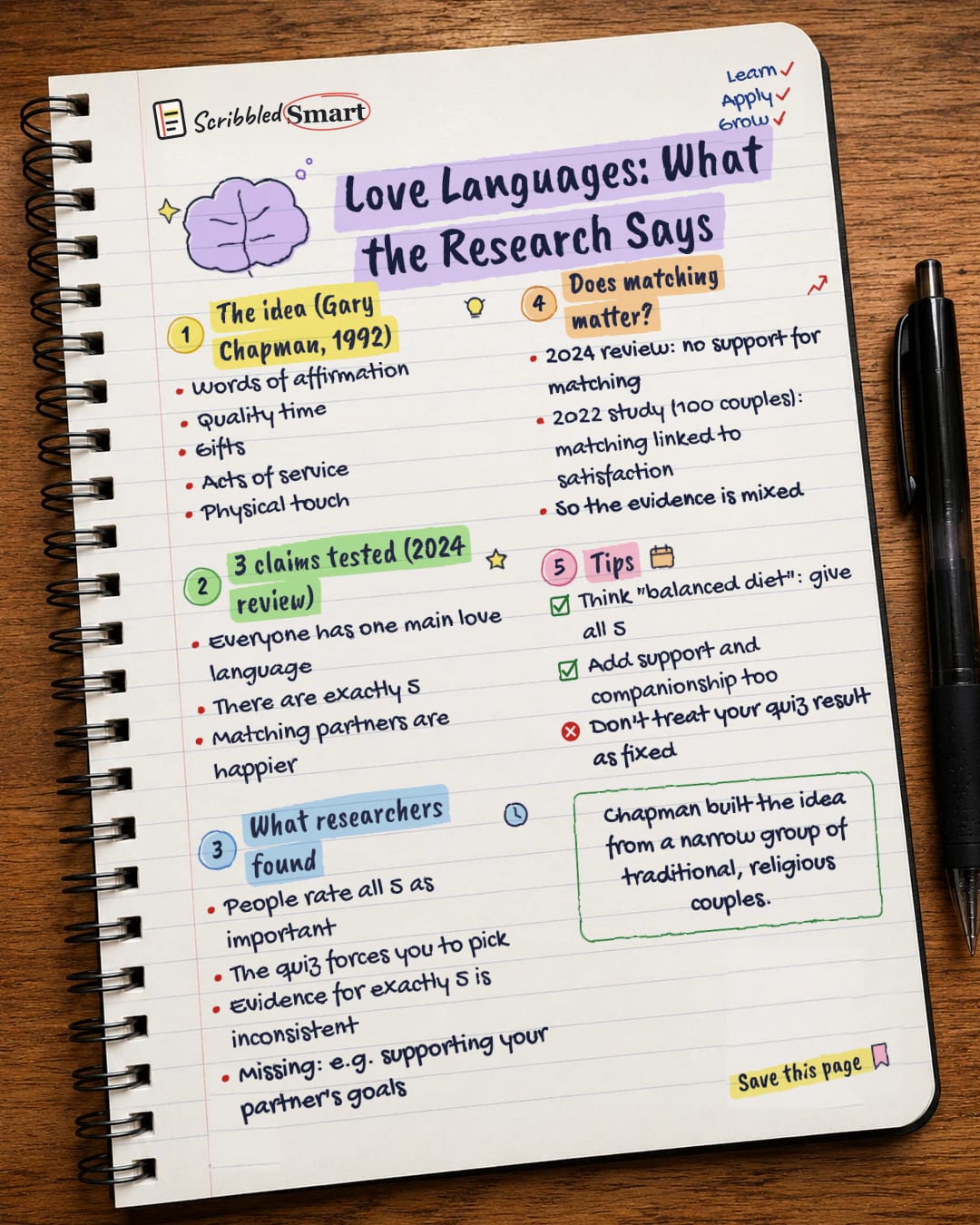
The idea (Gary Chapman, 1992)
- Words of affirmation
- Quality time
- Gifts
- Acts of service
- Physical touch
3 claims tested (2024 review)
- Everyone has one main love language
- There are exactly 5
- Matching partners are happier
What researchers found
- People rate all 5 as important
- The quiz forces you to pick
- Evidence for exactly 5 is inconsistent
- Missing: e.g. supporting your partner's goals
Does matching matter?
- 2024 review: no support for matching
- 2022 study (100 couples): matching linked to satisfaction
- So the evidence is mixed
Tips
- Think "balanced diet": give all 5
- Add support and companionship too
- Don't treat your quiz result as fixed
Sources
- University of Toronto News (4 Jan 2024): Little evidence linking five 'love languages' to healthy relationships, researchers say
- Impett, E. A., Park, G. & Muise, A. (2024): Popular psychology through a scientific lens: Evaluating love languages from a relationship science perspective. Current Directions in Psychological Science.
- Mostova, O., Stolarski, M. & Matthews, G. (2022): I love the way you love me. PLOS ONE
- Psychotherapy Networker: The Five Love Languages (interview with Gary Chapman)
How we checked this
Every fact on this note comes from the 4 sources listed here, checked against official or peer-reviewed sources where possible. AI tools help with drafting; a person checks every fact against the sources. How we research
Spotted a mistake? Tell us and we'll fix it and log it on the corrections page.


