
Psychology One-page note
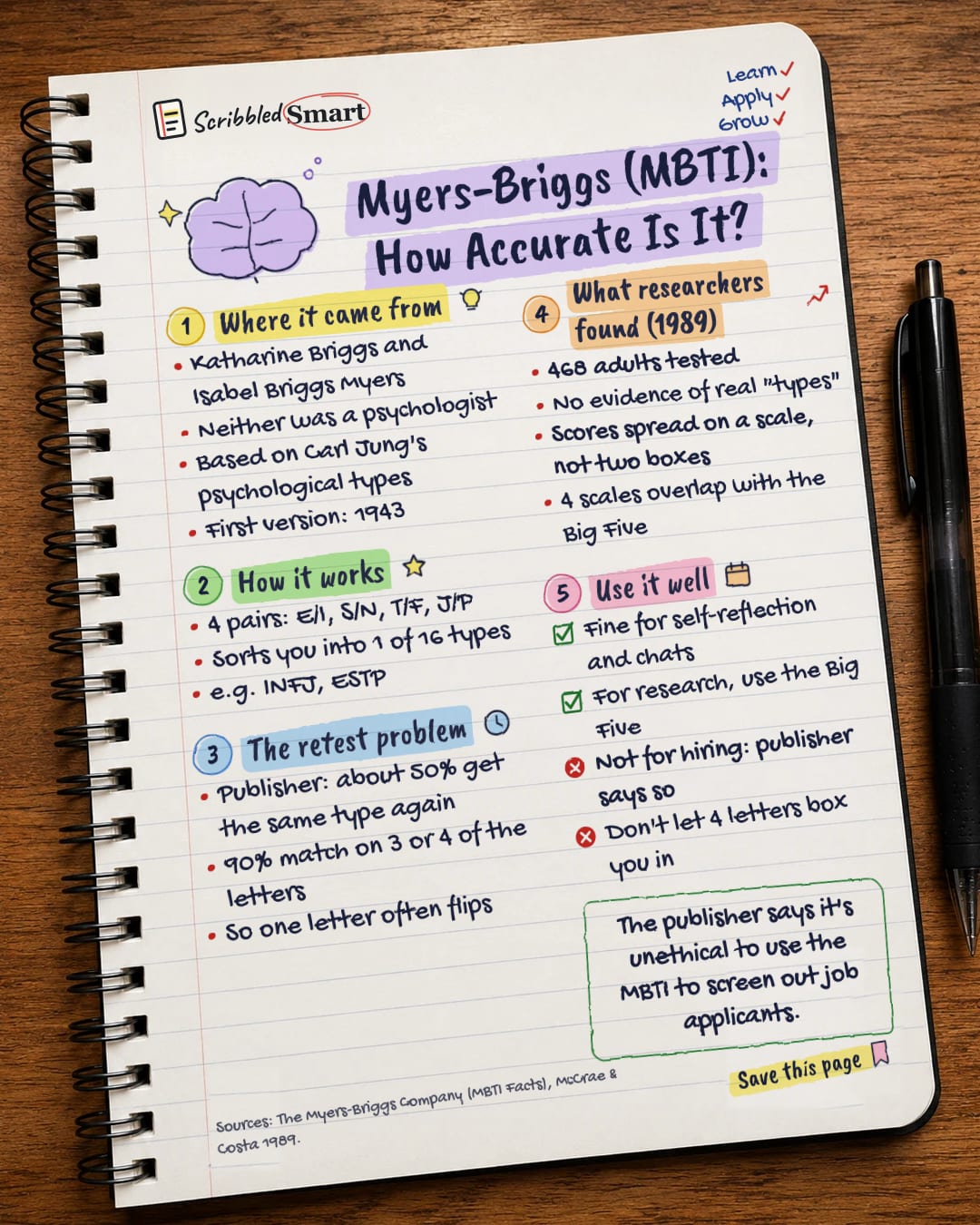
Myers-Briggs (MBTI): How Accurate Is It?
Are you really an INFJ? Take the test again and there's about a 50/50 chance you'll get a different type. Save this page.
Good to know
Sources: The Myers-Briggs Company (MBTI Facts), McCrae & Costa 1989.
What's on the page
The note as text, so you can read it, copy it or use a screen reader.
Where it came from
- Katharine Briggs and Isabel Briggs Myers
- Neither was a psychologist
- Based on Carl Jung's psychological types
- First version: 1943
How it works
- 4 pairs: E/I, S/N, T/F, J/P
- Sorts you into 1 of 16 types
- e.g. INFJ, ESTP
The retest problem
- Publisher: about 50% get the same type again
- 90% match on 3 or 4 of the letters
- So one letter often flips
What researchers found (1989)
- 468 adults tested
- No evidence of real "types"
- Scores spread on a scale, not two boxes
- 4 scales overlap with the Big Five
Use it well
- Fine for self-reflection and chats
- For research, use the Big Five
- Not for hiring: publisher says so
- Don't let 4 letters box you in
Sources
How we checked this
Every fact on this note comes from the 2 sources listed here, checked against official or peer-reviewed sources where possible. AI tools help with drafting; a person checks every fact against the sources. How we research
Spotted a mistake? Tell us and we'll fix it and log it on the corrections page.


