
Psychology One-page note
Self-Esteem: How to Build It
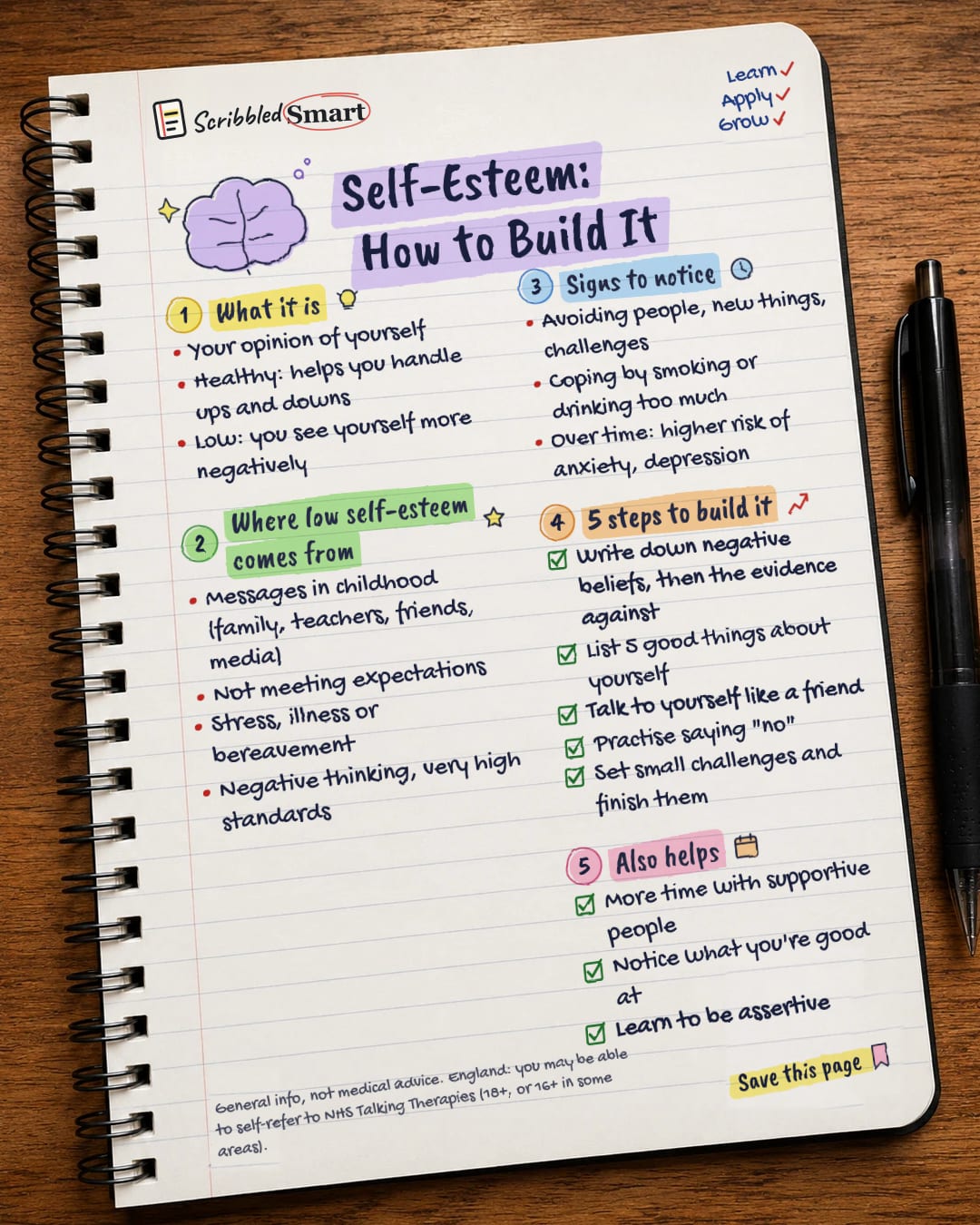
Low self-esteem isn't fixed. Here are 5 small steps the NHS suggests to start building it. Save this page.
Good to know
General info, not medical advice. England: you may be able to self-refer to NHS Talking Therapies (18+, or 16+ in some areas).
What's on the page
The note as text, so you can read it, copy it or use a screen reader.
What it is
- Your opinion of yourself
- Healthy: helps you handle ups and downs
- Low: you see yourself more negatively
Where low self-esteem comes from
- Messages in childhood (family, teachers, friends, media)
- Not meeting expectations
- Stress, illness or bereavement
- Negative thinking, very high standards
Signs to notice
- Avoiding people, new things, challenges
- Coping by smoking or drinking too much
- Over time: higher risk of anxiety, depression
5 steps to build it
- Write down negative beliefs, then the evidence against
- List 5 good things about yourself
- Talk to yourself like a friend
- Practise saying "no"
- Set small challenges and finish them
Also helps
- More time with supportive people
- Notice what you're good at
- Learn to be assertive
Sources
How we checked this
Every fact on this note comes from the 5 sources listed here, checked against official or peer-reviewed sources where possible. AI tools help with drafting; a person checks every fact against the sources. How we research
Spotted a mistake? Tell us and we'll fix it and log it on the corrections page.


