
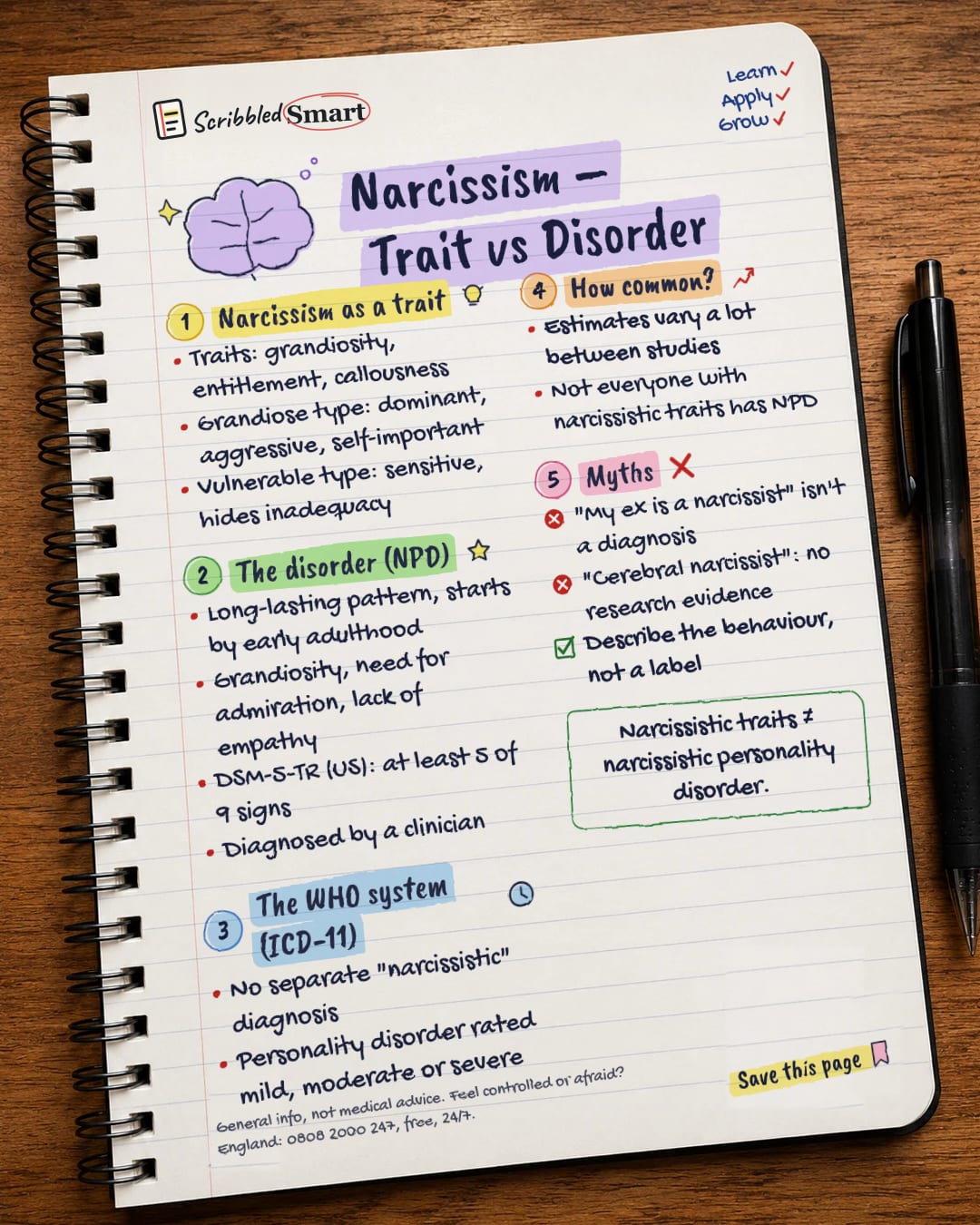
Psychology One-page note
Narcissism – Trait vs Disorder
"Narcissist" gets used a lot. Here's the difference between a trait and a diagnosis. Save this page.
Good to know
General info, not medical advice. Feel controlled or afraid? England: 0808 2000 247, free, 24/7.
What's on the page
The note as text, so you can read it, copy it or use a screen reader.
Narcissism as a trait
- Traits: grandiosity, entitlement, callousness
- Grandiose type: dominant, aggressive, self-important
- Vulnerable type: sensitive, hides inadequacy
The disorder (NPD)
- Long-lasting pattern, starts by early adulthood
- Grandiosity, need for admiration, lack of empathy
- DSM-5-TR (US): at least 5 of 9 signs
- Diagnosed by a clinician
The WHO system (ICD-11)
- No separate "narcissistic" diagnosis
- Personality disorder rated mild, moderate or severe
How common?
- Estimates vary a lot between studies
- Not everyone with narcissistic traits has NPD
Myths
- "My ex is a narcissist" isn't a diagnosis
- "Cerebral narcissist": no research evidence
- Describe the behaviour, not a label
Sources
- MSD Manual Professional: Narcissistic Personality Disorder (NPD)
- The Conversation (Willis, 2023): How many types of narcissist are there?
- Bach, B. et al. (2022): The ICD-11 classification of personality disorders: a European perspective
- Day, N. et al. (2024): Narcissistic personality disorder in the ICD-11. Journal of Clinical Psychology
- NHS: Personality disorder
- Stinson, F. S. et al. (2008): Prevalence of DSM-IV Narcissistic Personality Disorder (NESARC Wave 2)
- Miller, J. D. et al. (2017): Controversies in Narcissism
- Psychiatric Times: Narcissism: The Need for Conceptual and Diagnostic Clarity
- GOV.UK: Domestic abuse: how to get help
How we checked this
Every fact on this note comes from the 9 sources listed here, checked against official or peer-reviewed sources where possible. AI tools help with drafting; a person checks every fact against the sources. How we research
Spotted a mistake? Tell us and we'll fix it and log it on the corrections page.


