
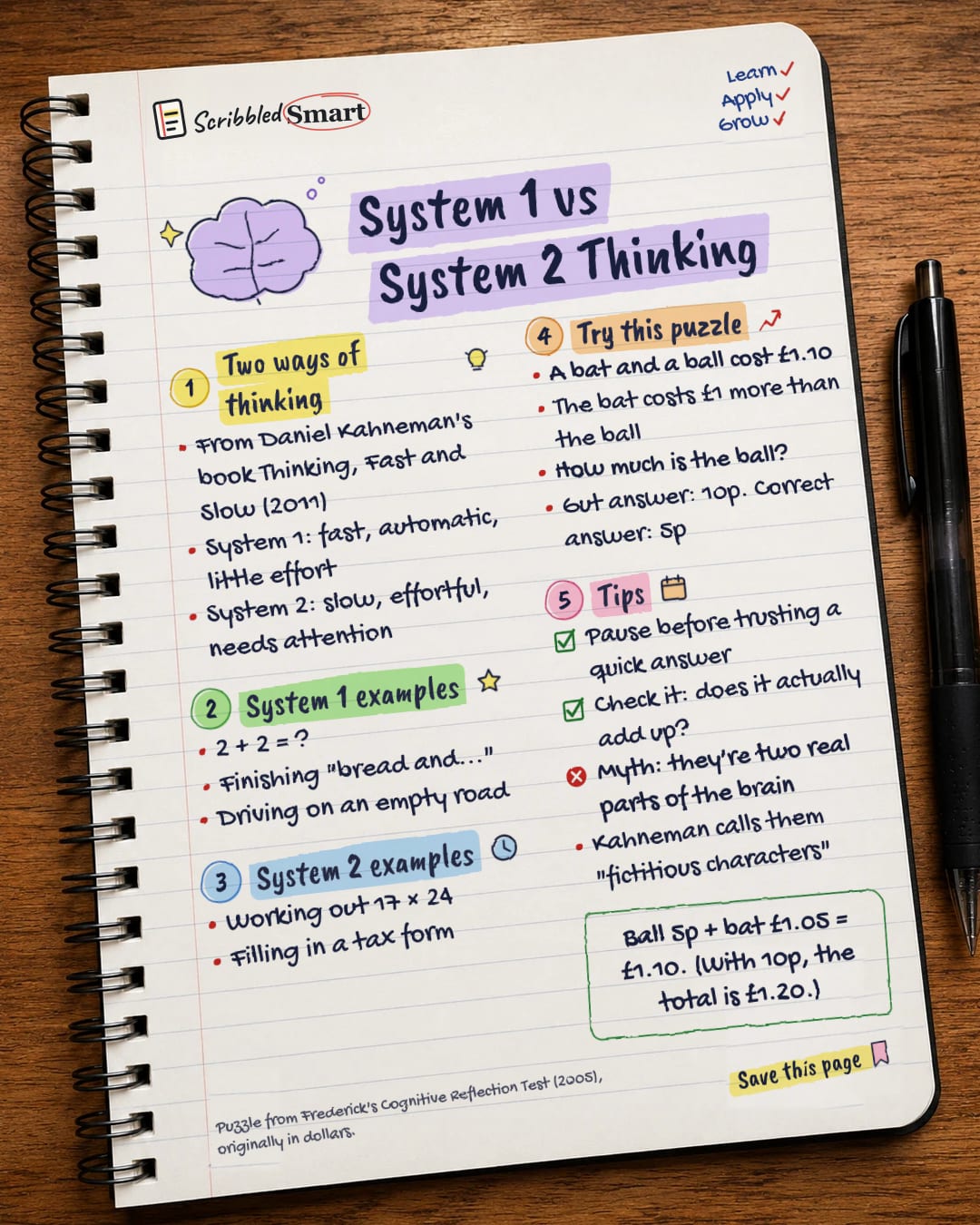
Psychology One-page note
System 1 vs System 2 Thinking
Your brain has a fast mode and a slow mode. Try the bat-and-ball puzzle before you read the answer. Save this page.
Good to know
Puzzle from Frederick's Cognitive Reflection Test (2005), originally in dollars.
What's on the page
The note as text, so you can read it, copy it or use a screen reader.
Two ways of thinking
- From Daniel Kahneman's book Thinking, Fast and Slow (2011)
- System 1: fast, automatic, little effort
- System 2: slow, effortful, needs attention
System 1 examples
- 2 + 2 = ?
- Finishing "bread and..."
- Driving on an empty road
System 2 examples
- Working out 17 × 24
- Filling in a tax form
Try this puzzle
- A bat and a ball cost £1.10
- The bat costs £1 more than the ball
- How much is the ball?
- Gut answer: 10p. Correct answer: 5p
Tips
- Pause before trusting a quick answer
- Check it: does it actually add up?
- Myth: they're two real parts of the brain
- Kahneman calls them "fictitious characters"
Sources
- Kahneman, D. (2011): Thinking, Fast and Slow, ch. 1 (excerpt)
- Kahneman, D. (2012): Of 2 Minds: How Fast and Slow Thinking Shape Perception and Choice [Excerpt]. Scientific American, 15 June 2012
- Frederick, S. (2005): Cognitive Reflection and Decision Making. Journal of Economic Perspectives
- Sinayev, A. & Peters, E. (2015): Cognitive reflection vs. calculation in decision making. Frontiers in Psychology
- Farnam Street: Daniel Kahneman, The Two Systems
How we checked this
Every fact on this note comes from the 5 sources listed here, checked against official or peer-reviewed sources where possible. AI tools help with drafting; a person checks every fact against the sources. How we research
Spotted a mistake? Tell us and we'll fix it and log it on the corrections page.


