
Study One-page note
The 10,000-Hour Rule: Myth vs Facts
Does 10,000 hours really make you an expert? Here's where the number came from and what research found. Save this page.
Good to know
Percentages = share of differences in performance linked to practice hours.
What's on the page
The note as text, so you can read it, copy it or use a screen reader.
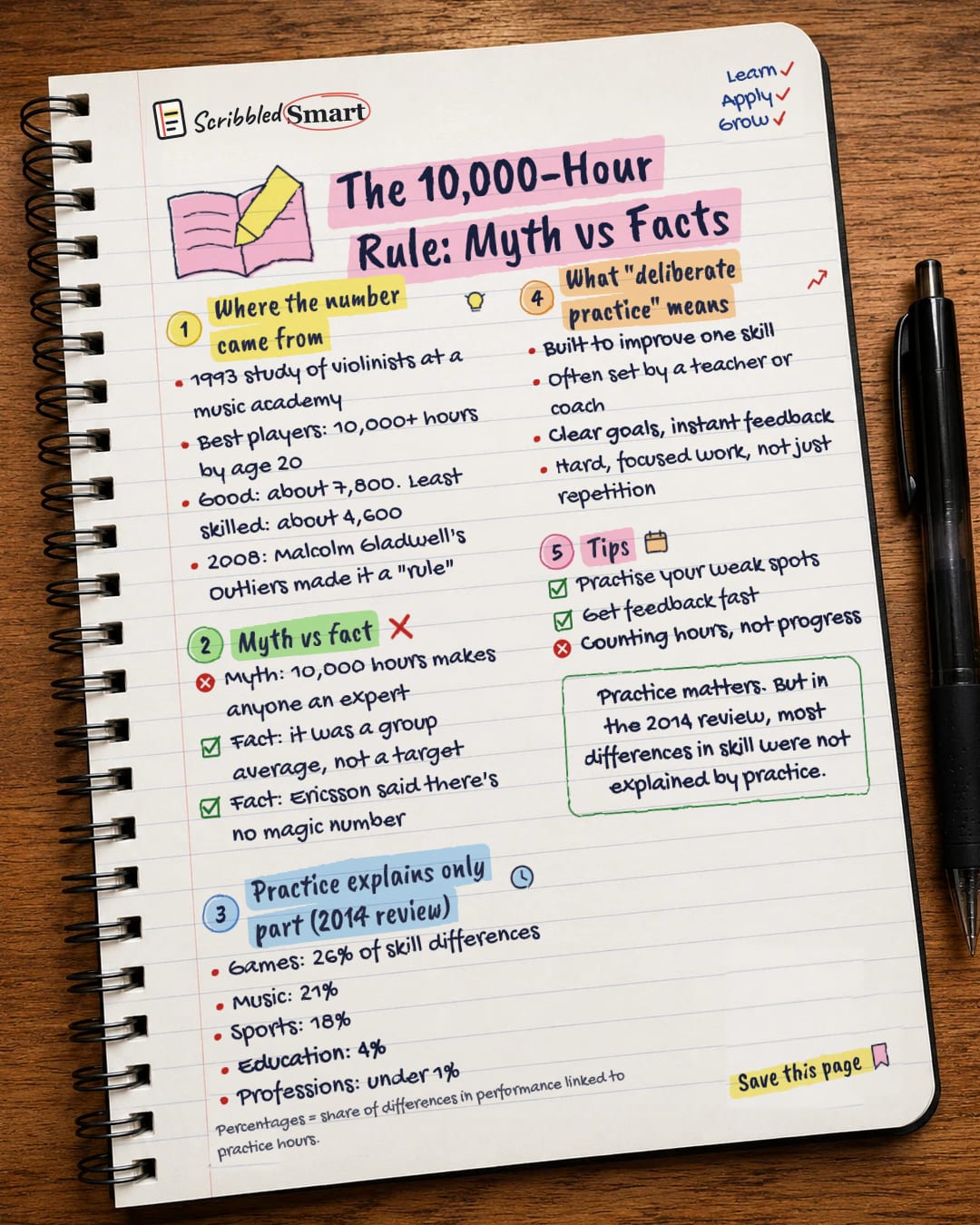
Where the number came from
- 1993 study of violinists at a music academy
- Best players: 10,000+ hours by age 20
- Good: about 7,800. Least skilled: about 4,600
- 2008: Malcolm Gladwell's Outliers made it a "rule"
Myth vs fact
- Myth: 10,000 hours makes anyone an expert
- Fact: it was a group average, not a target
- Fact: Ericsson said there's no magic number
Practice explains only part (2014 review)
- Games: 26% of skill differences
- Music: 21%
- Sports: 18%
- Education: 4%
- Professions: under 1%
What "deliberate practice" means
- Built to improve one skill
- Often set by a teacher or coach
- Clear goals, instant feedback
- Hard, focused work, not just repetition
Tips
- Practise your weak spots
- Get feedback fast
- Counting hours, not progress
Sources
How we checked this
Every fact on this note comes from the 3 sources listed here, checked against official or peer-reviewed sources where possible. AI tools help with drafting; a person checks every fact against the sources. How we research
Spotted a mistake? Tell us and we'll fix it and log it on the corrections page.


