
Study One-page note
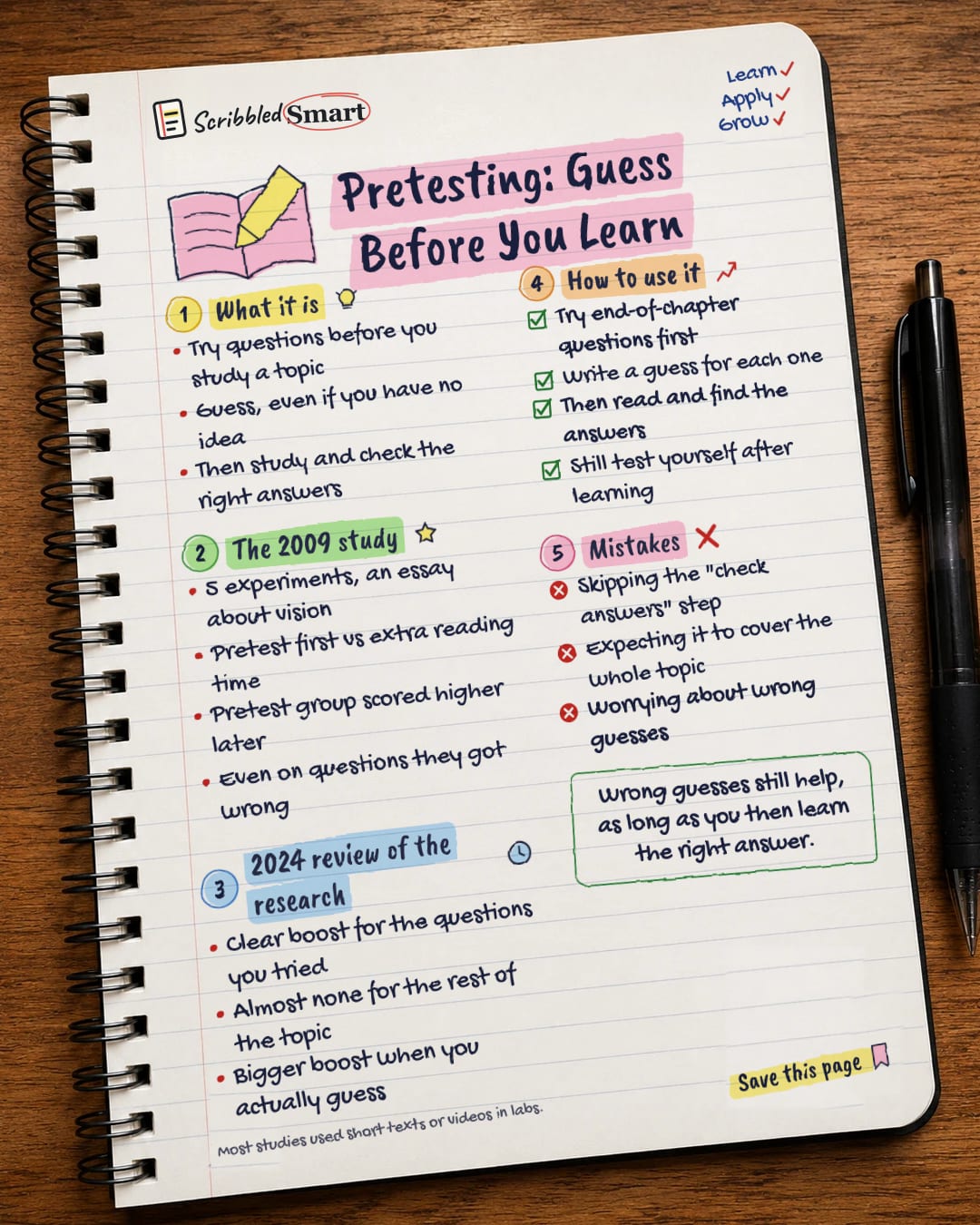
Pretesting: Guess Before You Learn
Getting questions wrong before you study can help you learn. Here's how pretesting works. Save this page.
Good to know
Most studies used short texts or videos in labs.
What's on the page
The note as text, so you can read it, copy it or use a screen reader.
What it is
- Try questions before you study a topic
- Guess, even if you have no idea
- Then study and check the right answers
The 2009 study
- 5 experiments, an essay about vision
- Pretest first vs extra reading time
- Pretest group scored higher later
- Even on questions they got wrong
2024 review of the research
- Clear boost for the questions you tried
- Almost none for the rest of the topic
- Bigger boost when you actually guess
How to use it
- Try end-of-chapter questions first
- Write a guess for each one
- Then read and find the answers
- Still test yourself after learning
Mistakes
- Skipping the "check answers" step
- Expecting it to cover the whole topic
- Worrying about wrong guesses
Sources
How we checked this
Every fact on this note comes from the 4 sources listed here, checked against official or peer-reviewed sources where possible. AI tools help with drafting; a person checks every fact against the sources. How we research
Spotted a mistake? Tell us and we'll fix it and log it on the corrections page.


