
Study One-page note
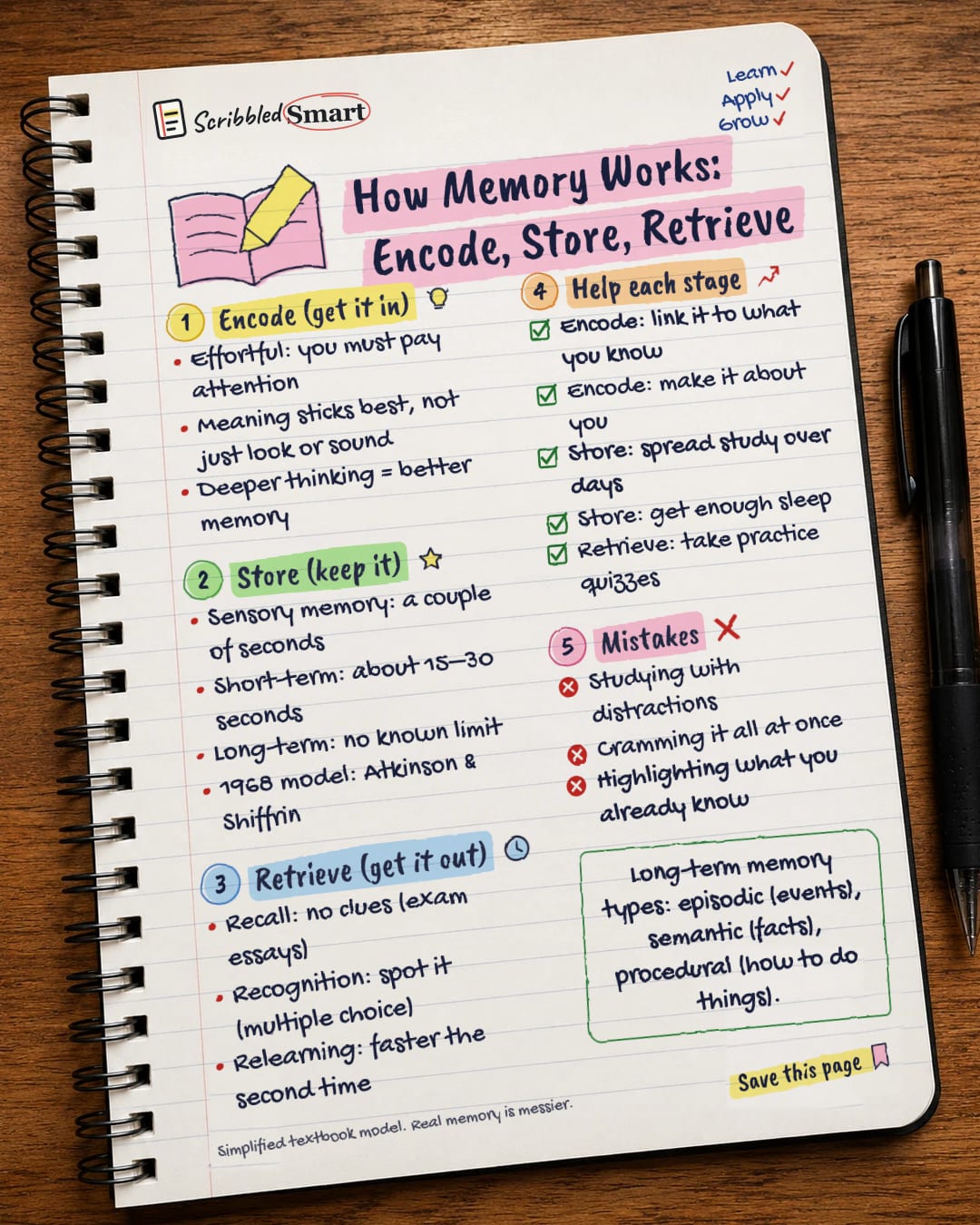
How Memory Works: Encode, Store, Retrieve
Remembering takes 3 steps: get it in, keep it, get it out. Here's how to help each one. Save this page.
Good to know
Simplified textbook model. Real memory is messier.
What's on the page
The note as text, so you can read it, copy it or use a screen reader.
Encode (get it in)
- Effortful: you must pay attention
- Meaning sticks best, not just look or sound
- Deeper thinking = better memory
Store (keep it)
- Sensory memory: a couple of seconds
- Short-term: about 15–30 seconds
- Long-term: no known limit
- 1968 model: Atkinson & Shiffrin
Retrieve (get it out)
- Recall: no clues (exam essays)
- Recognition: spot it (multiple choice)
- Relearning: faster the second time
Help each stage
- Encode: link it to what you know
- Encode: make it about you
- Store: spread study over days
- Store: get enough sleep
- Retrieve: take practice quizzes
Mistakes
- Studying with distractions
- Cramming it all at once
- Highlighting what you already know
Sources
How we checked this
Every fact on this note comes from the 3 sources listed here, checked against official or peer-reviewed sources where possible. AI tools help with drafting; a person checks every fact against the sources. How we research
Spotted a mistake? Tell us and we'll fix it and log it on the corrections page.


