
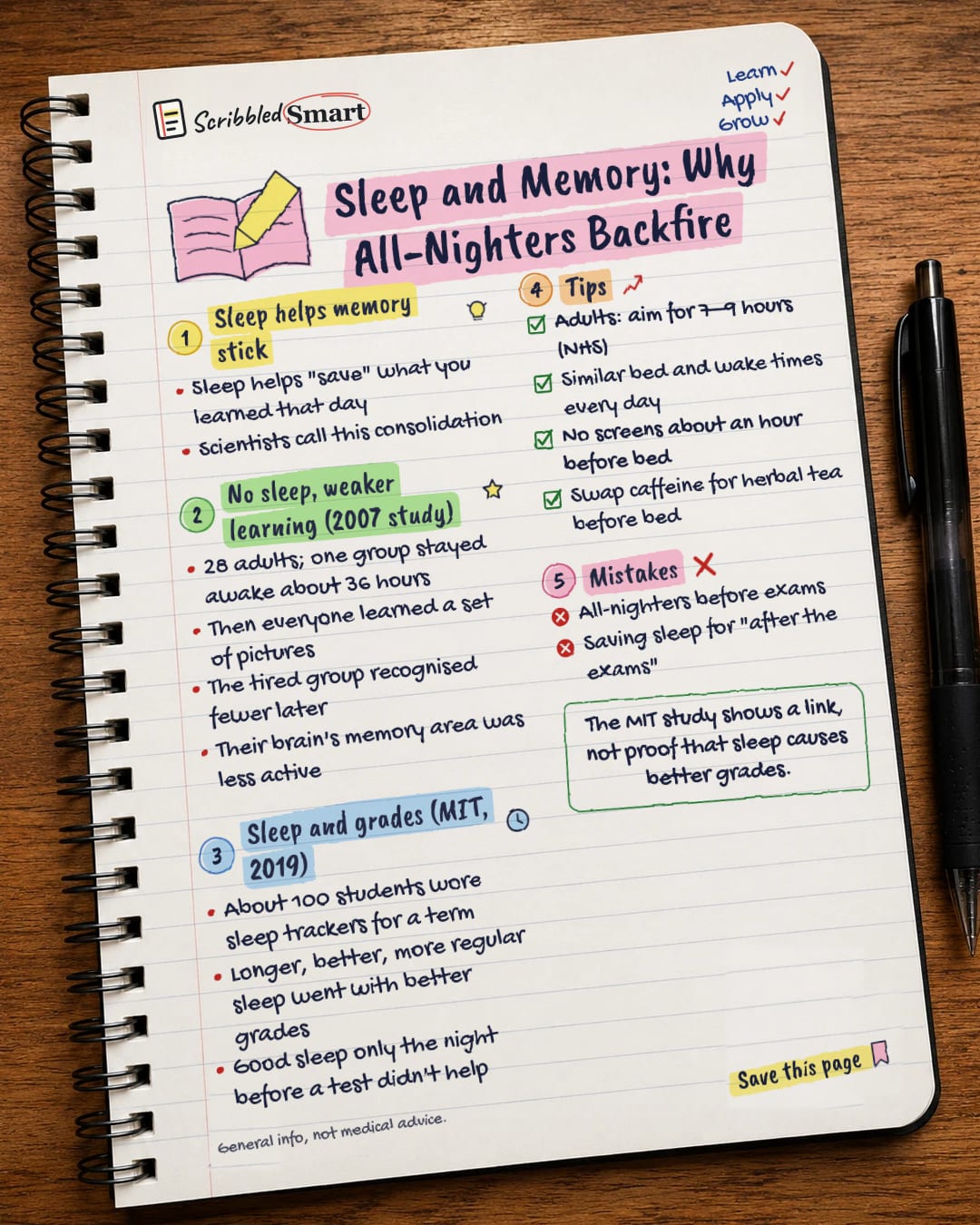
Study One-page note
Sleep and Memory: Why All-Nighters Backfire
Pulling an all-nighter to learn more? Research says it can backfire. Save this page.
Good to know
General info, not medical advice.
What's on the page
The note as text, so you can read it, copy it or use a screen reader.
Sleep helps memory stick
- Sleep helps "save" what you learned that day
- Scientists call this consolidation
No sleep, weaker learning (2007 study)
- 28 adults; one group stayed awake about 36 hours
- Then everyone learned a set of pictures
- The tired group recognised fewer later
- Their brain's memory area was less active
Sleep and grades (MIT, 2019)
- About 100 students wore sleep trackers for a term
- Longer, better, more regular sleep went with better grades
- Good sleep only the night before a test didn't help
Tips
- Adults: aim for 7–9 hours (NHS)
- Similar bed and wake times every day
- No screens about an hour before bed
- Swap caffeine for herbal tea before bed
Mistakes
- All-nighters before exams
- Saving sleep for "after the exams"
Sources
- NHS Every Mind Matters: Sleep problems
- NHS Every Mind Matters: How to fall asleep faster and sleep better
- BPS Research Digest: Students, it's time to ditch the pre-exam all-nighter
- MIT McGovern Institute: Better sleep habits lead to better college grades (2019)
- PubMed: Yoo et al. (2007), A deficit in the ability to form new human memories without sleep
- University of Lübeck: Diekelmann & Born (2010), The memory function of sleep
How we checked this
Every fact on this note comes from the 6 sources listed here, checked against official or peer-reviewed sources where possible. AI tools help with drafting; a person checks every fact against the sources. How we research
Spotted a mistake? Tell us and we'll fix it and log it on the corrections page.


