
Study One-page note
Interleaving: Mix Up Your Practice
Practising one topic at a time feels easier. Mixing them up works better. Save this page.
What's on the page
The note as text, so you can read it, copy it or use a screen reader.
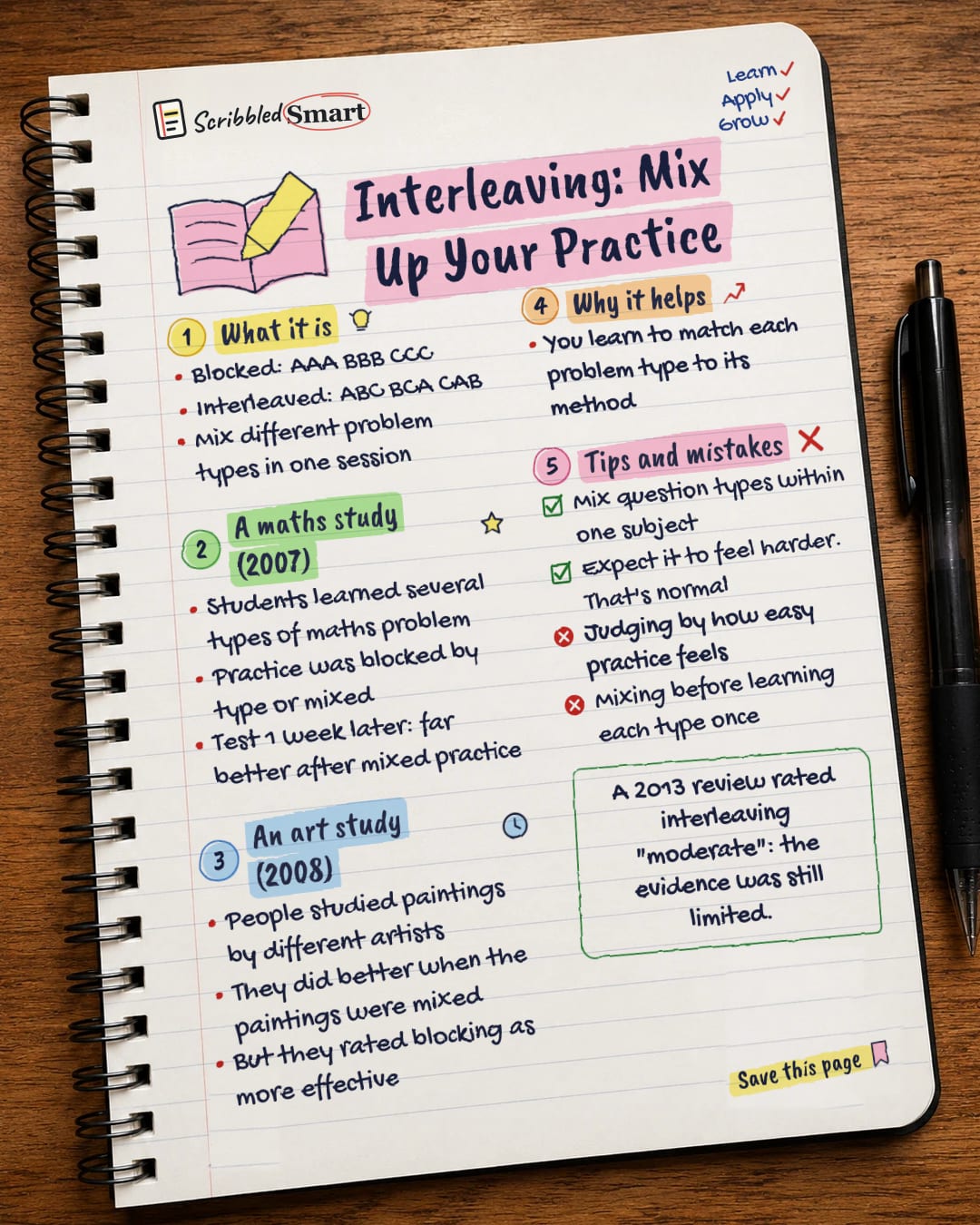
What it is
- Blocked: AAA BBB CCC
- Interleaved: ABC BCA CAB
- Mix different problem types in one session
A maths study (2007)
- Students learned several types of maths problem
- Practice was blocked by type or mixed
- Test 1 week later: far better after mixed practice
An art study (2008)
- People studied paintings by different artists
- They did better when the paintings were mixed
- But they rated blocking as more effective
Why it helps
- You learn to match each problem type to its method
Tips and mistakes
- Mix question types within one subject
- Expect it to feel harder. That's normal
- Judging by how easy practice feels
- Mixing before learning each type once
Sources
- Rohrer & Taylor (2007): The shuffling of mathematics problems improves learning (PDF)
- University of South Florida repository: Rohrer & Taylor (2007) record
- Psychology in Action: Desirable difficulties in math teaching
- Kornell & Bjork (2008): Learning Concepts and Categories (PDF, UCLA Bjork Lab)
- APS: Which study strategies make the grade?
How we checked this
Every fact on this note comes from the 5 sources listed here, checked against official or peer-reviewed sources where possible. AI tools help with drafting; a person checks every fact against the sources. How we research
Spotted a mistake? Tell us and we'll fix it and log it on the corrections page.


